
Oil short bets ahead of Trump’s key Iran announcements hit US$7bn
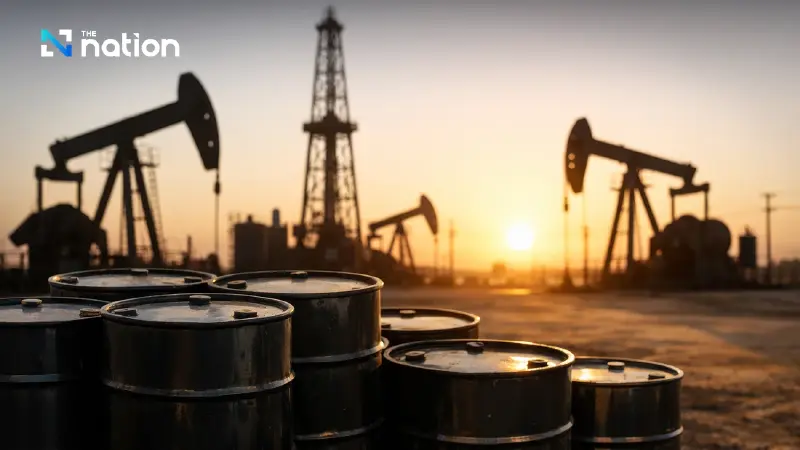


Reuters analysis says traders placed short positions across crude, diesel and gasoline futures before Trump’s Iran announcements, drawing scrutiny.
- Oil traders placed bets worth as much as US$7 billion on falling prices in March and April, immediately preceding key announcements by President Trump regarding Iran.
- The timing of the trades has raised suspicions of insider trading, prompting investigations by the US Commodity Futures Trading Commission (CFTC) and the Department of Justice.
- The short-selling occurred in several large blocks on four separate occasions, just minutes before announcements that caused oil prices to fall significantly, by as much as 15%.
- The US$7 billion total is far higher than a previously reported US$2.6 billion, as it includes a broader range of bets across multiple exchanges and fuel markets.
Oil traders placed bets worth as much as US$7 billion on falling prices in March and April, shortly before major Iran-related announcements by US President Donald Trump, according to traders, market specialists and a Reuters analysis of exchange data.
The positions were spread across several exchanges, fuel markets and derivatives. Reuters could not determine who made the trades, or whether they originated in the United States or elsewhere.
The trades included short positions, wagers that prices would decline, in derivatives covering ICE and CME crude, diesel and gasoline futures. Brent crude and low-sulphur gasoil futures are traded on the Intercontinental Exchange, while West Texas Intermediate crude and gasoline futures trade on the New York Mercantile Exchange, owned by CME Group.
Both ICE and CME declined to comment. A person familiar with the matter said CME is examining the trades.
The total is far higher than the previously reported US$2.6 billion in bets, which had already led the US administration to remind staff not to use non-public information for financial gain. The US Commodity Futures Trading Commission is investigating, a person familiar with the matter told Reuters in April, though the CFTC has not officially confirmed any probe.

The US Justice Department and CFTC did not immediately respond to requests for comment. A White House spokesperson said: “All federal employees are subject to government ethics guidelines that prohibit the use of non-public information for financial benefit."
The timing of the trades has drawn calls from legal experts and lawmakers for regulators to examine whether they were driven by inside information or leaks.
Traders first noticed unusual activity on March 23. Between 1049 and 1050 GMT, minutes before Trump announced at 1105 GMT that threatened attacks on Iranian power infrastructure would be delayed, traders placed bets on 20,000 lots of Brent and WTI futures, according to LSEG data.
The March 23 selling covered first-, second-, and third-month contracts worth about US$1.35 billion. It also included US$122 million in ICE gasoil, or diesel, futures and US$81 million in US gasoline futures, bringing the total for that episode to about US$2.2 billion.
Trump’s announcement that day sent crude futures down by as much as 15%, one of the largest intraday falls on record. Gasoline and gasoil futures dropped by about 12%.
A similar pattern appeared on April 7. Sell orders worth US$2.12 billion in oil and gasoline futures were placed between 1944 and 1945 GMT, after the market had settled, when trading volumes are usually thin. Minutes later, Trump announced a two-week ceasefire with Iran. Benchmark ICE Brent futures fell by as much as 15%.
On April 17, nearly US$2 billion in Brent, WTI, gasoil and gasoline futures were sold between 1224 and 1225 GMT, just before Iranian Foreign Minister Abbas Araqchi said the Strait of Hormuz would reopen. Trump and other US officials then posted multiple social media messages.
On April 21, about US$830 million in Brent and WTI contracts were sold roughly 15 minutes before Trump extended the ceasefire.
Reuters and other media had previously reported trades in the most actively traded front-month contracts for Brent and WTI. Initial Reuters calculations put the value of those four days of bets at about US$2.6 billion.
A broader review of trading data across exchanges and contracts found similar bets at the same dates and times in European diesel and US gasoline futures, as well as longer-dated Brent and WTI contracts. That lifted the total to about US$7 billion, based on Reuters calculations.
A short sale involves borrowing a derivative from a counterparty, selling it, and later buying it back at a lower price after prices fall, with the difference kept as profit.
Oil prices plunged by more than 10% on March 23, April 7, April 17 and April 21. Reuters calculations showed that a short seller deploying US$7 billion could have made hundreds of millions of dollars, depending on when the trades were entered and exited.
Adi Imsirovic, a veteran oil trader at the Centre for Strategic and International Studies, said the trades looked “well informed” because they came before major announcements. He said US authorities, including the CFTC, can access exchange data to identify who placed the trades if they decide to investigate.
On Thursday, ABC reported that the US Department of Justice was investigating US$2.6 billion in oil trades linked to the Iran war. The DOJ was not immediately available for comment.
The CFTC’s enforcement director said in March that the agency was aware of speculation about insider trading in CFTC-regulated markets and was “watching”.
“Let's stay with the facts. The volumes were highly unusual. They were concentrated. They were ahead of key announcements,” said Jorge Montepeque of Onyx Capital Group, who helped design the modern oil price-setting system at pricing agency Platts in the 1990s.
Robert Frenchman, a lawyer at Dynamis LLP in New York who has previously worked on white-collar crime and insider trading cases, said the scale of the trades was certain to attract attention.
“Those quantities are not going to escape scrutiny,” the Frenchman said.
Reuters
