
CAAT says aviation operating at just over 60% as jet fuel takes 25-40% of airline costs
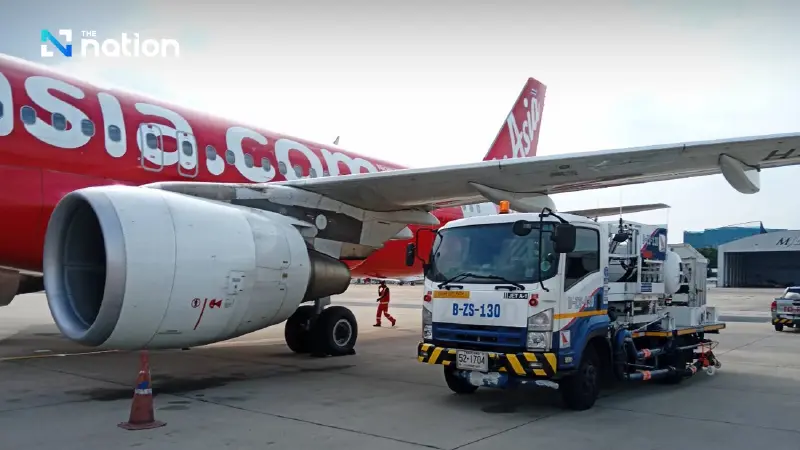


CAAT warns Middle East tensions and Hormuz disruption have driven jet fuel prices sharply higher, forcing airlines to cut schedules and reshuffle routes amid at least 1,900 cancellations.
Thailand’s Civil Aviation Authority (CAAT) says airlines have been forced to scale back operations as jet fuel costs surge, with flight schedules now running at just over 60% of pre-crisis operating plans amid heightened geopolitical tensions—particularly in the Middle East.
CAAT said the broader geopolitical situation remains volatile across multiple regions, but the Middle East conflict has intensified and appears increasingly prolonged. This has led some countries to restrict flight operations, close airspace, and prompted airlines to cancel flights or reroute services on multiple routes.
Since the situation escalated in February-March 2026, airlines have requested the cancellation of at least 1,900 flights, CAAT said.

Hormuz disruption adds to global energy instability
CAAT pointed to the crisis around the Strait of Hormuz—a key route for transporting crude oil—saying the disruption has become an accelerating factor undermining global energy stability. The strait typically carries around 20% of global oil consumption, and any interruption in shipments has direct implications for energy security, particularly for East Asia and Southeast Asia, which rely heavily on Middle Eastern energy supplies.
CAAT said the situation has continued to weigh on economic confidence and international travel, potentially affecting foreign tourists’ willingness to travel and, in turn, Thailand’s air travel demand.
Jet fuel a major risk factor for airlines
CAAT said jet fuel prices remain a key risk to the aviation sector, as fuel typically accounts for 25-40% of total airline operating costs.
The International Air Transport Association (IATA) had forecast average jet fuel prices of around US$88 per barrel in 2026, CAAT noted. However, with the Middle East situation worsening, jet fuel prices have risen sharply. CAAT said the global average jet fuel price in March 2026 stood at US$181.57 per barrel, reflecting extreme volatility and cost pressure—particularly as conflict zones overlap with key global energy transport routes.
CAAT added that the outlook remains highly uncertain due to external factors, including geopolitical risks, global supply-and-demand swings, and production and export policies by major oil producers—factors that could continue to push jet fuel costs higher and limit airlines’ ability to manage costs and set pricing strategies.
“If oil prices remain elevated, airlines may need to raise fares or impose additional fuel surcharges, which could directly affect travel demand,” the report said.

Thai airlines already cutting schedules
CAAT cited information from the Airlines Association of Thailand, which said airlines have absorbed severe cost impacts from higher jet fuel prices and tried to maintain services—even at a loss during the recent Songkran travel period—to reduce passenger disruption.
However, the association said carriers now have little choice but to reduce flights, while continuing to operate more than 60% of their planned schedule from before the crisis.
