
TTAA urges CAAT to secure refunds for tourists hit by cancelled flights
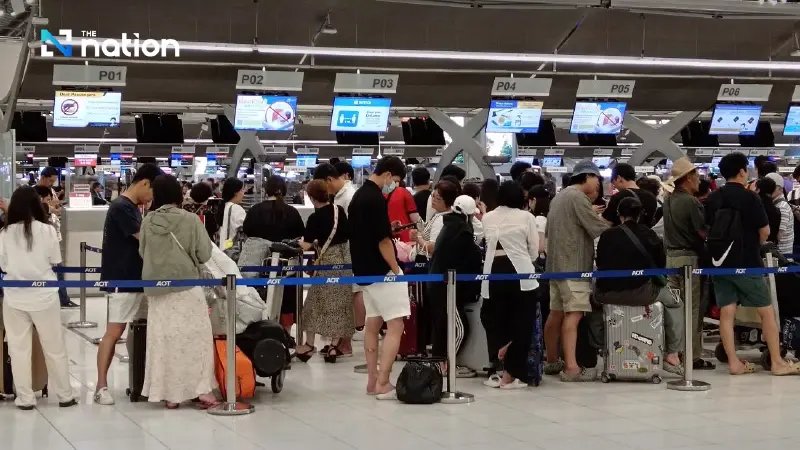


Outbound tour operators say passengers are still waiting for refunds as cancelled flights push costs, lost bookings and reputational damage onto travel firms.
- The Thai Travel Agents Association (TTAA) has formally urged the Civil Aviation Authority of Thailand (CAAT) to compel airlines to issue timely refunds for widespread flight cancellations.
- The TTAA highlights that tour operators are unfairly burdened, often advancing refunds to customers and absorbing other unrecoverable costs, while passengers face delayed refunds or are forced to accept credit vouchers.
- The association is demanding concrete measures, including a clear timeframe for refunds, an end to forced credit vouchers, and a requirement for airlines to transparently disclose cancellation reasons.
- TTAA argues that existing passenger rights rules are inadequate and fail to protect either consumers or tour operators, who act as a "buffer" and suffer significant financial and reputational damage.
The oil crisis has prompted airlines to gradually cancel flights, temporarily suspend services and reduce flight frequencies, affecting the operations of tourism businesses.
Kanlayanee Assanee, secretary-general of the Thai Travel Agents Association (TTAA), said on April 26, 2026, that the association, which represents outbound tour operators, had submitted an open letter to the Civil Aviation Authority of Thailand (CAAT) after widespread airline cancellations caused severe disruption to passengers. The move aims to press for the rights of travellers.
She said the main concerns were that many passengers had still not received refunds, while agents and operators had been affected on a broad scale. TTAA called for the problem to be resolved quickly, fairly and clearly, with the aim of pushing airlines to refund passengers as soon as possible and setting fair standards for both consumers and tourism businesses.
The open letter to CAAT was also addressed to the Director-General of the Department of Tourism, under the Ministry of Tourism and Sports. It concerned measures to protect consumer rights and ease the impact on tourism operators in cases where airlines cancel flights.

The letter said it aimed to reflect the real problems arising when flights are cancelled: “consumers suffer damage” but “tourism operators are forced to bear the burden instead”. Operators are having to advance refunds to customers, absorb unrecoverable costs and shoulder business losses without fair support measures.
TTAA said the government should seriously consider the issue, both in terms of the hardship faced by consumers and the damage suffered by operators.
The association said the continuing flight cancellations in recent periods had not only harmed passengers, but had also shifted a large cost burden onto tourism operators without a fair protection mechanism.
Airlines had repeatedly cancelled flights and made significant schedule changes, particularly at short notice. This had caused widespread impact on passengers and tourism operators, who act as direct representatives in caring for consumers.
TTAA said the open letter was prepared on behalf of affected consumers to reflect the practical reality that most of the damage does not end with the airlines, but is inevitably passed on to tourism operators.

Damage suffered by consumers
Passengers are unable to travel according to their planned itineraries, losing money and important opportunities, especially in group travel.
Delayed refunds or restrictions requiring passengers to accept credit vouchers affect consumers’ liquidity.
Unclear information from airlines means consumers have to rely mainly on operators to coordinate and solve problems.
Damage falling on tour operators
Although operators did not cause the problem, they have had to bear the direct burden, including:
Advancing refunds to customers to maintain confidence, even though they have not yet received refunds from the airlines.
Absorbing hidden costs such as accommodation, transfers and programme-change expenses, many of which cannot be recovered.
Using substantial resources to solve urgent problems, from coordination and itinerary adjustments to caring for customers case by case.
Bearing reputational damage, even though the incidents are beyond their control.
TTAA said the situation clearly showed that tourism operators were acting as a “buffer”, taking responsibility before and on behalf of airlines, without fair support measures.
Although rules on passenger rights currently exist, TTAA said they are still unable in practice to remedy the real damage that has occurred. There are also insufficient measures to address the impact on operators as business-to-business (B2B) contractual parties, while the reasons cited for flight cancellations still lack transparency and are difficult to verify.
To genuinely protect consumers and create fairness across the system, TTAA asked CAAT to consider concrete action by requiring airlines to provide refunds within a clear timeframe and preventing them from forcing passengers to accept credit against their will. Airlines should also arrange alternative travel or compensation that reflects the actual damage suffered across all sectors, especially in cases where operators have had to advance payments on behalf of customers.
TTAA also said airlines should be required to disclose the reasons for flight cancellations in a transparent and verifiable manner, while an effective complaint mechanism should be established to cover both consumers and operators. Clear regulatory measures and penalties should also be set for airlines that fail to comply.
Thailand’s tourism industry is driven by “confidence”, TTAA said. If operators, who are on the front line of service delivery, are left to bear risks alone, the whole system will be affected in the long term. Consumer protection, therefore, cannot be limited to the final point of service, but must fairly cover the entire service chain.
The association asked the relevant agencies to consider the matter urgently and allow the private sector to take part in discussions to jointly determine appropriate guidelines.

