
WTO members agree e-commerce duty pact after moratorium lapses
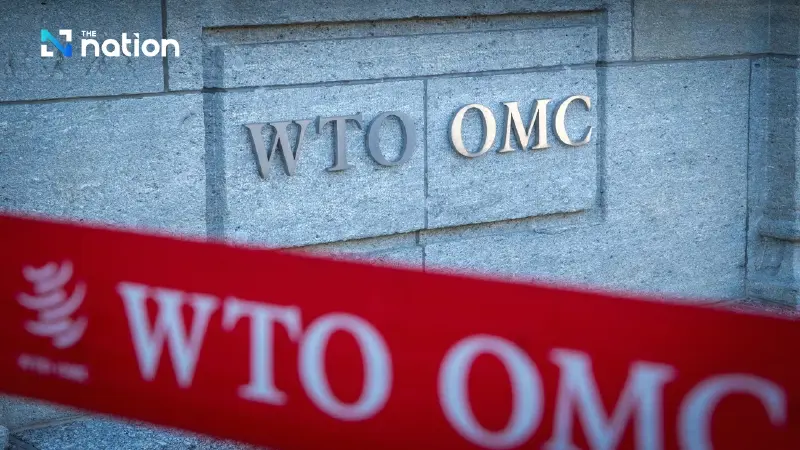


Brazil’s refusal to back a four-year WTO extension prompted 19 members to promise duty-free treatment for electronic transmissions.
- A group of 19 World Trade Organisation (WTO) members, including the United States, Japan, and South Korea, have created a new pact pledging not to charge duties on electronic transmissions.
- This new agreement was formed after the long-standing, global WTO moratorium on e-commerce duties lapsed due to a failure to achieve consensus, with Brazil opposing its extension.
- The pact is intended to provide predictability for businesses in the absence of the global deal, but is viewed by some as a temporary "sticking plaster" rather than a substitute for a full WTO-wide agreement.
The United States and 18 other World Trade Organisation members moved on Thursday (May 7) to create a separate pact pledging not to charge duties on electronic transmissions, after talks failed to break a deadlock with Brazil, according to a document.
The group includes the US, Japan, South Korea, Singapore, Australia, Norway and Argentina. Under the agreement, the 19 members said they would not impose duties on electronic transmissions for an unspecified period.
The final text, dated May 7, said the pact would take effect on May 8 and expressed disappointment that the wider WTO moratorium had lapsed.
“Nonetheless, this group of Members remains committed to do what we can to provide to businesses and consumers a measure of predictability and certainty in the absence of the multilateral E-Commerce Moratorium,” the document said.
It also invited other WTO members to join the arrangement.
Brazil maintained its opposition to a four-year extension of the global WTO deal during talks in Geneva that ended on Thursday. Turkey, which had previously opposed the extension, withdrew its objection, a WTO spokesperson said.

The moratorium was first agreed in 1998 and has been renewed repeatedly since then. It prevents WTO members from imposing duties on cross-border electronic transmissions, including streaming music or films and downloading software.
WTO members with major digital economies, including the US, the European Union, Canada and Japan, have argued that the moratorium gives global digital trade more certainty and should be made permanent.
The lapse followed a failure at a high-level WTO meeting in Yaounde, Cameroon, in March to renew the long-standing moratorium covering cross-border streaming and downloads. Business groups said that the setback raised serious concerns over the WTO’s ability to set global trade rules.
Sabina Ciofu, international policy and strategy lead at techUK, the trade association representing 1,200 companies in the UK technology industry, told Reuters that the 19-member pact offered a way forward, but the absence of a multilateral deal was deeply worrying.
Reuters
“If WTO members cannot maintain consensus around one of the longest-standing and most widely supported rules underpinning digital trade, serious questions will continue to grow about the organisation's relevance,” Ciofu said.
International Chamber of Commerce Secretary General John Denton described the pact as a welcome sticking plaster, but said the end of the globally agreed moratorium sent a troubling signal at a time when businesses needed genuine certainty rather than patchwork fixes.
“No one should pretend this is a substitute for a clear WTO-wide agreement,” Denton said, adding that governments should treat the pact as a bridge back to fully restoring the multilateral moratorium.
US ambassador to the WTO Joseph Barloon told delegates during the WTO General Council meeting that Washington was launching the plurilateral agreement to give businesses and consumers greater certainty and predictability.
“The US efforts on reform and e-commerce do not close the door to multilateral engagement. But the United States will not sit idly and wait for 166 Members to agree on common-sense solutions to respond to the needs of our stakeholders,” Barloon told delegates.
