
NT to end Thaicom 4 satellite internet service on June 30 as iPSTAR nears retirement
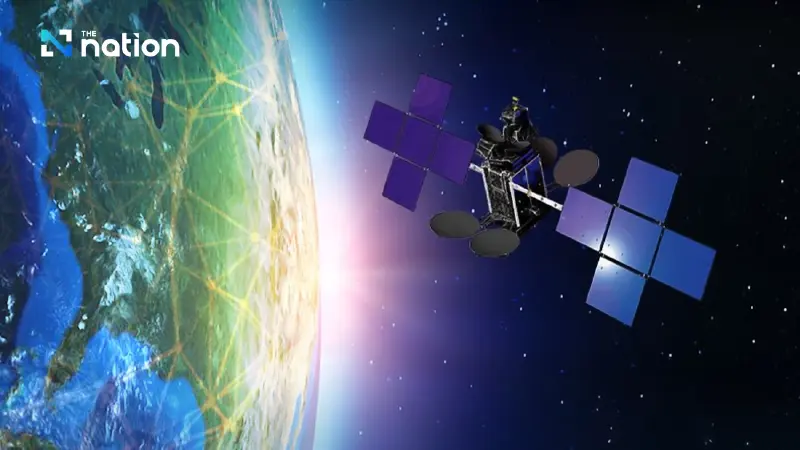


National Telecom will terminate its satellite internet service via Thaicom 4, or iPSTAR, at 11.59pm on June 30, as Thailand’s pioneering broadband satellite nears the end of its engineering life and operators prepare a temporary Korean satellite backup.
NT sets June 30 deadline for iPSTAR service
National Telecom Public Company Limited, or NT, will terminate its internet service via the Thaicom 4 satellite, also known as iPSTAR, at 11.59pm on June 30, 2026, according to a notice issued through its NT Satellite channel.
The announcement marks a key step in the wind-down of Thaicom 4, Thailand’s pioneering broadband satellite, which has been used to provide satellite internet services to customers in areas where terrestrial telecom networks are limited or unavailable.
Thaicom’s website says Thaicom 4, or IPSTAR, is currently operated by NT and is positioned at 119.5 degrees East. It describes IPSTAR as the world’s first high-throughput satellite, providing broadband capacity and services for telecom operators, businesses and government agencies across the Asia-Pacific region.
Ageing satellite approaches end of mission
Thaicom 4 is entering the final stage of its engineering life, prompting both operators and regulators to prepare measures to prevent disruption for customers.
The National Broadcasting and Telecommunications Commission approved the use of a Korean satellite backup in April after being informed that Thaicom 4, which has already exceeded its engineering life, was likely to leave orbit by July 31, 2026.
Thaicom 4’s engineering life has previously been extended twice. The first extension pushed its expected service life from 2022 to 2024, while a second extension in March 2024 allowed it to continue operating into late 2025. The satellite has remained in service while Thailand waits for a replacement satellite to take over capacity at the same orbital position.
Korean satellite prepared as temporary backup
Thaicom has prepared a temporary transition plan using Koreasat-7, a South Korean satellite operated at a nearby orbital position, to support former Thaicom 4 customers.
According to Isranews, the NBTC board approved Space Tech Innovation Co Ltd, a Thaicom subsidiary, to use capacity on South Korea’s Koreasat-7 for domestic services to support existing Thaicom 4 customers. The approval covers a five-year period.
The Korean satellite was chosen because its orbital position is close to Thaicom 4’s slot, allowing customers to be moved with minimal changes to receiving equipment or dish alignment. The transition is intended to maintain service continuity while Thaicom waits for its replacement satellite.
The temporary system still requires administrative processing, ground station work and related equipment installation. Thaicom previously estimated that the temporary service would take another three to six months to become operational after the necessary work is completed.
Thaicom 9 remains long-term replacement
Thaicom’s long-term plan is to reinforce the 119.5 degrees East orbital slot with Thaicom 9, a new high-throughput satellite to be provided by US-based Astranis.
Thaicom announced in March 2024 that its subsidiary, Space Tech Innovation, had signed an agreement with Astranis for a MicroGEO satellite providing Ka-band services over Asia. At the time, Thaicom said Thaicom 9 was scheduled to launch in 2025.
However, the replacement plan has faced delays. Thaicom 9’s launch timetable was no longer achievable due to manufacturing issues, with the launch likely to slip into next year pending a revised schedule.
The delay has made the Korean satellite backup more important, as it gives Thaicom and NT a stopgap solution while the industry manages the transition away from Thaicom 4.
