
Thailand and Vietnam reset rivalry with new supply-chain pact


Thailand and Vietnam are moving from rivalry to strategic partnership as both countries seek stronger supply chains, trade growth and investment links.
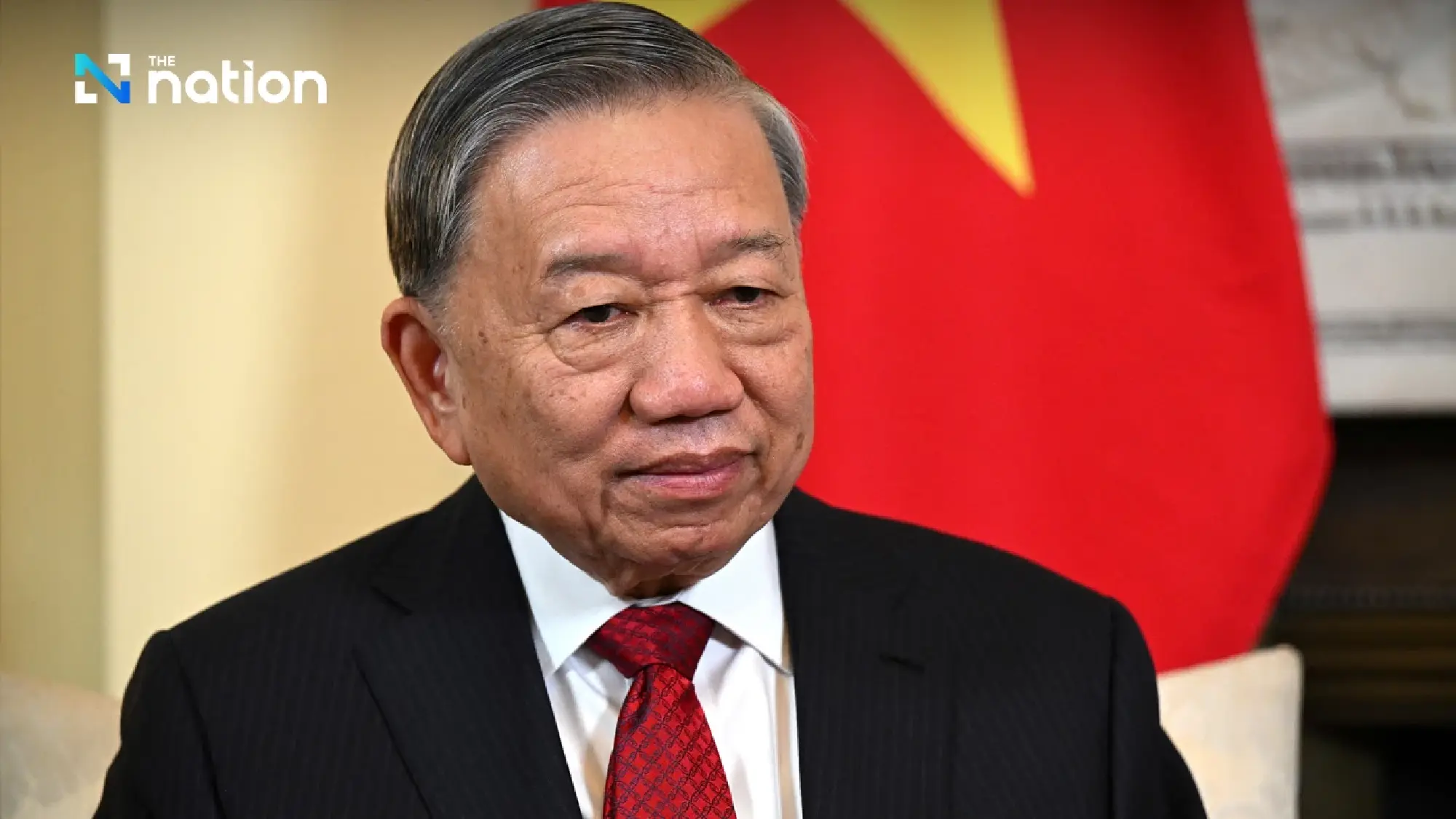
Bangkok has become the stage for a new chapter in Thailand–Vietnam relations, as Prime Minister Anutin Charnvirakul hosts Tô Lâm, General Secretary of the Communist Party of Vietnam and President of the Socialist Republic of Vietnam, during an official visit aimed at turning long-standing competition into a strategic economic partnership.
The visit, taking place from May 27 to 29, carries both diplomatic and symbolic weight. It is Tô Lâm’s first official trip to Thailand since assuming the presidency and comes as the two countries mark 50 years of diplomatic relations, first established in 1976.
But beyond protocol and anniversary messaging, the visit signals something more commercially significant: Thailand and Vietnam are trying to recast themselves not as rivals chasing the same foreign investment, but as complementary partners in a changing global supply chain.

A visit that began with history, not business
Tô Lâm did not begin his trip in Bangkok. Instead, he and his spouse, Ngô Phương Ly, first stopped in Udon Thani province on May 27 to visit the Ho Chi Minh Memorial and meet the Thai-Vietnamese community before travelling on to the capital later in the day.
The choice of Udon Thani was deliberate. It placed people-to-people ties at the centre of the visit, underlining that the relationship between Thailand and Vietnam reaches beyond formal diplomacy and has deep roots in communities that have connected the two countries for generations.
The main diplomatic programme followed on May 28 at Government House, where Tô Lâm was welcomed with full honours, including the playing of national anthems and an inspection of the guard of honour.
The two leaders then held a one-on-one meeting in the Ivory Room before moving to full delegation talks at Phakdi Bodin Building. The discussions lasted nearly an hour and were followed by an exchange of memorandums of understanding (MOUs), a joint press statement at Santi Maitri Building and an official dinner.
Business forum puts supply chains at the centre
For the private sector, the most closely watched moment came later in the day, when Anutin and Tô Lâm will jointly open the Thailand–Viet Nam Business Forum 2026 at The Ritz-Carlton, Bangkok.
The forum is expected to draw around 400 to 500 participants from the public and private sectors, with business MOUs to be signed between the two countries. Tô Lâm will also hold one-on-one discussions with senior Thai business leaders.
Assoc Prof Lae Dilokvidhyarat, a political economist, Vietnam specialist and adviser to the Senate Committee on Foreign Affairs, told Thansettakij that the new Thailand–Vietnam strategy rests on three pillars: sustainable peace, sustainable growth and a sustainable future.
He noted that the word “sustainable” should not be treated as diplomatic language alone, saying the concept must be translated into practical outcomes as both countries respond to pressure from major-power rivalry and a more volatile global economic order.
“Thailand and Vietnam are both small countries that rely heavily on exports, but both are now in a difficult position because of the conflict between China and the United States,” Lae said.
“For the two countries to work together strategically is necessary. It reduces dependence on major powers and helps strengthen markets within Asean and Asia.”
He said one particularly important issue was the creation of a joint production base for exports, which would help prevent problems caused by goods being relabelled or routed through one country to bypass trade measures, potentially leading to trade deficits or retaliation from the United States.
He stressed that the two countries were in a similar position on this issue, making a new approach to joint investment an important path forward.

From zero-sum rivalry to strategic partnership
For much of the past decade, Thailand and Vietnam have often been seen as direct competitors for foreign direct investment, especially as multinational companies adopted China+1 strategies and sought to diversify production away from China.
Vietnam has attracted investors with lower labour costs, a long coastline connected to global shipping routes and a young workforce with an average age of around 30. Thailand, by contrast, has relied on stronger infrastructure, deeper supply chains and its position as a long-established Asean business hub.
The consequences have been visible. LG Electronics shifted television production out of Thailand, Samsung invested more than US$220 million in an R&D centre in Hanoi, while Suzuki announced the end of automobile production in Thailand.
These developments have fuelled concern in Thai industry that Vietnam is steadily gaining ground in the regional manufacturing race.
The latest summit, however, points to a different approach. Rather than continuing to compete in a zero-sum contest, the two countries are seeking to position themselves as a combined production and investment platform.
Under this approach, Thailand’s strengths in upstream industries, industrial materials, research, regional headquarters and advanced supply networks could be linked with Vietnam’s strengths in large-scale assembly, young labour and electronics manufacturing.
The Thailand–Viet Nam Business Forum 2026 also signalled that both countries are preparing to move ahead with a joint action plan for 2026–2031, to be signed on May 28.
A US$25 billion trade target
Thailand and Vietnam have set a target of raising bilateral trade to US$25 billion by 2027.
Trade between the two countries reached US$22.1 billion in 2025, up from US$8.9 billion in 2013, meaning bilateral trade has expanded almost 2.5 times in just over a decade.
In the first four months of 2026, two-way trade reached US$8.6 billion, a 23.9% increase from the same period a year earlier.
Thailand’s main exports to Vietnam include refined oil, plastic pellets, chemicals, vehicles and auto parts, and integrated circuits. These products reflect Thailand’s role in upstream and intermediate manufacturing.
Vietnam’s exports to Thailand are led by mobile phones, computers, electrical appliances, agricultural goods and seafood, highlighting Vietnam’s growing role as a global electronics production base.
This is less a picture of direct competition than supply-chain connection. Vietnam assembles, Thailand supplies materials and parts, and both countries export to global markets.
China+2 emerges as a new strategic play
One of the most striking elements in the action plan is the direct reference to a “China+2” strategy.
The practical meaning is clear: instead of asking multinational firms to choose between Thailand and Vietnam, the two countries want to present themselves as a connected investment package.
Thailand could serve as a regional operating base, research centre and upstream production hub, while Vietnam could provide high-volume assembly supported by lower labour costs and a younger workforce. Together, the two economies could cover more of the value chain than either could alone.
Under the plan, Thailand’s Board of Investment (BOI) and Vietnam’s Ministry of Finance will coordinate policies to attract foreign direct investment.
The strategy is in line with the behaviour of leading multinationals that are already using a “parallel market strategy” in Asean, choosing Thailand as a regional headquarters and Vietnam as a production base.
A recent example is CPF’s move to acquire 100% of CP Pokphand in Vietnam, strengthening its agro-industrial presence in a market with major long-term potential.
Semiconductors, EVs and digital economy in focus
The action plan places particular emphasis on three future industries: semiconductors, electric vehicles and the digital economy.
In semiconductors, the two countries have strengths that could complement each other. Thailand has built a back-end semiconductor ecosystem over several decades, while Vietnam has a growing pool of young engineers and strong links to Samsung’s production network in Hanoi and Haiphong.
The plan calls for closer links between production lines in both countries, as well as the exchange of highly skilled workers in IT, artificial intelligence and semiconductors through cooperation between universities and the private sector.
On the digital economy, Thailand’s National Innovation Agency and Vietnam’s National Innovation Centre are expected to develop cooperation mechanisms. Another practical area is the expansion of cross-border QR code payment systems, including smoother connectivity between PromptPay and VietQR.
R9 and R12 could reshape regional logistics
Transport connectivity is another major pillar of the new cooperation agenda.
The plan highlights the development of transport routes along the East-West Economic Corridor, especially Route 9 and Route 12, which connect Thailand, Laos and Vietnam.
If these routes are upgraded and used more effectively, logistics costs and delivery times between Thailand’s Northeast and Vietnam’s central and southern regions could fall significantly.
Better road links would also create new opportunities for cross-border tourism, alongside plans to increase commercial flights between major and secondary cities.
The plan also includes a summit involving nine provinces from Thailand, Laos and Vietnam, signalling an effort to bring local economies into the cooperation framework rather than leaving it as a central-government project alone.
Security cooperation moves up the agenda
The summit also underlined the urgency of tackling transnational crime, particularly online fraud and scam centres operating around border areas in the region.
These crimes have affected citizens of both countries and have become a growing regional security challenge.
The action plan calls for a rapid alert and response mechanism, information-sharing through hotlines, and closer cooperation through INTERPOL and ASEANAPOL. It also supports faster ratification of the Asean extradition treaty, which would give countries in the region a stronger legal tool to deal with cross-border criminal networks.
Thailand’s bureaucracy remains a hidden test
Despite the positive strategic picture, Lae pointed to differences in governance systems and administrative speed, saying Thai local cooperation projects, such as sister-city links between Udon Thani and Vietnamese provinces, can be slowed by bureaucracy because Thai provincial governors remain heavily tied to decisions from the central government through the Interior Ministry.
Vietnam, by contrast, is moving ahead with major administrative reforms, including reducing the number of provinces from more than 60 to just over 30, abolishing district-level administration to connect communes more directly with provinces, and cutting the size of the civil service by hundreds of thousands of positions each year.
These changes are making Vietnam more agile in trade and investment, while Thailand’s public-sector efficiency has fallen from 25th to 30th in the 2025 IMD ranking.
Lae said working more closely with Vietnam could be uncomfortable for Thailand, but also necessary. Closer engagement with a more dynamic country, he argued, could expose the weaknesses of Thailand’s own system and create pressure for reform.
“Upgrading strategic relations is about opening opportunities,” he said. “But how much of that opportunity we can seize is another matter. Success does not depend only on signing agreements. It also depends on Thailand’s own internal readiness.”
What Thai businesses need to watch
For Thai businesses, the new Thailand–Vietnam cooperation framework carries several implications.
The first is market opportunity. Vietnam has a population of more than 100 million and GDP growth estimated at around 6.2% to 7.5% a year, creating potential for Thai companies in retail, food, clean energy and digital services.
The second is supply-chain integration. Thai companies producing parts, materials or logistics services could become part of Vietnam’s production network linked to global brands. This would allow Thai businesses to add value through regional production chains rather than compete only in final consumer markets.
The third is risk. Thailand still faces unresolved structural weaknesses, including declining public-sector efficiency and a corruption perception score that has fallen to its lowest level in 19 years. Vietnam, meanwhile, continues to push anti-corruption reforms.
These issues could make investors considering Thailand as a regional headquarters hesitate if the business environment does not improve in a concrete way.
A partnership Thailand cannot afford to miss
The handshake between Anutin and Tô Lâm is more than a diplomatic gesture. It reflects a strategic choice by both governments to move beyond old patterns of rivalry and build a more connected economic future.
In a world where geopolitics is reshaping supply chains and trade tensions are forcing countries to seek trusted partners, Thailand and Vietnam are choosing to work together at a moment that could define the next phase of Asean manufacturing and investment.
For Thai businesses, the question is no longer whether Thailand and Vietnam should cooperate. The question is how quickly they can position themselves inside the new supply chain now taking shape — before others move in to fill the gap.
