
Thailand seeks to open four new fruit markets in China after high-level talks
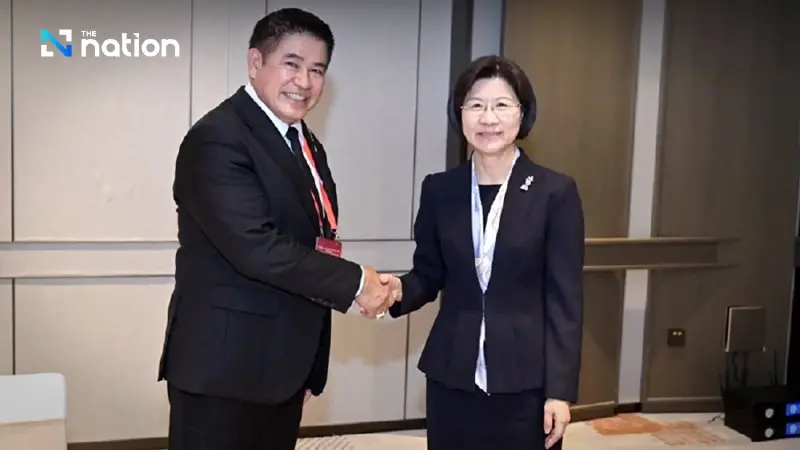


Deputy PM Thammanat announces progress with China’s customs authority to expand Thai fruit exports, address longan sulphur issues, and advance ePhyto and traceability systems.
Deputy Prime Minister and Minister of Agriculture and Cooperatives Thammanat Prompao on Friday revealed the outcomes of his meeting with senior officials of China’s General Administration of Customs (GACC) during the 9th China-ASEAN Ministerial Meeting on SPS Cooperation held in Chongqing, China.

Thammanat described the discussions as positive, with both sides recognising the importance of expanding the market for high-quality Thai fruit in China. Thailand proposed opening the Chinese market to four additional fresh fruits — dates, salak (snake fruit), maprang (plum mango) and mayong chid (Marian plum) — to push the value of Thai fruit exports to China beyond 160 billion baht per year.
A GACC inspection team already visited Thai date and salak orchards and packing facilities between August 5-9, 2025. Thailand expects China to allow fresh date and salak imports early next year.
Maprang and mayongchid remain under review and would be approved in the next phase.
If all four fruits are approved, Thailand estimates initial export volumes of 3,000 tonnes of dates and salak, worth 565 million baht per year, and 4,000 tonnes of maprang and mayong chid, worth 1 billion baht per year.

Thammanat said the Ministry is treating the issue of excess sulphur dioxide residues in longan exports very seriously. The Department of Agriculture held technical discussions with GACC on September 9, 2025 to explore solutions. Thailand is now conducting research, as there has never been a full analysis of sulphur dioxide levels across the entire longan fruit (flesh, seed, peel, stem) below 50 ppm.
Thailand proposed that China adopt a transition period, temporarily applying the 2004 protocol standard — testing only the fruit flesh for sulphur levels not exceeding 50 ppm — to prevent disruptions to trade. Thammanat reaffirmed that Thailand places the highest priority on product quality and Chinese consumer safety and is ready to conduct joint research with China to upgrade food safety standards.

GACC has also drafted a new durian protocol for Thailand to review. Both sides agreed to jointly revise the document to ensure it covers the entire supply chain — from production and export–import procedures to quality control — based on trade facilitation and each country’s legal framework.
The Department of Agriculture will now consult government agencies, exporters, and durian growers on the details.
Both sides reached agreement on accelerating the integration of the electronic phytosanitary certificate system (ePhyto) and traceability systems to improve agricultural export management, risk control, and confidence in certification.
The goal is to achieve full system linkage by 2026, in line with the National Fruit Safety Platform endorsed by Thailand’s Fruit Board.
Thammanat stressed that strengthening SPS cooperation with China will enhance Thailand’s agricultural competitiveness and open greater export opportunities for Thai farmers.

