
Thai trade surplus with US, deficit with China continues, 2026 export risks
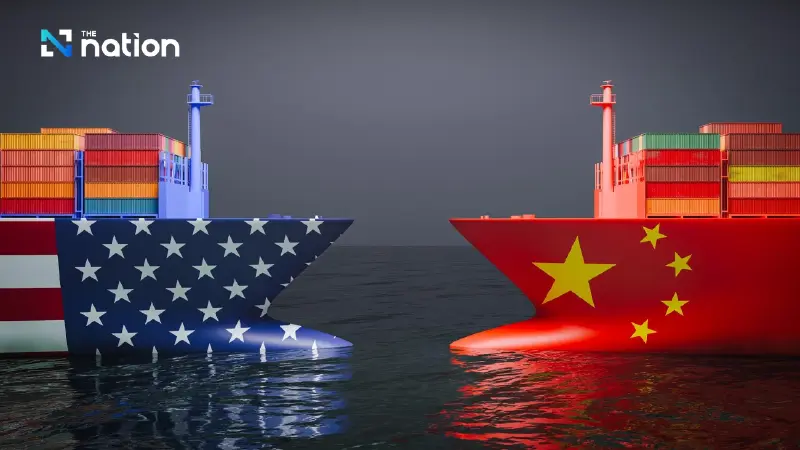


Thailand’s trade surplus with the US continues, but the trade deficit with China grows. 2026 export growth risks from tariffs and geopolitical tensions.
Over the past five years (2021-2025), Thailand has consistently enjoyed a trade surplus with the United States, while its trade deficit with China has increased every year.
The United States has remained a key export market for Thailand, driving growth in products like computers and electronics. Meanwhile, China has been a major source of imports, particularly for capital goods and raw materials. Despite this, Thailand’s trade balance with China continues to show a deficit.
For 2026, the outlook for Thai exports is more uncertain, as risks are emerging from both tariff measures from the United States and increasing geopolitical tensions that may impact global trade.
The Ministry of Commerce’s Trade Policy and Strategy Office (TPSO) forecasts a potential slowdown in exports, with growth expected to range from -3.1% to +1.1%. This projection is influenced by factors like tariffs, geopolitical issues, and the stronger Thai baht.
According to Nantapong Jiralertpong, Director of the Trade Policy and Strategy Office (TPSO), Thailand’s export market with the US remains a critical driving force, even though growth is expected to slow compared to previous years. Meanwhile, China remains a structural challenge, with Thailand needing to adjust its strategy, shifting from reliance on exporting raw goods to focusing on higher-value-added products that meet changing consumer demands.
Key Highlights from Thailand’s Trade Performance:
In 2025, Thailand’s total trade with the US reached $93.65 billion, with exports of $72.51 billion and imports of $21.15 billion, leading to a trade surplus of 51,361.4 million THB.
Exports to the US have continued to generate positive trade balances year on year, with a notable surge in electronics and telecommunications products.
In contrast, Thailand’s trade deficit with China has continued to grow year-on-year, as evidenced by 2025 figures, where Thailand’s exports to China were $39.72 billion, but imports were significantly higher at $107.62 billion, resulting in a trade deficit of 67,892.8 million THB.
Risks and Opportunities in 2026
Nantapong noted that 2026 poses both risks and opportunities for Thai exports. Key risks stem from the geopolitical tensions that could disrupt global supply chains and trade agreements, and the strength of the Thai baht that could hurt export competitiveness. However, if the global economy stabilizes and geopolitical issues ease, there may still be opportunities for growth, particularly in sectors like electronics, which continue to show growth potential.
The US continues to be a critical engine for Thailand’s exports, but with the ongoing US-China trade tensions, Thailand must shift its focus towards more advanced products. The electronics cycle remains strong, and the sector could drive Thailand’s export growth despite the challenges from tariffs and exchange rate fluctuations.
The Department of Trade Policy and Strategy also noted that Thailand must address the issue of relying heavily on basic exports by moving towards products with more value-added components. The shift in strategy will be key to ensuring sustainable growth in Thai exports in the coming years.
Forecast for 2026
The Ministry of Commerce predicts that exports in 2026 may grow between -3.1% and +1.1%, with a median of -1.1%, due to these various risks. This would bring the total export value to a range between $329.1 billion and $343.4 billion. The department emphasized that 2026 will be a crucial year for Thailand’s export strategies, with the country needing to adapt to ongoing geopolitical challenges, economic pressures, and the volatile currency environment.
