
FTI: Trump’s 10% global tariff shakes Thai exports—electronics and autos hit
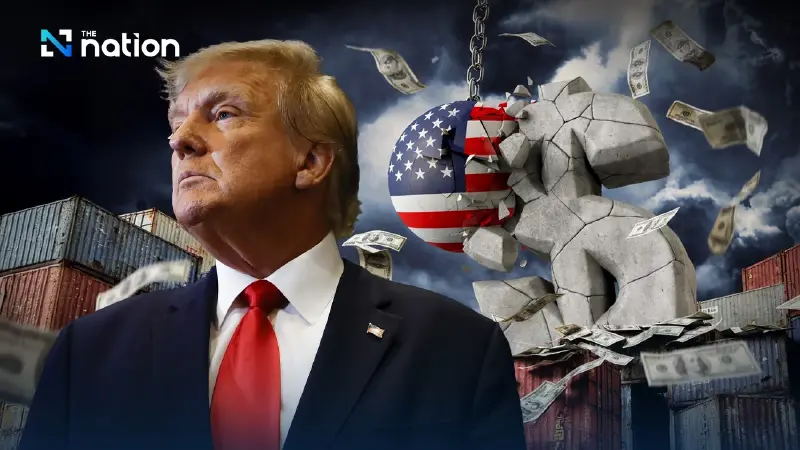


FTI warns US 10% global tariff will hit Thai electronics and auto parts, with tyres facing a 10% top-up on existing anti-dumping duties
- The Federation of Thai Industries (FTI) says that after the US Supreme Court curbed the authority for “reciprocal tariffs”, Donald Trump turned to Section 122 of the Trade Act of 1974 to impose a 10% customs tariff on global imports (“global tariff”) instead.
- Thai export products facing the full 10% impact include electronics such as hard disk drives (HDD), printed circuit boards (PCB) and integrated circuits (IC), where Thailand is a key manufacturing base.
- The automotive and parts group—especially tyres—will be heavily affected because the additional 10% would be layered on top of existing anti-dumping (AD) duties, sharply raising costs.
- Higher tariffs will immediately hit the competitiveness of Thailand’s main export industries, especially as the global economy slows.
- The 10% tariff under Section 122 is time-limited: it can be enforced for only 150 days, and any extension would require approval from Congress.
Kriengkrai Thiennukul, president of the Federation of Thai Industries (FTI), told Krungthep Turakij that after the US Supreme Court issued a 6–3 majority ruling on Donald Trump’s authority to impose “reciprocal tariffs”, the judgment was not beyond expectations for Thai private-sector players because the court had postponed issuing the decision several times—reflecting efforts to find an appropriate outcome under the checks-and-balances mechanism of the US democratic system.

Court blocks reciprocal tariffs, but Trump does not back down
Kriengkrai said the ruling clearly stated that reciprocal tariffs of that type were not a direct presidential power and had to end immediately. However, Trump has maintained his stance of protecting US interests under “America First”, and Kriengkrai said the private sector must closely monitor what other measures Trump might introduce.
After the ruling, Trump turned to other legal tools. Most recently, he announced Section 122 under the Trade Act of 1974 to impose a 10% global tariff on worldwide imports, on top of existing baseline rates.
Kriengkrai noted Section 122 has time constraints: it can be applied for only 150 days, or around five months (until around July 2026). If the US wants to extend it, it must obtain approval from Congress, which serves as a check on executive power.
He added that even if the ruling makes the overall trade-war picture look temporarily calmer, and some tariff rates are adjusted to a uniform 10% for all countries, the structural risk has not disappeared because Trump still has other legal tools that can be deployed at any time.
Two groups of Thai exports face different fates
Kriengkrai divided the impact on Thai exports into two main groups:
1) Group hit by the full 10%
He said products subject to the full 10% tariff under Section 122 include:
- Electronics such as HDD, PCB and IC, where Thailand is a major global production base
- Automobiles and parts, especially tyres, which would face an additional 10% layered on top of existing anti-dumping (AD) duties, causing a double-layer cost increase
- Electrical appliances such as air conditioners and refrigerators, with the US as a key market
- Gems and jewellery, where Thailand is a major exporter to the US
He said these are high-export-share industries, and higher tariffs would immediately hurt competitiveness—especially amid a slowing global economy and volatile orders.
2) Exempted group
By contrast, he said agricultural and fisheries products such as rice, durian, mangosteen and many tropical fruits were exempted, arguing that if the US imposed tariffs in these categories, domestic food prices would rise and worsen inflation—an issue the US government tries to avoid for political and economic reasons.
He said the exemptions reflect US domestic policy constraints and give Thailand some breathing space in agriculture.
Watch Section 301 and currency risks
Kriengkrai said that although Section 122 lasts only 150 days, Thai businesses should closely watch the possibility of the US using Section 301, which allows Washington to investigate and take action against countries seen as engaging in unfair trade practices. Potential issues that could be raised include intellectual property violations, industrial subsidies and currency distortion.
He said Thailand remains among countries watched over baht movements, which could become a pretext for additional trade measures in the future.
Another unresolved issue is how and when the US would refund previously collected tariffs worth more than hundreds of billions of dollars if the earlier measures are deemed unlawful—an uncertainty that could create shocks to US fiscal conditions and capital markets.
150 days for talks: gas and aircraft as pressure relief
Kriengkrai said that during the 150-day period in which Section 122 is in effect, Thailand still has an opportunity to pursue bilateral talks with the US to seek exemptions or relief for certain items. Thailand could propose increased imports from the US—such as natural gas or aircraft—which have been discussed before. He said success would depend on US domestic political balance and the stance of the White House economic team.
He also noted the role of US Treasury Secretary Scott Bessent, described as a hawkish right-hand figure, who has said the administration will look for other measures to prevent tariff revenue from falling—reflecting that the US still relies on trade-measure revenue in a meaningful way.
Kriengkrai said that while the short-term situation looks somewhat eased after the court ruling and some tariff rates have reset to 10% across countries—“temporary good news”—Thai industry still cannot relax given Trump’s combative style and tendency to introduce aggressive and unexpected “creative measures”.
He added that US domestic political factors, such as this year’s midterm elections, could directly affect power stability and the direction of US trade policy.
He concluded that while the trade war may appear to ease, it is not over. Thailand must assess developments day by day and prepare for all scenarios. Thai industry needs greater flexibility, market diversification and proactive risk management amid what he described as the most volatile trade geopolitics in years.
