
Thailand to Pivot Towards Japan in Major 2026 Cassava Export Drive
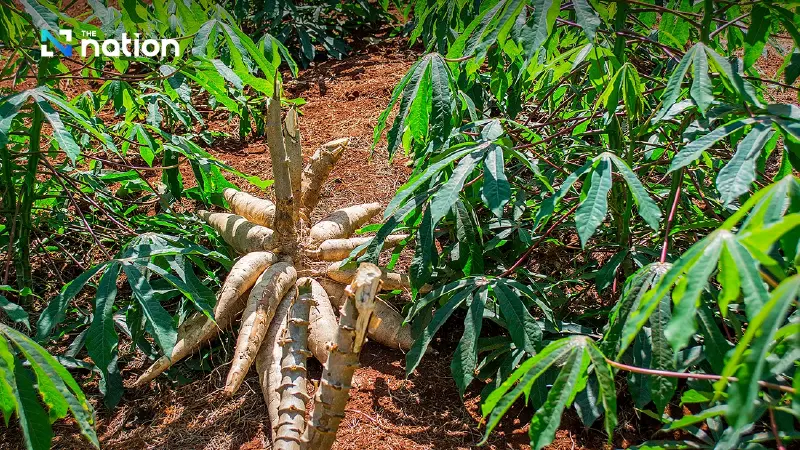


The Department of Foreign Trade targets Japan’s high-value livestock and consumer sectors to diversify exports and boost income for Thai cassava farmers
- Thailand is launching a major cassava export drive for 2026, strategically targeting the Japanese market to expand its presence.
- The initiative marks a pivot from exporting raw commodities to focusing on high-value, processed products like modified starches, premium tapioca, and cassava pellets.
- The primary targets within Japan are the livestock sector for animal feed and consumer goods manufacturers seeking non-GMO and gluten-free ingredients.
- A high-level Thai delegation is visiting Tokyo to secure long-term trade agreements, aiming to boost income for farmers and stabilize domestic prices.
The Department of Foreign Trade targets Japan’s high-value livestock and consumer sectors to diversify exports and boost income for Thai cassava farmers.
Thailand’s Department of Foreign Trade (DFT) has announced an aggressive expansion strategy for 2026, aimed at positioning Thai cassava as a premium staple within the Japanese industrial landscape.
A high-level delegation comprising 37 government officials, agricultural scientists, and private sector leaders is scheduled to arrive in Tokyo on 25 February.
The mission seeks to secure long-term trade agreements within Japan’s burgeoning livestock and consumer goods sectors, marking a strategic shift towards high-value, processed agricultural exports.

Arada Fuangtong, director-general of the Department of Foreign Trade, noted that the 2026 roadmap focuses on "value-added" innovation. Rather than relying on raw commodities, the DFT is championing modified starches, premium-grade tapioca, and cassava pellets.
"Thai cassava has long been recognised for its rigorous quality standards and sophisticated production technology," Arada stated. "Our premium starches are particularly well-suited to the Japanese market, where there is a significant appetite for non-GMO and gluten-free carbohydrate sources."

The mission follows successful preliminary talks in late 2025, which saw Japanese innovators express keen interest in Thai-manufactured tapioca pearls and thermoplastic starch.
By moving into these specialised niches, Thailand aims to reduce its reliance on any single export market and protect domestic farmers from global price volatility.
Beyond simple transactions, the Thai government is pursuing a "Strategic Partnership" model. The delegation will meet with key Japanese importers to integrate Thai cassava into animal feed formulas and various consumer manufacturing processes.

Currently, Japan is Thailand's second-largest export market for cassava. In 2025, Thailand exported 394,742 tonnes to the archipelago, valued at approximately $261.64 million.
While processed starch currently dominates the trade at 84.4%, the DFT believes there is significant room for growth in the livestock-bound pellet sector.
By strengthening these bilateral ties, the DFT expects to stabilise domestic prices for Thai growers and reinforce the entire supply chain through 2026 and beyond.
