
Thailand, South Africa to fast-track ministerial trade talks
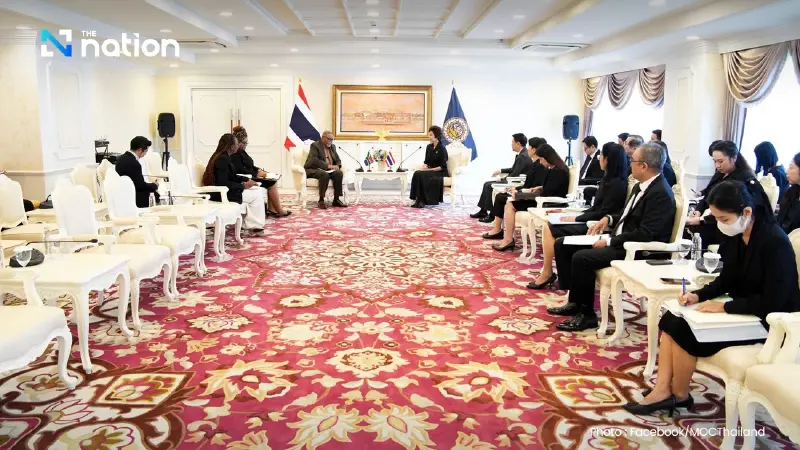


Thailand and South Africa have agreed to bring forward their next Joint Trade Committee meeting to this year and upgrade it to ministerial level to deepen economic ties, expand bilateral trade and tackle logistical and financial barriers.
Thailand and South Africa have agreed to accelerate their next Joint Trade Committee (JTC) meeting and upgrade it to ministerial level this year, in a move aimed at strengthening economic cooperation, expanding bilateral trade and reducing obstacles to commerce between the two countries.
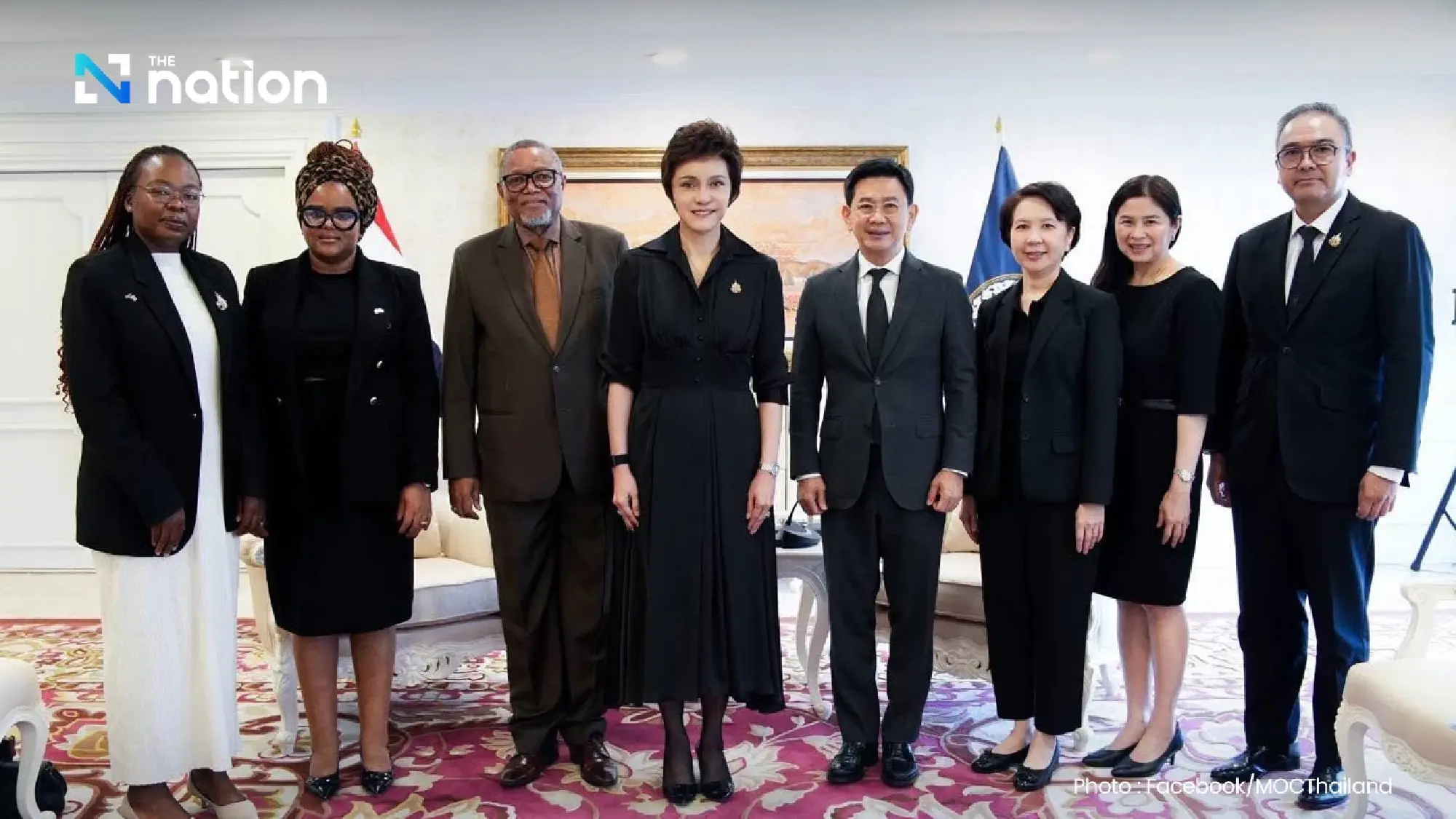
The agreement was reached during a meeting between Commerce Minister Suphajee Suthumpun and Darkey Ephraim Africa, South Africa’s ambassador to Thailand.
Suphajee said the two countries had maintained long-standing and positive relations, with this year marking the 34th anniversary of diplomatic ties. She said the milestone offered a timely opportunity for both sides to deepen economic relations and promote cooperation through a strategic partnership that could add value to supply chains and build on each country’s strengths.
She said one of the main challenges facing bilateral trade was the long distance between the two countries, which continued to create logistical and financial transaction barriers. A stronger strategic partnership, she said, could help ease those constraints and benefit the trade and economic interests of both sides.


JTC to be brought forward
Suphajee said Thailand and South Africa had continued to use the JTC mechanism to discuss trade and investment issues on a regular basis, usually every two years.
At the latest meeting, both sides agreed to bring forward the next JTC session from its previous timeframe so that it can be held this year, while also raising it to ministerial level.
She added that the Ministry of Commerce was ready to fully support activities aimed at strengthening trade and investment ties between Thailand and Africa under the Thailand-Africa Initiative (TAI).


Focus on high-potential exports
Thailand and South Africa are also seeking to expand bilateral exports of high-potential products in order to create a more balanced trade relationship.
Thailand has expressed readiness to support exports of key products such as rice, processed food and agricultural goods, and automobiles.
Suphajee said Thai rice, with more than 5,000 varieties, stood out for both its quality and diversity and could be paired with a wide range of dishes.
South Africa, meanwhile, is seeking to increase exports of apples, pears and wine to Thailand.
Thailand views South Africa as a potential distribution hub for goods entering other African markets, just as Thailand could serve as a gateway for African products into Asean.

Trade fairs and investment push
To help strengthen business networks and create more trade opportunities, Suphajee invited South African entrepreneurs to take part in major trade fairs in Thailand, including Bangkok Gems & Jewelry, THAIFEX-Anuga Asia, and TILOG-LogistiX 2026.
She said the Ministry of Commerce would also send a trade delegation later this year to hold business talks aimed at further promoting economic relations between the two countries.
Both sides also agreed to make greater use of the cooperation mechanism between Thailand’s Board of Investment (BOI) and South Africa’s Invest SA to encourage more joint investment promotion activities.
South Africa remains Thailand’s top African trade partner
In 2025, South Africa was Thailand’s 28th-largest trading partner globally and its largest trading partner in Africa.
Bilateral trade totalled US$4.01 billion, with Thailand exporting US$3.23 billion worth of goods to South Africa and importing US$782.59 million.
Thailand’s main exports included automobiles, equipment and parts, internal combustion piston engines and parts, rice, machinery and parts, and rubber products.
Its main imports from South Africa included jewellery, gems, silver bullion and gold, other metal ores, scrap metal and metal products, chemicals, machinery and parts, and automotive parts and accessories.
