
Thailand hits back at US trade allegations over forced labour and excess capacity
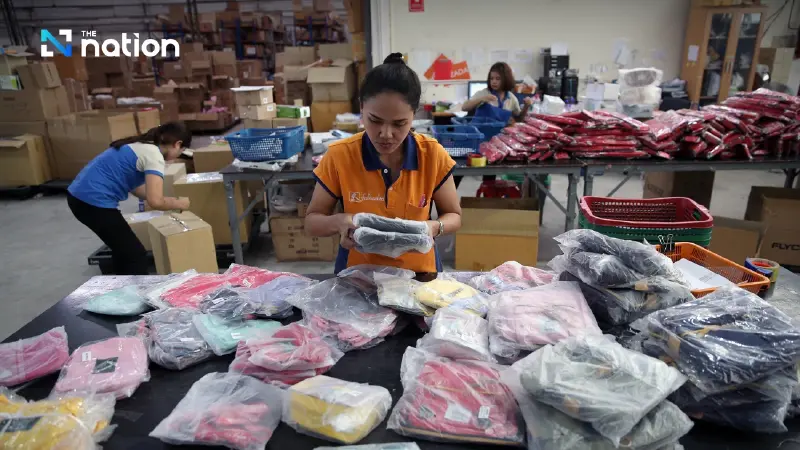


Bangkok tells USTR that Thai supply chains are entirely clean and refutes Washington’s claims that industrial overproduction is skewing bilateral trade
- A Thai delegation asserted to the U.S. Trade Representative (USTR) that its supply chains are entirely free of forced labour, citing rigorous laws and regular audits by US companies.
- Thailand refuted claims of industrial overproduction, arguing that its free-market economy allows private-sector decisions, not state quotas, to dictate manufacturing levels.
- The defense was part of technical talks addressing a US investigation under Section 301 of the Trade Act, with Thailand denying excess capacity in sectors like automotive parts, rubber, and electronics.
- Officials also highlighted strict enforcement measures to prevent the illegal transhipment of goods from other countries through Thailand to bypass US tariffs.
Bangkok tells USTR that Thai supply chains are entirely clean and refutes Washington’s claims that industrial overproduction is skewing bilateral trade.
A high-level Thai delegation has robustly defended the kingdom's trade practices during technical consultations with the Office of the United States Trade Representative (USTR), clarifying that Thai supply chains are completely free of forced labour.
Officials also rejected American allegations regarding industrial excess capacity, counter-arguing that Thailand operates a strictly free-market economy and remains an indispensable, long-standing commercial ally to the United States.
The technical-level talks, which took place on 13–14 May 2026, were convened to address Washington's concerns under Section 301 of the US Trade Act of 1974. The US is currently investigating potential forced labour import bans and alleged overproduction across several Thai sectors.
Arada Fuangtong, director-general of the Department of Foreign Trade, joined the sessions alongside Assistant Minister to the Ministry of Commerce Dr Kirida Bhaopichitr, who led the cross-agency "Team Thailand" delegation.
Representatives from the Ministry of Labour, the Ministry of Foreign Affairs, the Customs Department, and the Board of Investment (BOI) also provided evidence to the USTR.

Labour supply chains 'fully compliant'
Addressing the forced labour allegations, the Thai delegation assured the USTR that Thailand’s export infrastructure enforces rigorous labour laws. Officials noted that Thai exports are routinely audited and certified by American corporate buyers and international non-governmental organisations to guarantee alignment with global human rights standards.
To further solidify this commitment, Thailand is drafting a Human Rights Due Diligence (HRDD) act. The upcoming legislation aims to modernise and tighten supply chain monitoring, ensuring long-term transparency and cementing trust with international trading partners. Both nations agreed to maintain open communication channels to eliminate exploitative labour practices globally.

Overcapacity claims rejected
The delegation also tackled US anxieties regarding excess production capacity, which Washington feared was driving an export surge and widening the US trade deficit with Thailand.
The Thai side clarified that manufacturing and capital investment trajectories are dictated entirely by private-sector decisions based on genuine market opportunities. The Thai state does not set arbitrary production quotas, choosing instead to focus on guaranteeing fair and transparent competition.
Thailand categorically denied running excess capacity in the specific industries flagged by the US, which include:
- Vehicles and automotive components
- Rubber products
- Industrial machinery and electronic goods
Cracking down on transhipment
In response to concerns over product transhipment—where goods from third countries might be routed through Thailand to bypass US tariffs—the Department of Foreign Trade outlined its strict enforcement measures.
Working in tandem with US Customs authorities, Thailand has enhanced its verification protocols for certificates of origin. The measure ensures that all US-bound exports undergo substantial, verifiable transformation within Thailand, strictly meeting US regulatory criteria.
Characterising the bilateral talks as constructive and friendly, Mrs Arada emphasised that Thailand’s exports are a vital component of the US manufacturing matrix and remain in high demand by American consumers.
Reaffirming that Thai commerce poses no threat to US economic security, she stated that Bangkok remains fully committed to a transparent, equitable, and sustainable trading relationship.
