
Anutin heads to Russia seeking energy deals and bigger orders for Thai goods
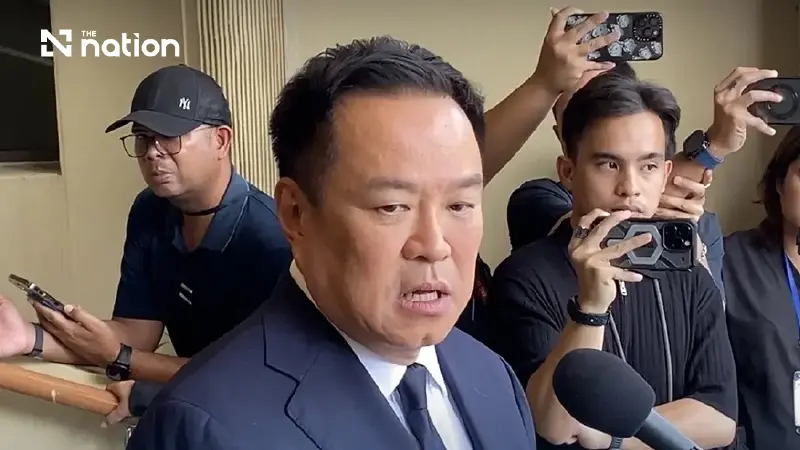


Prime Minister Anutin Charnvirakul will seek stronger trade, energy and investment ties with Russia during talks in Kazan, as Thailand tries to revive sanctions-hit bilateral trade and push more Thai exports into Russian and Eurasian markets.
Anutin to push trade, energy and investment in Russia talks
Prime Minister Anutin Charnvirakul will seek stronger trade, energy and investment ties with Russia during a visit to Kazan this week, with bilateral talks scheduled with President Vladimir Putin as Thailand pushes for more Russian orders of Thai products while exploring new energy sources.
Anutin, who also serves as interior minister, said at Government House that Thailand had several areas to discuss with Russia, including agriculture, industry, investment, tourism and energy. He is scheduled to visit Russia from June 16-19, 2026, while the ASEAN-Russia summit will officially take place in Kazan on June 17-18 to mark 35 years of ASEAN-Russia relations.
“We buy many products from them, and we want them to increase orders from Thailand. This is a good opportunity,” Anutin said, adding that his bilateral meeting with Putin is scheduled for the evening of June 18.
Energy on the agenda as Thailand diversifies supply
Asked whether oil would be discussed, Anutin said all issues would be covered because Russia is one of the world’s major energy-producing countries.
He said Thailand was seeking energy resources from various sources, while also looking to promote Thai products such as agricultural goods, food, electronic equipment and industrial products.
“These days, everything has to work both ways,” Anutin said when asked whether the trip was aimed at selling Thai goods or buying Russian products.
The government has framed the visit as part of Thailand’s wider economic diplomacy, with the aim of opening new markets, increasing exports, attracting investment and strengthening long-term competitiveness.
Sanctions-hit trade raises stakes for Kazan visit
The trip comes as Thai-Russian trade remains far below its pre-war level, with sanctions, payment restrictions and compliance risks continuing to weigh on business activity.
Bilateral trade stood at 87.31 billion baht in 2021, before Russia’s war in Ukraine, but fell to 64.56 billion baht in 2022, a drop of 26.06%. Although trade partly recovered to 57.82 billion baht in 2025, it was still more than 29 billion baht below the 2021 level.
The recovery weakened again in the first four months of 2026, when total trade dropped 24.61% year on year to 17.21 billion baht. Thai exports to Russia plunged 40.07% to 7.85 billion baht, while Thailand returned to a trade deficit of 1.51 billion baht.
Payment risks remain key obstacle
Business leaders say sanctions on Russia’s financial system remain the biggest barrier to reviving trade. Kriengkrai Thiennukul, honorary chairman of the Federation of Thai Industries and former chairman of the Thai-Russian Business Council, said payment problems had become the central obstacle after major Russian banks were cut off from the SWIFT financial messaging system.
As a result, many businesses have had to rely on traders or third countries to process transactions, increasing both costs and complexity. Many firms also remain cautious because of the risk of being blacklisted or breaching sanctions compliance rules.
Thailand eyes oil, fertiliser and Eurasian markets
Despite the risks, energy and fertiliser are seen as practical areas where Thailand could deepen economic cooperation with Russia. Kriengkrai said Russian oil could present an opportunity for Thailand if sanction-related risks can be managed, while fertiliser imports could help reduce costs for Thai farmers.
Thailand has expressed interest in importing 1-2 million tonnes of granular urea fertiliser annually from Russia, with both sides discussing a joint working group to address trade issues and streamline import-export procedures.
Russia could also serve as a gateway for Thai products into the Eurasian Economic Union, a market of almost 200 million people. Thailand’s main exports to Russia include auto parts, plastics, processed food and clothing, while key imports from Russia include oil, fertiliser, chemicals, steel, minerals and coal.
Tourism and investment also in focus
Anutin said investment would also be discussed, noting that the chairman of the Russian Chamber of Commerce had previously met him. Tourism will also be on the agenda, reflecting Thailand’s interest in sustaining Russian visitor flows while building broader business links.
The Russia-ASEAN Business Forum will be held alongside the summit on June 17, bringing together business leaders to explore trade, investment, joint ventures and youth initiatives.
For Thailand, the Kazan visit is not only a diplomatic engagement but also a test of whether Bangkok can turn Russia’s demand for new trade partners into concrete gains for Thai exporters, while managing the financial and geopolitical risks that have constrained trade since the war in Ukraine began.
