
Thai Commerce Minister Flies to US to Tackle Tariff Disputes
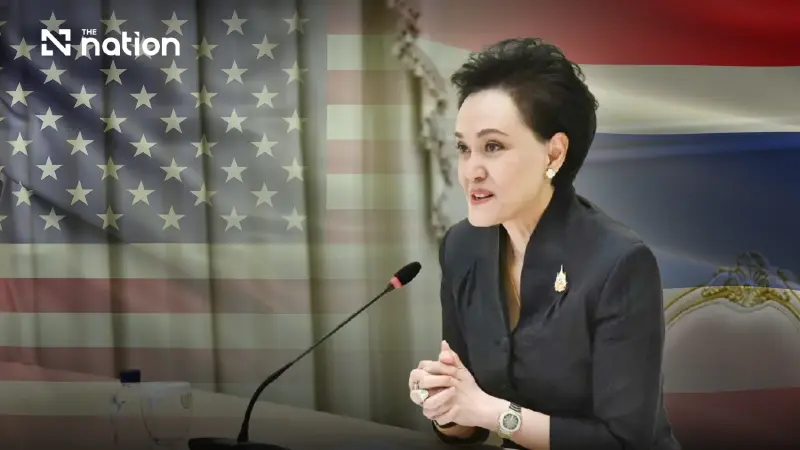


Commerce Minister Suphajee Suthumpun heads to Washington to contest Sections 301 and 122 investigations while defending Thailand's trade sovereignty
- Thailand's Commerce Minister is visiting the US to negotiate over trade investigations under Sections 301 and 122 and to seek a reduction in import tariffs on Thai goods.
- The delegation will counter US allegations that Thailand is a transit hub for circumventing Chinese tariffs by presenting data showing high local content in its manufactured goods.
- To resolve a probe linked to forced labor concerns, the minister will provide Washington with evidence of clean supply chains and expedited legislation.
- Thailand has established non-negotiable "red lines," stating it will reject any US demands to lower its agricultural safety standards or to restrict its trade with other nations like China.
Commerce Minister Suphajee Suthumpun heads to Washington to contest Sections 301 and 122 investigations while defending Thailand's trade sovereignty.
Deputy Prime Minister and Commerce Minister Suphajee Suthumpun will lead a high-level delegation to the United States next week to negotiate critical trade disputes that threaten Thailand’s multi-billion-dollar export sector.
The strategic mission, scheduled for 15–17 July, aims to address ongoing US investigations under Sections 301 and 122 of the US Trade Act of 1974.
A key priority for the Thai delegation is to negotiate a reciprocal trade agreement to lower import tariffs on Thai goods from 12.5% back to 10%, bringing the country in line with regional competitors such as Malaysia.
Suphajee acknowledged that the upcoming talks are highly sensitive, noting that Thailand currently holds the seventh-largest trade surplus with the US, valued at approximately $50 billion USD.
A central focus of the trip will be resolving the Section 122 probe, which is set to expire on 24 July. Thailand currently faces tariff disadvantages due to US concerns over international legal frameworks regarding forced labour.
The Commerce Minister intends to reassure Washington that Thailand is expediting relevant legislation and maintains clear, verifiable proof that its supply chains are entirely free of forced labour.
Disproving Chinese Circumvention
The delegation has also prepared robust data to counter US allegations under Section 301 that Thailand is being used as a transit hub to circumvent tariffs on Chinese goods.
Suphajee stated that official figures confirm three of Thailand’s core manufacturing sectors—machinery, automotive, and rubber products—boast local content ratios between 70% and 90%, well above the 60% minimum threshold.
Furthermore, the minister will point out that more than 30% of Thailand's trade surplus is actually generated by American multinationals operating factories in Thailand and shipping products back to the US.
Uncompromising 'Red Lines'
Despite the pressure to secure a deal, Bangkok has established strict, non-negotiable "red lines". Thailand will flatly reject US demands to lower its agricultural safety standards regarding lean-meat enhancing agents (beta-agonists) in imported meat.
Crucially, Suphajee reaffirmed Thailand’s commitment to strategic autonomy, stating that the government will not accept any US conditions aimed at restricting Thailand's trade with third nations, such as China.
To mitigate inflation concerns for US households, Thailand will present an "exempt list" featuring six key product categories, including jasmine rice. The delegation will argue that penalising these imports would directly drive up the cost of living for American consumers, as the items cannot easily be replicated or substituted by US domestic producers.
