
Market sentiment brightens as Anutin elected Thailand’s 32nd PM
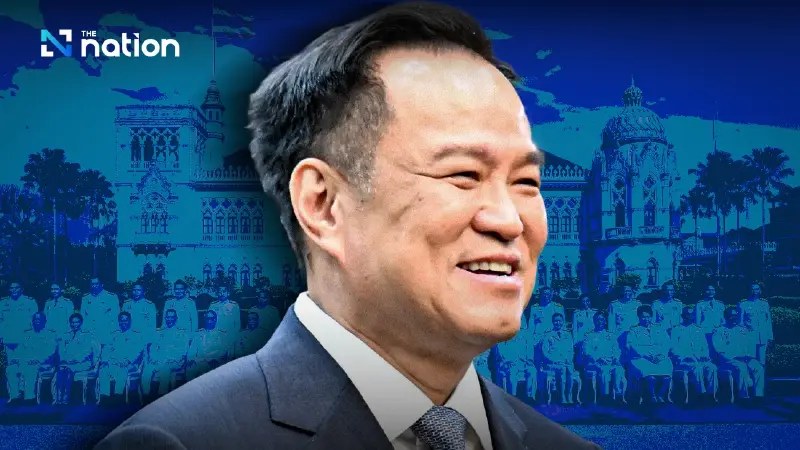


Brokers upbeat as Anutin becomes new PM, lifting Thai stocks. Kasikorn eyes Fed rate cuts and fund inflows, while Asia Plus and IAA watch cabinet picks.
Parliament on 5 September voted to endorse Anutin Charnvirakul, leader of the Bhumjaithai Party, as Thailand’s 32nd prime minister. The Stock Exchange of Thailand responded positively, gaining 11 points, with shares linked to Bhumjaithai’s policy agenda driving the rally.
The market rose about 2% this week, reflecting expectations of new stimulus measures from the incoming government. Analysts noted that sentiment for the Thai bourse has now shifted to a “positive” outlook.
Sorrabhol Virameteekul, Senior Director of Securities Analysis at Kasikorn Securities, said that historically, over the past two decades, the Thai stock index has typically risen about 0.5% in the month following the formal appointment of a new prime minister, with foreign investors buying a net average of 6–10 billion baht.
“This time, however, the new PM’s endorsement comes alongside the passage of the Budget Bill, enabling immediate disbursement, while political stability appears firmer. This suggests the Thai index could climb more significantly,” he explained.
Fed clarity may boost fund inflows
Analysts are also watching the US Federal Reserve (Fed) meeting on September 16–17, for guidance on interest rates next year. Should the Fed signal two or three rate cuts, more than the single cut currently expected by markets, foreign fund inflows could return gradually from September, supporting the Thai index in a range of 1,275–1,330 points this month.
Cabinet line-up and border issue in focus
The next factor to watch is the new cabinet line-up, especially economic ministries such as Finance, Energy and Commerce, which will set the direction of Thailand’s economic policy. Investors are waiting to see whether the government will continue Pheu Thai’s programmes or introduce new measures.
Another urgent priority, Sorrabhol noted, is resolving the Thai-Cambodian border conflict. If negotiations ease tensions and border checkpoints reopen, it would help strengthen stability, encourage foreign investment, and boost cross-border trade.
Investment strategy
Kasikorn Securities recommends rotating into stocks linked to domestic growth, including:
Finance: MTC, SAWAD, TIDLOR
Power producers (resilient to politics, with ongoing investment): BGRIM, GULF
Retail (with upside if Thai-Cambodian tensions ease): CBG, DHOME, OSP, SAPPE
“Since the People’s Party pledged support for Anutin, the market has already priced in domestic political stability. With the Budget Bill ready for disbursement and potential Fed rate cuts, Thai equities could test resistance at 1,300 points. Still, investors must monitor the cabinet line-up in the coming two weeks and progress on the Thai-Cambodian border talks,” Sorrabhol concluded.
Asia Plus sees Thai stocks gaining on clearer politics, fiscal stimulus hopes
Therdsak Thaveeteeratham, Executive Director at Asia Plus Securities, said that greater political clarity has reduced volatility and improved sentiment in the Thai stock market. With a new prime minister in place and a clear framework for House’s dissolution, he expects stronger momentum for the economy through accelerated budget disbursement and renewed investor confidence.
He added that fund flows are likely to shift from the domestic bond market back into equities, helping the Stock Exchange of Thailand break through the 1,300-point level.
Key factors to watch
Looking ahead, Therdsak highlighted several factors:
- Government policy: The direction of fiscal measures will be crucial, with the greatest impact expected from increased budget spending to stimulate the economy.
- Caretaker period: The four-month window before the expected House dissolution in January is still sufficient to drive growth this year, he noted.
- Cabinet line-up: The composition of the new cabinet remains uncertain, as it will come from a different political camp than the previous government. However, there is room for professional technocrats to be appointed to key posts, which could further reassure investors.
Tisco chief sees stable politics boosting economy, urges top-tier finance minister
Paiboon Nalinthrangkurn, CEO of Tisco Securities and Chairman of the Investment Analysts Association (IAA), said the appointment of the new prime minister was in line with earlier expectations. He noted that if the new government’s term lasts only four months as agreed before the House’s dissolution, time will be limited to address pressing economic issues.
He emphasised that the key focus will be on the new economic team, particularly the finance minister.
“Whoever takes the role, we hope it will be an A-grade calibre figure who can get to work immediately, both continuing current policies and improving them where needed,” Paiboon said.
He added that with political stability restored, he believes both the Thai economy and stock market will respond more positively for the rest of this year.
Bualuang strategist: pro-growth policies lift domestic plays, but market upside limited
Piriyapon Kongvanich, Investment Strategy Analyst for Wealth Management at Bualuang Securities, said investor sentiment has improved following Anutin’s confirmation as Thailand’s new prime minister, with stocks tied to the Bhumjaithai Party’s stimulus agenda showing gains.
He noted that policy themes such as emergency loan schemes and debt moratoriums are boosting “domestic play” sectors linked to household consumption and the grassroots economy. Beneficiaries include:
- Retail: CPALL, GLOBAL
- Hire-purchase/consumer finance: MTC, SAWAD
- Property: SPALI
- Tourism stimulus: hotel operators like CENTEL
- Transport and construction projects: contractor groups
Meanwhile, the electronics and petrochemical sectors saw profit-taking after earlier rallies, with global slowdown concerns resurfacing as US jobs data weakened.
Fund flows
Foreign investors continued to sell this week, with net sales of around 300 million baht, following 20 billion baht in net sales last month. In contrast, domestic institutions and retail investors provided buying support. NVDR data showed heavy inflows into CPALL and BH, while significant selling was seen in TOP and PTTEP.
Outlook
Piriyapon expects the Thai stock market to remain sideways next week, capped near 1,280 points. Short-term sentiment may still benefit from political clarity, though the incoming cabinet line-up will ultimately set the next direction.
He cautioned that with a minority government, stimulus measures may face limitations, keeping the market’s upside constrained. As a result, he expects trading to become more selective, focusing on stocks with visible earnings improvement.
