
Gold's Relentless Rise and the 2026 Paradox
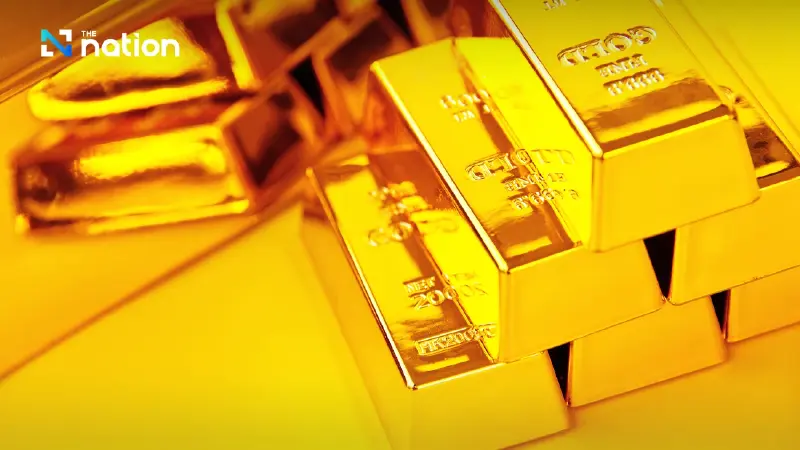


Record 70%+ gains in 2025 leave precious metal at crossroads after volatile year-end as structural demand battles price-sensitive consumers
- Gold experienced a historic "relentless rise" in 2025, gaining over 70% to reach an all-time high above $4,550 per ounce, its best annual performance since 1979, before a sharp year-end correction.
- The "2026 paradox" refers to the conflict between strong structural demand from central banks and investors versus weakening physical consumer demand, as record-high prices stifle jewelry purchases in key markets.
- Despite this paradox, institutional outlook for 2026 remains bullish, with major banks forecasting prices could surpass $5,000 per ounce, supported by expected Federal Reserve rate cuts and continued central bank buying.
Record 70%+ gains in 2025 leave precious metal at crossroads after volatile year-end as structural demand battles price-sensitive consumers.
The gold market closes 2025 having delivered its most spectacular annual performance in over four decades, with gains exceeding 70% that have fundamentally altered how global investors view the precious metal.
What began as a steady climb fueled by geopolitical tensions evolved into a historic rally that saw spot prices breach $4,550 per ounce in late December before experiencing sharp volatility in the year's final trading days.
As markets head into 2026, gold trades around $4,360-$4,370 per ounce following a dramatic 4%+ correction on December 29 that marked the metal's largest single-day drop since October.
The Anatomy of an Extraordinary Year
This year's rally represents gold's strongest annual performance since 1979, when the metal surged over 120% amid the Iranian Revolution and soaring inflation.
The 2025 gain of approximately 70-72% makes gold one of the year's best-performing major assets across all categories.
Yet unlike previous bull runs driven predominantly by dollar weakness or monetary panic, 2025 has been characterized by what the World Gold Council describes as "unusually balanced" contributions across all four key drivers of gold performance.
According to the World Gold Council's Gold Return Attribution Model (GRAM), geopolitical tensions and US dollar weakness alone accounted for roughly 16 percentage points of gold's return.
The balance came from a broad coalition of buyers: investment momentum contributed nine percentage points, whilst economic expansion—paradoxically—added 10 points, suggesting that gold has transcended its traditional inverse relationship with risk assets.
Central banks have effectively doubled their annual net purchases from approximately 500 to over 1,000 metric tonnes per year since the Russia-Ukraine war, whilst North American gold-backed ETFs recorded substantial inflows throughout the year, with global ETF inflows exceeding $45 billion.

A Week of Dramatic Volatility
The final week of 2025 encapsulated both the extraordinary strength and inherent volatility of the gold market.
On December 26, gold futures opened above $4,500 per ounce for the third consecutive day, reaching an all-time peak of $4,556.30.
The precious metal touched its highest-ever level near $4,550 during the holiday trading period, driven by persistent geopolitical tensions and safe-haven demand.
However, the euphoria was short-lived. On Monday, December 29, gold experienced its sharpest single-day decline in months, plummeting more than 4% to below $4,350 per ounce.
The dramatic selloff—which saw prices drop nearly $200 in a single session—was triggered by aggressive year-end profit-taking, increased margin requirements from CME Group (a 14% hike), and tentative progress in US-Ukraine peace talks that temporarily reduced safe-haven demand.
President Trump's announcement that negotiations with Ukrainian President Volodymyr Zelenskiy had made significant progress weighed on prices, even as major uncertainties persist regarding control of the Donbas region.
The thin trading environment during the holiday period amplified the volatility, with reduced market depth meaning individual trades had greater price impact.
By December 30, gold had stabilised and recovered some ground, trading around $4,360-$4,370 per ounce as markets digested the correction.
Despite the sharp pullback, the metal remains up more than 70% for the year and is on track for its strongest annual gain since 1979, supported by sustained central bank buying, persistent ETF inflows, and expectations of further Federal Reserve rate cuts.

The Return of the Western Investor
After years of relative indifference, Western institutional capital has re-entered the gold market with force.
Trading Economics reports that gold has surged 66-72% in 2025, with different measures showing the gain ranging from 66% to as high as 74.5% depending on the calculation method and timing.
The shift has been particularly pronounced in North America, where investors have begun viewing gold not merely as a crisis hedge but as a strategic diversifier against fiscal instability.
Gold-backed exchange-traded funds saw explosive inflows, with the SPDR Gold Trust (the world's largest precious metals ETF) increasing its holdings by more than 20% throughout the year.
Yet even with these stratospheric gains, current ETF holdings remain less than half the levels seen in previous bull cycles, according to the World Gold Council—suggesting considerable room for further accumulation.
Growing US primary budget deficits—which have reached concerning levels approaching 100% of GDP—have amplified concerns about currency debasement, lending credence to what JPMorgan analysts describe as the "debasement hedging" thesis.
A Consensus That Leans Bullish
The outlook for 2026 reflects a striking degree of institutional confidence, though the magnitude of projected gains varies considerably.
JPMorgan forecasts gold prices will average $5,055 per ounce by the fourth quarter of 2026, with the bank's private banking division suggesting prices could reach $5,200 to $5,300 by year-end—representing more than a 20% premium to current levels following the late-December correction.
The forecast rests on the assumption that investors and central banks will purchase approximately 585 tonnes per quarter throughout the year.
Natasha Kaneva, JPMorgan's head of global commodities strategy, states the trends driving gold's rebasing "are not exhausted" and could push prices towards the $5,000 mark and potentially $6,000 longer term.
Goldman Sachs remains similarly optimistic, targeting $4,900 by the final quarter of 2026, whilst UBS projects $4,500 by mid-year, with an upside case reaching $4,900. Societe Generale has issued even more bullish guidance, forecasting $5,000 per ounce by year-end 2026.
The World Gold Council, whilst more cautious, notes that if economic growth slows and interest rates decline further, gold could see moderate gains of 5% to 15%. In a more severe downturn—what they term the "doom loop" scenario—performance could surge 15% to 30%.

The Bull Case: Structural Support Remains Intact
Arguments for continued strength rest on the persistence of the key drivers that defined 2025.
Foremost amongst these is the expectation that the Federal Reserve will maintain its easing cycle. The Fed cut rates 25 basis points on December 10, 2025, bringing the policy rate to the 3.5%-3.75% range.
Markets currently price in at least two additional Federal Reserve rate cuts in 2026, which would push the policy rate back toward the low-3% region and further suppress real yields. Lower real rates directly reduce the opportunity cost of holding non-yielding assets like gold.
This view has been amplified by political dynamics, including President Trump's public pressure for lower rates and the upcoming end of Fed Chair Jerome Powell's term in May 2026, which could usher in a more dovish stance at the central bank.
Central bank demand is expected to remain a crucial pillar. The World Gold Council's 2025 survey revealed the strongest intention to increase gold reserves since the survey began in 2019.
Global central banks have added over 1,000 tons of gold to reserves annually for three consecutive years, well above historical averages of approximately 500 tonnes.
This buying trend accelerated after Western nations froze Russian foreign exchange reserves in 2022, prompting central banks worldwide to diversify away from dollar-denominated assets. Central banks view gold as a non-confiscatable reserve asset that cannot be weaponized through sanctions.
Gold as a proportion of foreign exchange reserves "is still relatively small as an overall percentage" for many central banks, especially in emerging markets, according to JPMorgan's Alex Wolf, suggesting significant room for continued accumulation.
Renewed ETF inflows are also anticipated. Analysts at UBS and ING expect investment demand via ETFs to increase, supported by easier monetary conditions. With current holdings still substantially below previous peaks, there appears to be ample capacity for growth.
The US dollar has also been a significant tailwind. The US Dollar Index is down approximately 9-10% for the year 2025, heading for one of its worst annual performances since the early 2000s.
A weaker dollar mechanically boosts all dollar-denominated commodities and signals that global investors are less willing to pay for dollar safety.

The Bear Case: Demand Destruction and Policy Risks
Despite the overwhelmingly bullish sentiment, several credible headwinds could pressure prices in the coming year.
Most immediate is the impact of record-high prices on physical demand.
The World Gold Council reported a 19% year-over-year decline in jewelry demand in the third quarter of 2025, whilst reports from India noted a 16% drop in overall gold demand during the same period.
Given that jewelry accounts for approximately 40% of total gold consumption, this erosion presents a material challenge.
The late-December volatility demonstrated that gold remains vulnerable to profit-taking after extended rallies. The 4%+ correction on December 29 showed that even in a structural bull market, tactical retreats of 3-5% are natural and healthy consolidations.
Some technical analysts now suggest potential support levels around $4,300-$4,350, with deeper corrections possible if macroeconomic conditions shift.
A successful implementation of Trump administration policies could trigger what the World Gold Council terms a "reflation return"—a scenario where stronger-than-expected global economic growth forces the Federal Reserve to hold or even raise interest rates.
This would strengthen the US dollar, increase the opportunity cost of holding gold, and likely trigger a broad risk-on rotation away from safe-haven assets. Under such conditions, gold could face a correction of 5% to 20% from current levels.
Progress on geopolitical fronts could also reduce safe-haven demand. The tentative advances in US-Ukraine peace talks that contributed to the December 29 selloff demonstrate how reduced global tensions could weigh on prices, even if major uncertainties remain unresolved.
Central bank behavior represents another wildcard. Whilst the structural trend towards de-dollarization appears intact, any meaningful shift from net buying to net selling could undermine price support.
The recent proposal by a board member of the Philippines' central bank to sell "excessive" gold holdings serves as a cautionary example of this potential threat.
Recycling flows also warrant attention. In India alone, consumers have pledged more than 200 tonnes of gold jewelry through the formal sector this year, representing a substantial volume of potential secondary supply.
An economic slowdown in a major market could trigger forced liquidations of gold-backed loans, flooding the market with supply precisely when demand might be waning.

The 2026 Paradox: Growth Amidst Constraint
Entering 2026, the gold market is defined by a striking divergence: while structural demand from central banks and strategic investors provides a resilient floor, record-high prices are increasingly stifling traditional consumer demand, particularly in key physical markets like jewelry.
The late-December volatility serves as a reminder that even the most robust bull markets do not move in a straight line.
After gold shattered psychological barriers at $4,000, $4,500, and briefly approached $4,600, a period of consolidation was inevitable.
Technical analysts now watch the $4,200-$4,350 range as critical support levels that, if held, would confirm the 2025 rally as a structural shift rather than a speculative bubble.
The "tension between accommodative monetary policy and weakening physical demand" identified by market analysts will likely define the trajectory of the coming twelve months.
The diversity of potential outcomes—from range-bound consolidation to another surge towards $5,000 or beyond—underscores gold's enduring role as a portfolio diversifier.
Yet it also highlights the heightened sensitivity to policy signals and macroeconomic data. Investors would be well-advised to monitor US fiscal policy developments and central bank accumulation data with equal intensity.
Indian jewelry import figures and Federal Reserve communications will serve as the true barometers of the market's next major inflection point.
In an environment where tail-risk events have become increasingly frequent—as evidenced by rising kurtosis and skew in equity markets—gold's capacity to provide downside protection may prove more valuable than ever, regardless of whether prices move higher or consolidate at current levels.
The question for 2026 is not whether gold remains relevant, but rather whether the market has already priced in the structural shifts that have driven the 2025 rally—or if, as JPMorgan suggests, the rebasing has further to run.
As gold enters 2026 trading around $4,360-$4,370 per ounce following its dramatic year-end volatility, one thing is certain: the precious metal has firmly established itself not just as a crisis hedge, but as a primary pillar of the modern institutional portfolio in an era of fiscal fragility and geopolitical realignment.
