
Gold, silver, copper soar to new highs; analysts warn of instability
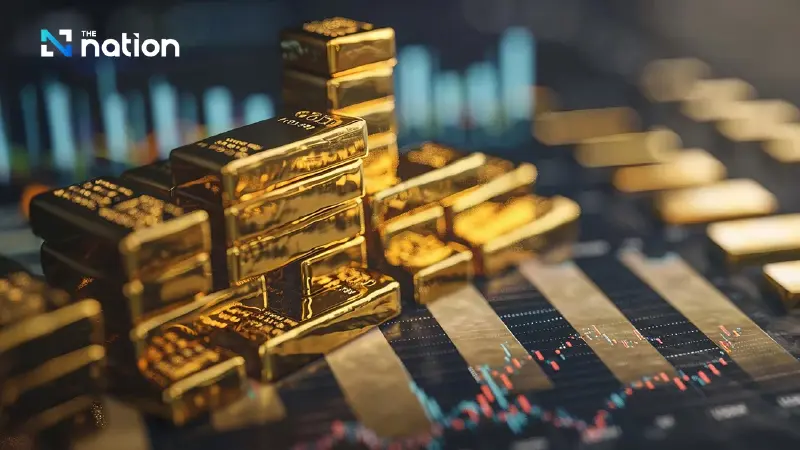


Gold, silver, and copper prices surge amid geopolitical tensions, a weaker dollar, and speculation-driven demand. Analysts warn of risks as markets disconnect from fundamentals.
- Gold, silver, and copper prices surged to historic highs due to geopolitical tensions, a weakening dollar, and increasing uncertainty over US policies.
- As of January 29, 2026, gold prices exceeded $5,500 per ounce, with the global market reaching a new record of $5,595.47 before retreating slightly. This marks a continuous upward trend over the past nine days, reflecting heightened investor concerns over geopolitical instability and a move away from traditional assets like government bonds.
- In addition to gold, silver reached a new all-time high of $120.45 per ounce, while copper, though not classified as a precious metal, hit a 16-year high, driven by speculation and expectations of stronger US economic growth.
Gold, silver, and copper prices have reached new record highs, with global geopolitical tensions, a weakening dollar, and economic uncertainty driving investors away from bonds and currencies into assets that preserve value, like precious metals. On January 29, 2026, gold prices surged to an all-time high of $5,595.47 per ounce, before retracting slightly to $5,549.93. This marks a 9-day streak of upward movement, fueled by the falling value of the US dollar and increasing speculation in commodities.
The price of gold rose by 2.5% on the day, with a peak increase of 3.3% on January 29. This comes after a 4.6% increase on January 28, marking the strongest daily price surge since the peak of the COVID-19 pandemic in March 2020. The continuous rise in gold prices is being driven by growing geopolitical tensions, concerns over the independence of the US Federal Reserve (Fed), and the broader economic uncertainty. These factors have sparked what is known as the "Debasement trade" – where investors sell traditional assets like government bonds and move into commodities like gold.
Meanwhile, the price of silver also saw a record-breaking increase, reaching $120.45 per ounce before retracting slightly to $118.25 per ounce. This increase, which represents a 1.4% gain, is largely driven by the role of silver as an industrial metal. The demand for silver is strong in industries such as solar energy, electronics, and power generation, all of which are contributing to its price rise. The silver market, already constrained by supply limitations, has seen speculative investment adding fuel to the fire.
Copper, though not a precious metal, hit a new 16-year high, rising 7.9% to $14,125 per tonne on the London Metal Exchange (LME). This surge is being driven by a strong speculative demand in China, combined with expectations of a stronger economic recovery in the US. The rise in copper prices marks the highest level for the metal in over a decade, and its performance is being watched closely due to its significance in global industrial activity.
In 2026, gold prices have already increased by 27%, continuing the upward trend from 2025, when prices soared by 64%. Silver has also risen by 65% this year, following a 145% surge in 2025. Analysts are becoming concerned that the precious metals market is increasingly being driven by speculation, rather than by real supply and demand factors, which is causing significant price volatility.
Edward Yardeni, President of Yardeni Research, stated that the precious metals market is currently in a "melt-up" phase, where prices rise rapidly in a short period, driven by speculative trading rather than underlying market conditions. Yardeni noted that while this phenomenon is common in certain markets, it is now spreading across a range of precious metals and even industrial metals.
Nicki Schells from MKS PAMP further commented that the precious metals market is "breaking" due to extreme volatility that is not supported by fundamental demand. The market is being driven by speculative capital flows, and analysts are warning that this will lead to more dramatic price swings and potential corrections in the future.
Maximilian Tomei, CEO and joint portfolio manager at Galena Asset Management, agreed that the recent price movements in gold and other precious metals are largely disconnected from underlying fundamentals. He pointed out that the recent increase in gold prices is closely tied to the weakening of the US dollar, as gold is priced in dollars. When the reference currency weakens, the price of gold rises.
The US Dollar Index, which measures the strength of the US dollar against a basket of major currencies, has fallen nearly 11% over the past 12 months. This has contributed to the rise in the price of gold and other precious metals, as investors look for alternative assets to hold.
In Thailand, the price of gold followed the global trend and surged to new highs. On January 29, 2026, the price of gold in Thailand exceeded 81,000 baht per ounce, reflecting a significant increase in the gold market. Gold prices rose sharply by 3,950 baht in a single day, marking a 2,000 baht increase per day over the past few days.
Jitti Tangsithpakdi, President of the Gold Traders Association of Thailand, noted that the Thai gold market is experiencing significant volatility due to the influence of geopolitical tensions, particularly the ongoing conflict with Iran, as well as the unpredictability of US policies under President Donald Trump. This has created a turbulent global economic climate, and the price of gold has skyrocketed in response. Many countries have reduced their reliance on US dollar reserves and started accumulating gold as a safer asset in response to the ongoing uncertainty.
The Gold Traders Association of Thailand has warned investors to be cautious about engaging in short-term speculative trading in such a volatile market. The dramatic rise in gold prices this year has already seen an increase of nearly 17,000 baht since the beginning of the year, a rise far beyond the historical average increase of 8-9% per year over the last 40 years.
Looking forward, analysts predict that if gold prices continue their upward momentum and rise by 40% this year, global gold prices could reach $6,030 per ounce, pushing Thai gold prices to 90,000 baht per ounce. Should the Thai baht strengthen, the price of gold in Thailand could even hit 100,000 baht per ounce.
Experts warn that short-term speculation remains a risky venture, and investors should be aware of the high potential for price corrections in the coming months. For those looking to invest in gold over the long term, it is advised to wait for a price adjustment before making major purchases.
Fetco warns: Trump’s actions stir global chaos, pushing gold up by 3,000 baht daily
Dr Kobsak Pootrakool,, Chairman of the Thai Capital Market Business Council, stated that gold prices have reached unprecedented levels, defying all expectations. Recently, spot gold surged above $5,500 per ounce, while the price of gold bullion in Thailand has surpassed 80,000 baht, averaging a daily increase of 2,000 baht. At times, gold prices have been highly volatile, rising by $100 per ounce on some days, with this trend continuing for several consecutive days.
Additionally, the risk of escalating geopolitical conflicts, particularly the extreme polarization between the US and China, has caused deep divisions between the two powers. The old world order has ended, and we are now entering the "Never Normal" phase, filled with volatility and power struggles of every form. The US has started using sanctions against countries that are allied with or do business with its adversaries, such as Russia, Iran, and China.
As uncertainty increases, the trend of de-dollarization is gaining momentum. Many countries are seeking to reduce their reliance on the US dollar, which has long been the world’s primary liquid asset, due to concerns that reserves may be seized or impacted by financial sanctions. As confidence in the dollar weakens, gold has become the second most liquid asset, with people increasingly choosing it to store value.
Furthermore, major powers like China and India have started selling off their dollars and accumulating gold instead, aiming to diversify their risks in response to tensions with the US.
Gold in Focus for the Next 3 Years
Dr Kobsak also shared his outlook on gold prices in the near future, stating that with the world entering the "Never Normal" phase, we are in the midst of a changing world order. This period will be filled with uncertainty, especially over the next three years, coinciding with the tenure of the current US president. As a result, safe-haven assets like gold are being closely watched amid the global "storm," and the world is unlikely to return to calm anytime soon.
“The rapid rise in gold prices, increasing by 2,000 baht per day in Thailand, reflects the panic and adjustment to the new world order,” he remarked.
He also warned investors not to bet all their money on gold during such a high-price period. “Do not sell your house or assets to invest, as a sudden market reversal could lead to significant losses. You must assess the risk level. Think of it like swimming – if you're not good at swimming (low risk tolerance), you shouldn't venture into strong currents in the gold market right now. But if you want to invest, do so cautiously and in moderation.”
