
Gold stays under pressure as Iran war fuels market turmoil
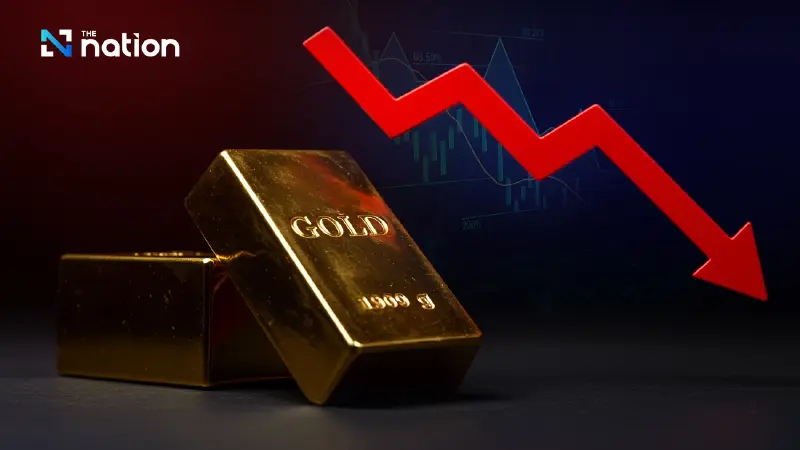


Gold prices remain volatile as the Iran war drives oil higher, stokes inflation fears and weakens hopes for interest rate cuts
Gold prices remained under pressure as the conflict in Iran continued to unsettle investors, with the metal extending a steep decline triggered by rising oil prices, inflation fears and reduced expectations for interest rate cuts.
Spot gold has fallen around 15% since fighting began on February 28 and is now roughly 22% below its record high in January, reflecting a sharp shift in investor sentiment as markets struggle to price in the broader economic fallout from the war.
Although gold is traditionally seen as a hedge against inflation and geopolitical turmoil, the current environment has complicated that role. The surge in oil prices has raised concerns that inflation could stay elevated for longer, which in turn has strengthened expectations that interest rates may remain high well into the short and medium term. That has reduced the appeal of gold as a non-yielding asset.
Analysts said the recent swings in gold prices resembled previous “black swan” shocks, when investors initially rushed to raise cash rather than hold safe-haven assets. In this phase of the market, liquidity demand has outweighed defensive buying, helping to explain why bullion has failed to benefit in the usual way from escalating geopolitical risk.
A similar pattern was seen after Russia’s invasion of Ukraine in 2022, when gold rose at first before retreating as inflation and interest rate expectations began to dominate market direction.
Even so, longer-term support for gold has not disappeared. The rally that lifted prices from around US$1,650 an ounce in November 2022 to a record high of about US$5,595 in January 2026 was driven initially by central bank and institutional demand, before speculative buying by retail investors, especially in Asia, became a more prominent force.
The broader backdrop also remains supportive in the longer run, with concerns lingering over large fiscal deficits in major economies, stubborn inflation and continued reserve diversification by central banks amid a more fragmented global landscape.
At the same time, investment flows have weakened. Gold-backed exchange-traded funds saw outflows of US$7.9 billion, equivalent to 54.8 metric tonnes, mostly from the United States, since the Middle East conflict began. Total holdings fell to 4,117.9 tonnes, signalling softer institutional appetite during the latest bout of turbulence.
On Monday, spot gold briefly dropped to a four-month low of US$4,098 before recovering some ground. It later traded at US$4,377 an ounce, down 2.5% on the session, after briefly easing losses when US President Donald Trump said he would delay an attack on Iranian energy infrastructure.
US gold futures also ended lower, closing down 0.7% at US$4,574 an ounce. The metal lost nearly 10% last week alone, marking its weakest weekly performance since September 2011. Spot gold is now down about 25% from its late-January peak of US$5,594.92 an ounce.
Other precious metals were mixed. Spot silver rose 3.3% to US$69.97 after touching its lowest level of the year, while platinum and palladium also moved higher in early Asian trading on Tuesday.
In the latest update on Tuesday morning, spot gold edged up 0.5% to US$4,427.76 an ounce at 7.03am Singapore time, holding above the US$4,400 mark after Monday’s heavy sell-off. Silver rose 0.7% to US$69.60, while platinum and palladium also advanced.
Even with the modest rebound, the broader trend remains fragile. Gold has now posted nine straight days of declines, its longest losing streak since 2023, as the Middle East war continues to lift oil prices and darken the outlook for inflation, monetary policy and global growth.
