
US trade report flags Thailand over market distortions, tariff barriers
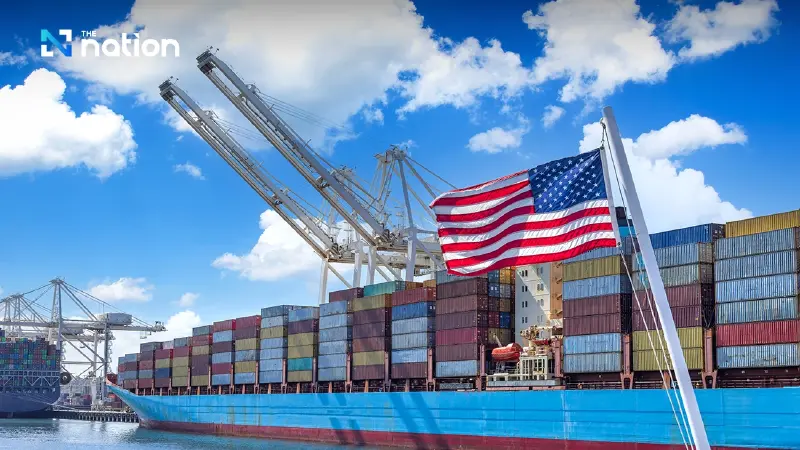


The 2026 USTR report flags Thailand over market distortions, tariff barriers and labour concerns, while trade talks with the US remain unfinished
- The U.S. Trade Representative's 2026 National Trade Estimate Report highlights a widening trade deficit with Thailand, which grew to $71.9 billion in 2025, as a key point of concern.
- The report specifically criticizes Thailand's tariff barriers, noting an average agricultural tariff rate of 28.3% and a non-agricultural rate of 7.0%.
- The U.S. accuses Thailand of failing to take sufficient action against market-distorting practices and for not signing a binding agreement to address these issues.
- Beyond tariffs, the report also pressures Thailand on other trade-related issues, including weak labor rights protections, intellectual property concerns, and customs practices.
Thailand has come under renewed trade scrutiny from the United States after the Office of the United States Trade Representative released its 2026 National Trade Estimate Report, a wide-ranging annual review of foreign trade barriers affecting US exports and investment. The report was released on March 31, 2026, and forms part of the Trump administration’s broader push to challenge what it describes as unfair trade practices and expand reciprocal market access.
In the Thailand section, the report said the US goods trade deficit with Thailand widened to US$71.9 billion in 2025, up 58% from 2024. It said US goods exports to Thailand totalled US$19.5 billion, while US imports from Thailand reached US$91.3 billion, taking total goods trade between the two countries to about US$110.8 billion. The report also said Thailand was the 23rd-largest goods export market for the US in 2025. On services, the US recorded a US$267 million deficit with Thailand in 2025, while total bilateral services trade stood at about US$7.8 billion.
The USTR document also revisited the bilateral trade architecture already in place. The US and Thailand have operated under the Trade and Investment Framework Agreement, or TIFA, since 2002. In October 2025, the two sides also announced a joint framework for a reciprocal trade agreement, with the US fact sheet saying Thailand had committed in principle to eliminate tariffs on 99% of goods covering a full range of US industrial, food and agricultural products, while also addressing several non-tariff barriers.
Those commitments, as outlined in the US framework fact sheet and reflected in the Thai report, include accepting US-made vehicles that comply with Federal Motor Vehicle Safety Standards and emissions rules, recognising US Food and Drug Administration certifications and pre-market approvals for medical devices and pharmaceuticals, licensing US ethanol imports for fuel use, reforming customs reward practices, strengthening regulatory practices, improving environmental enforcement, and tackling long-running intellectual property concerns. The two countries are expected to continue negotiations to conclude the agreement.
Even so, the 2026 NTE also sharpened criticism of Thailand under the heading of other market-distorting practices. It said Thailand had not taken sufficient action against market distortions to protect both the US and Thai markets and support a fairer and more stable trading relationship. It further noted that Thailand had not signed an Agreement on Reciprocal Trade containing binding commitments to address those distortions, and had not joined the Global Forum on Steel Excess Capacity.
The report goes beyond tariffs. It said Thailand’s average most-favoured-nation tariff rate stood at 9.9% in 2024, with average agricultural tariffs at 28.3% and non-agricultural tariffs at 7.0%. It also noted that Thailand had bound 76.9% of all tariff lines at the World Trade Organization, with an average bound tariff of 26.6%.
Labour remains another sensitive area. The US report said Washington continues to have concerns over Thailand’s labour rights protections, especially freedom of association and effective collective bargaining. It also noted continued concern over enforcement, echoing issues that led the US to suspend some of Thailand’s Generalized System of Preferences benefits in April 2020. The report added that Thailand still has no import ban on goods made with forced labour or indentured labour.
The pressure may intensify further through ongoing Section 301 processes. The USTR announced in March 2026 that interested parties must submit written comments by April 15, 2026, in investigations related to structural excess capacity and production, with public hearings scheduled to begin on May 5 and continue through May 8. In a separate set of Section 301 investigations related to failures to act on forced labour, the USTR also opened proceedings in March.
For Thailand, the report is more than a catalogue of complaints. It serves as a clear signal that while the US remains Thailand’s biggest export market, the bilateral relationship is still weighed down by unresolved disputes over tariffs, industrial policy, labour standards and market access. The broader challenge now is whether both sides can turn the existing framework into a final agreement that reduces friction rather than allowing trade tensions to harden further
