
Thai Health Ministry Tightens Medical Cannabis Rules
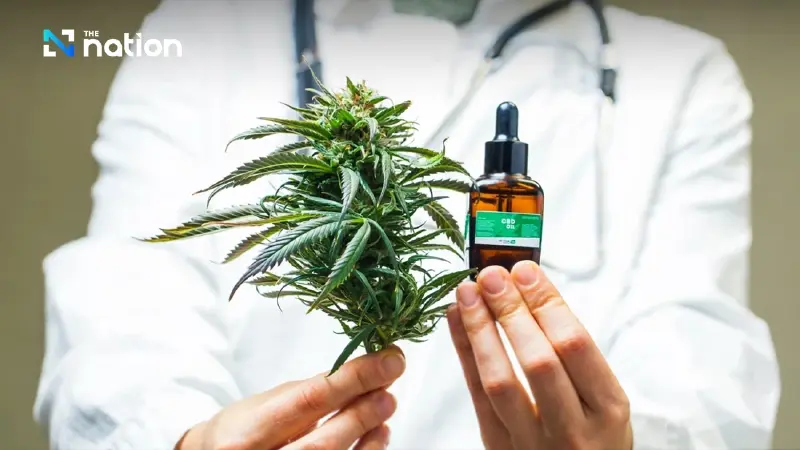


New regulations limit cannabis use to five specific medical conditions and require patients to obtain a prescription, as over 12,000 dispensaries face licence renewals under stricter rules
- Thailand's new regulations limit medical cannabis use to five specific conditions, such as chronic pain and insomnia, and require a prescription for cannabis flower buds.
- Dispensaries must now be licensed, source their products from certified farms, and are prohibited from selling cannabis online or through vending machines.
- The regulatory overhaul will require approximately 12,000 cannabis dispensaries to meet stricter licensing standards and is supported by a new telemedicine system to track prescriptions.
Thailand's Department of Thai Traditional and Alternative Medicine is implementing a new ministerial regulation that will strictly control the use of medical cannabis, limiting it to just five specific conditions.
Speaking at a press conference on 1 September 2025, Dr Somruek Chungsaman, the department's Director-General, announced that patients will need a prescription to access cannabis flower buds.
Dispensaries must also be licensed, source their products from certified farms, and are prohibited from selling cannabis online or through vending machines.
The new rules, which came into effect in June 2025, will limit medical cannabis use to insomnia, chronic pain, migraines, Parkinson's disease, and loss of appetite. Prescriptions are valid for a maximum of 30 days.
Regulatory Overhaul
The new regulations come as approximately 12,000 cannabis dispensaries face licence renewals at the end of the year. If the new law passes, these businesses will have to meet stricter standards.
The department is also working to train a new generation of medical staff, including 'budtenders', and is developing a telemedicine system to link prescriptions to a central database. This will help prevent repeat prescriptions and ensure tighter control.

Industry Challenges
Supree Thongpetch, president of the SME Council Association, estimated the value of the medical cannabis market at a minimum of 36 billion baht.
He said the lack of clear standards has been a major problem for smaller businesses, many of which had considered leaving the market. However, with the new regulations, the association is working to help its members meet the new medical standards.
Sittichai Daengprasert, chairman of the Herbal Industry Group, agreed that the market has been hurt by a lack of clarity. He said the biggest obstacles for the industry are the shortage of certified laboratories and farms.
Sittichai proposed that large herbal medicine factories with GMP PICS certification be allowed to test and certify products from smaller businesses. This would help smaller businesses without their own labs enter the medical market.
He said his industry group is ready to help, with 214 factories that already meet the necessary standards.
"If the GACP requirement for farms is relaxed, and testing is not limited to ISO 17025 labs," Sittichai explained, "cannabis can be taken from a farm directly to a GMP PICS-certified factory, where it can be tested and certified as medical cannabis."
Both industry leaders expressed confidence that the market has a positive future, believing that the new regulations will help clean up the industry and increase consumer trust.
