
Proton therapy: a game-changer in targeted cancer treatment
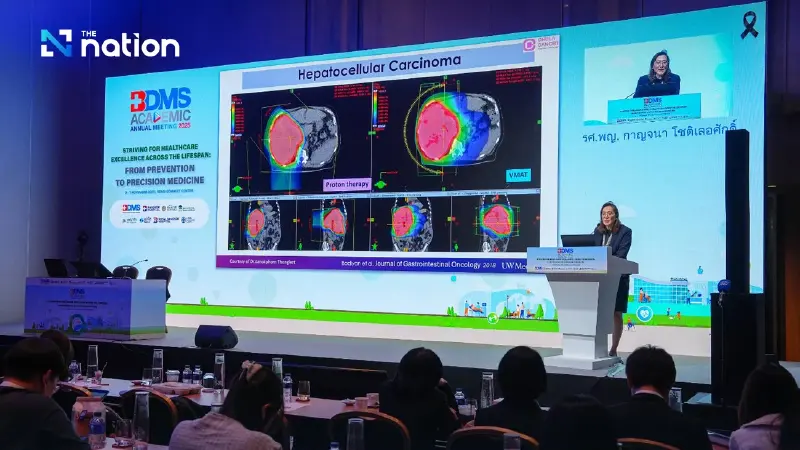


Proton therapy is revolutionising cancer treatment by offering precise radiation targeting, reducing side effects, and improving patient outcomes.
Cancer is one of the most common diseases in Thailand, with around 140,000 new cases diagnosed each year. Additionally, the incidence of the disease is on the rise annually, primarily due to the country’s aging population, as well as changing lifestyles and environmental factors.
Children are also at risk of developing cancer, with approximately 1,000 to 1,200 new paediatric cases diagnosed annually in Thailand. Cancer can affect children of all ages, including newborns.
Among the various treatment methods available, proton therapy has become a key player in treating cancer and improving patients' quality of life. Proton therapy is valued for its ability to reduce the impact of radiation on healthy organs surrounding cancerous tissue, according to experts from Chulalongkorn University’s Division of Radiation Oncology.
During the BDMS Academic Annual Meeting 2025, under the theme "Striving for Healthcare Excellence Across the Lifespan: From Prevention to Precision Medicine," it was highlighted that proton therapy allows medical professionals to target the radiation precisely, unlike traditional radiation therapies, which may affect surrounding vital organs.

Kanjana Shotelersuk, an expert in the field, explained that proton therapy facilitates the treatment of cancer patients, especially those under 21 years of age, who are particularly sensitive to radiation. It has significantly improved treatment outcomes, with survival rates after five years of treatment reaching 80-90%.
Kanjana added that proton therapy is particularly effective in treating certain types of cancer that are difficult to manage with conventional methods.
These include bone cancer, which requires high radiation doses, liver cancer, where special care is needed to limit radiation’s impact on the liver, and head and neck cancers, where radiation therapy can cause oral pain and negatively affect the patient's quality of life, including issues such as tooth decay, dry mouth, and weight loss.
However, the use of proton therapy faces several challenges. Treatment planning is time-consuming, as medical teams work to find the best approach to minimise the impact on surrounding organs, particularly for children, who may not tolerate the procedure as well.
Furthermore, the cost of proton therapy in Thailand remains high, with treatments potentially exceeding 1 million baht. This creates uncertainty for hospitals considering the investment needed to establish proton therapy facilities and the challenge of ensuring cost-effectiveness.
While the outcomes of proton therapy in controlling cancer tumours may not differ significantly from those of existing radiation therapies, Kanjana noted that some patients experience better recovery when radiation doses are carefully managed.
Addressing challenges such as treatment planning and cost is essential for wider adoption of proton therapy in the future.

The evolution and future of proton therapy in Thailand
According to Taweap Sanghangthum, proton therapy, which was first introduced in Russia in 1969, has evolved from being an expensive and rare treatment to a more affordable option.
There are now over 300 proton therapy machines worldwide, with the US having the highest number. However, Asia still lags behind, with countries like Japan, China, Taiwan, India, and Saudi Arabia leading the charge.
In Thailand, there are currently 55 radiotherapy centres and approximately 482 radiation technologists, yet the country only has one proton therapy machine, located at King Chulalongkorn Memorial Hospital.
Echoing Kanjana Shotelersuk's sentiments, Taweap explained that proton therapy is superior due to its lower radiation dose, which ensures better protection of healthy organs, such as the heart and lungs, after the cancer site. It is considered the first priority for treating children, he added.
Despite Thailand's plans for proton therapy dating back to 2000, challenges remain. At that time, the cost of the machine was a staggering 4.5 billion baht, with high maintenance costs and a need for a large space for installation.
Looking ahead, Taweap mentioned that proton therapy machines are being developed to be smaller, though they may be tailored to specific cancer treatments. Additionally, new forms of proton therapy are being explored to improve treatment outcomes and offer personalised care for patients.
"Proton therapy has become increasingly appealing for its precision, leading to more effective treatment outcomes," Taweap concluded, expressing optimism that proton therapy will soon be more widely adopted as the machines become more compact and cost-effective.

The role of medical collaboration in proton therapy
As proton therapy is still a new treatment in Thailand, Boontarik Nayong explained that its success relies heavily on collaboration among medical staff, particularly radiation therapists, to provide precise and effective care for patients.
The treatment process consists of several key steps: diagnosis, treatment simulation (ensuring the patient can tolerate daily sessions), treatment planning (to protect vital organs), treatment verification (to confirm the correct treatment direction), and, finally, treatment delivery.
Patients typically need to remain in position for at least 30 minutes, depending on their movement, which can sometimes be uncomfortable.
Boontarik emphasised that radiation therapists must have a thorough understanding of the treatment plan, patient anatomy, and the overall workflow. Peer reviews and discussions regarding radiation doses are crucial to ensuring safe and effective treatment.
"We must adjust our mindset to embrace new technologies," Boontarik said. She further explained that teamwork is essential, involving clear communication with physicians, discussions with patients, and coordination with engineers in case of downtime, which could last up to 15 minutes.
If necessary, doctors may decide to continue the treatment the following day.
Boontarik also pointed out Thailand's main challenges in proton therapy, including limited local expertise and the lack of dedicated training centres. She highlighted the need for a structured education system for radiation therapists. Balancing the integration of new technologies with adequate training is crucial for Thailand’s progress in this field.
"Proton therapy is not only a technology known for its precision, but the role of medical staff is vital to ensuring the best possible outcomes," she concluded.
"Radiation therapists are key in delivering precise treatment, and we must continue developing ourselves—both in knowledge, skills, and teamwork—while also showing empathy towards patients and colleagues."
