
Toxic dust crisis engulfs Chiang Mai as doctors warn of acute symptoms
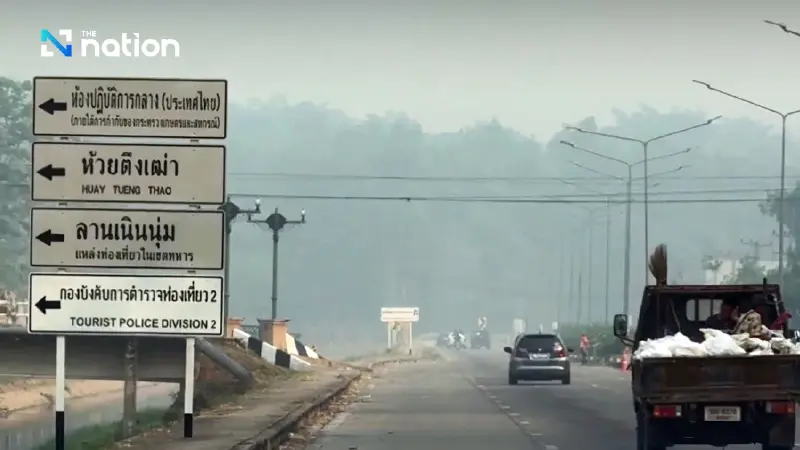


Chiang Mai remained under choking haze for a 10th straight day, with red-level PM2.5 readings and health officials warning of both immediate and long-term risks.
- Chiang Mai is experiencing a severe air pollution crisis, with toxic dust levels remaining at a dangerous "red-level" for over 10 consecutive days.
- Doctors are warning of acute health symptoms caused by the pollution, including eye discomfort, nasal congestion, and nosebleeds, with a rise in affected patients.
- Health officials also caution that the dust can enter the bloodstream, increasing the long-term risk of cardiovascular disease, especially for high-risk groups.
- In response, authorities are urging residents to wear
Air pollution in Chiang Mai, including haze and forest fires, entered its 10th day on April 3, 2026.
The latest data from the Pollution Control Department in Chiang Mai, based on readings from all six air quality monitoring stations, showed red-level conditions, with levels still expected to rise continuously. PM2.5 exceeded 100 µg/m3 at every station.
In the urban area, the highest reading was recorded at the air quality monitoring station in Chang Phueak subdistrict, Mueang Chiang Mai district, Chiang Mai, where the AQI measured 260, and PM2.5 stood at 134.3 µg/m3.
In Mueang Na subdistrict, Chiang Dao district, the AQI was 444, while PM2.5 reached 318.3 µg/m3.
At 8am today, data from IQAir.com, which ranks the world’s most polluted cities, continued to place Chiang Mai Municipality in first place.
By 9am, however, Chiang Mai Municipality had dropped to second place, with air quality measured at 223 US AQI and PM2.5 at 148.3 µg/m3. Delhi, India, had overtaken it later in the morning.

With Chiang Mai’s air quality crisis dragging on for a 10th consecutive day, the main concern is the impact on health, including short-term illness, chronic conditions and the long-term effects of toxic dust.
The Chiang Mai Provincial Public Health Office, together with Maharaj Nakorn Chiang Mai Hospital, briefed the media on the health impact of PM2.5, saying the dust affects health in both the short and long term. Acute exposure can cause symptoms such as eye discomfort, nasal congestion and nosebleeds, with patient numbers rising during periods of severe dust pollution.
In the long term, the dust can enter the bloodstream and increase the risk of cardiovascular disease. High-risk groups in particular may develop severe symptoms within 48–72 hours.
The Chiang Mai Provincial Public Health Office said dust levels remained in the orange-to-red range. Although the number of patients in some groups, such as those with chronic obstructive pulmonary disease, asthma and nosebleeds, had fallen from last year, this was partly due to stricter preventive measures and the later-than-usual arrival of the dust.


However, health impacts usually emerge with a delay of about one week and therefore require close monitoring.
Long-term conditions such as cardiovascular disease still require continued surveillance, alongside the development of a health data tracking system linking healthcare facilities and studies into the impact on other diseases, such as lung cancer, to support health policy planning.
The Chiang Mai Provincial Public Health Office has accelerated preventive measures, including providing information to more than 700,000 households, distributing nearly 200,000 masks, opening more than 500 dust-free rooms and setting up pollution clinics at five hospitals to support those affected.
Officials also urged the public to continue protecting themselves by wearing N95 masks, avoiding outdoor activities and using air purifiers. Anyone with unusual symptoms such as coughing, breathing difficulties or chest tightness was advised to seek medical attention immediately.

