
Chiang Mai tops world air pollution ranking as PM2.5 worsens further
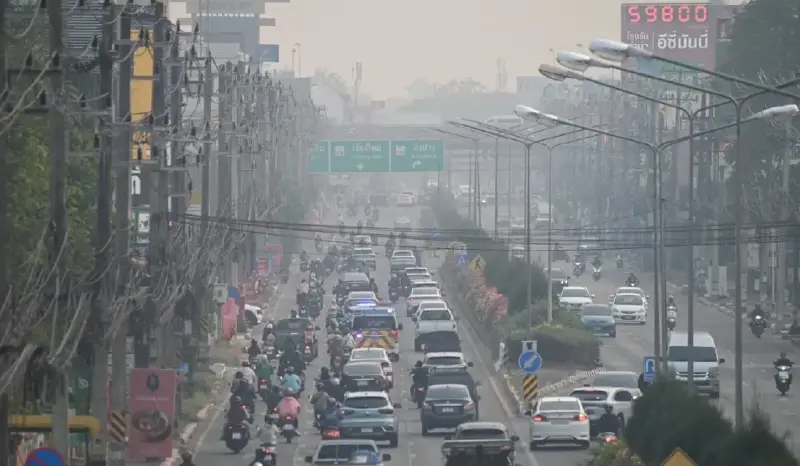


Chiang Mai was ranked the world’s worst city for air quality on April 7 after AQI hit 209, as dense haze blanketed the city and health risks intensified.
- On April 7, 2026, the air quality monitoring service IQAir ranked Chiang Mai as the world's most polluted city.
- The city recorded an Air Quality Index (AQI) of 209, which is classified as "Very Unhealthy" and indicates serious health effects for everyone.
- The severe pollution has caused residents to suffer from breathing difficulties and eye irritation, prompting health authorities to advise against outdoor activities.
- The critical PM2.5 levels are attributed to a combination of weather conditions and continued open burning in Thailand's upper North.
The PM2.5 situation in Thailand’s upper North has continued to worsen, with Chiang Mai facing particularly severe conditions.
The entire city was shrouded in a dull white haze on April 7, 2026, with visibility severely reduced.
According to IQAir data checked at 7am, Chiang Mai Municipality was ranked the world’s worst city for air quality, recording an Air Quality Index (AQI) of 209, which falls into the purple “Very Unhealthy” category, indicating serious health effects for everyone.
IQAir’s AQI bands classify 201–300 as “Very unhealthy”, 151–200 as “Unhealthy”, and 101–150 as “Unhealthy for sensitive groups”.
Summary of the world’s worst air pollution cities (April 7, 2026)
- Chiang Mai, Thailand: AQI 209 (purple level)
- Hanoi, Vietnam: AQI 174 (red level)
- Riyadh, Saudi Arabia: AQI 154 (red level)
Note: Bangkok ranked 13th in the world, with an AQI of 105 (orange level)
Reporters said that conditions on the streets of Chiang Mai city had prompted residents to wear both N95 masks and standard face masks to reduce the risk of inhaling hazardous particles.
Many people had also started complaining of difficulty breathing and severe eye irritation, even while indoors.
Public health authorities have issued an urgent warning, advising people to avoid all outdoor activities, particularly vulnerable groups such as young children, pregnant women, the elderly, and those with underlying respiratory conditions.
Anyone who must go outside has been urged to wear certified anti-dust masks at all times.
Even though relevant agencies have continued to monitor the situation closely, PM2.5 levels in the upper North remain stuck at a critical level due to weather conditions and continued open burning.
If the situation persists, it could have unavoidable long-term consequences for public health and the local tourism economy.
