
PCD says 50 water sources across Thailand are safe for Songkran
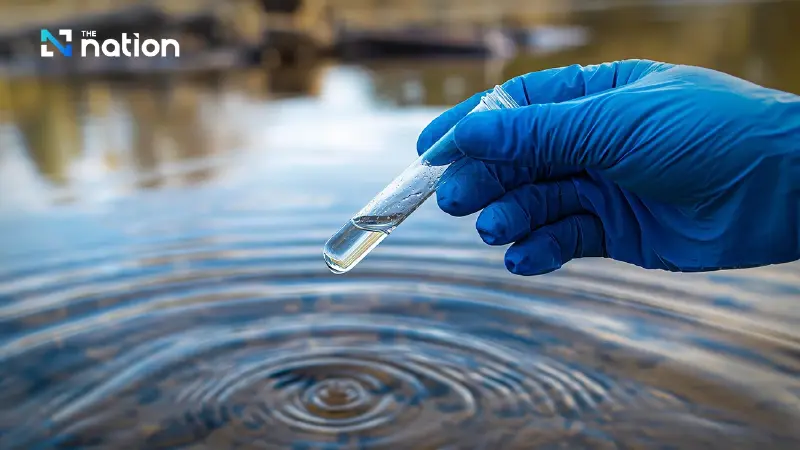


Water in 50 monitored rivers and waterways met the safety threshold for Songkran, with poorer quality found mainly in downstream urban areas.
- Thailand's Pollution Control Department (PCD) has declared 50 water sources nationwide safe for use during the Songkran festival.
- The declaration is based on water quality tests conducted from January to March 2026, which found these sources met the safety standard of having faecal coliform bacteria (FCB) below 4,000 MPN per 100 millilitres.
- Out of 65 total sources monitored, 57 were rated "fair" or better, while 8 were found to be "degraded," mostly in downstream areas near cities and industrial zones.
- The five sources with the highest "very good" water quality were the upper Tapi, upper Lang Suan, upper Pattani, Phum Duang, and Sai Buri rivers.
Surin Worakijthamrong, Director-General of the Pollution Control Department (PCD), said on April 11, 2026, that the department had monitored water quality in 59 flowing surface water sources and six still water bodies nationwide: Kwan Phayao, Bueng Boraphet, Nong Han, Thale Noi, Thale Luang and Songkhla Lake.
Tests conducted from January to March 2026 found overall water quality to be very good in 8% of sources (5 sources), good in 48% (31 sources), fair in 32% (21 sources) and degraded in 12% (8 sources).
This showed that most water sources were in good condition, and that water rated fair or above was sufficiently safe for Songkran use.
Most degraded sources were located in downstream areas, where rivers pass through densely populated urban communities, industrial zones and livestock farming areas.

The Director-General said that, based on water quality assessments for January-March 2026, sources with faecal coliform bacteria (FCB) below 4,000 MPN per 100 millilitres could be used for Songkran water play.
MPN, or Most Probable Number, is a unit used to measure microbial density.
The 50 sources were middle Chao Phraya, upper Chao Phraya, upper Tha Chin, Prachin Buri, Bang Pakong, Mae Klong, Nakhon Nayok, Khwae Yai, Khwae Noi, Pa Sak, Noi, Lop Buri, Sakae Krang, Chanthaburi, lower Rayong, Prasae, lower Phang Rat, upper Phang Rat, Welu, Trat, Ping, Nan, Yom, Wang, Ing, Mae Chang, Nam Un, Phong, Chi, Mun, upper Lam Takhong, Lam Chi, Lam Pao, Songkhram, Siao, Loei, lower Phetchaburi, upper Phetchaburi, Pran Buri, lower Tapi, upper Tapi, Kui Buri, lower Lang Suan, upper Lang Suan, Pak Phanang, Trang, lower Pattani, upper Pattani, Phum Duang and Sai Buri.
The five best water sources during January-March 2026 were:
- upper Tapi
- upper Lang Suan
- upper Pattani
- Phum Duang
- Sai Buri
The Director-General added that water suitable for Songkran use should be clean and free of foreign matter.
If it comes from a natural water source, people should observe the general condition of the water, including smell, oil stains, food scraps, rubbish or rotting matter.
The surrounding environment should also not show signs such as wastewater discharge pipes from factories or communities, excessive aquatic plants, or water that is murky or dark green.
People playing Songkran should take care not to let water enter their eyes, ears, nose or mouth, and should bathe thoroughly afterwards.
If they develop any unusual symptoms, such as skin irritation or itchy rashes, they should stop immediately and wash themselves at once.
