
Super El Niño raises water risk in Thailand’s eastern growth zone
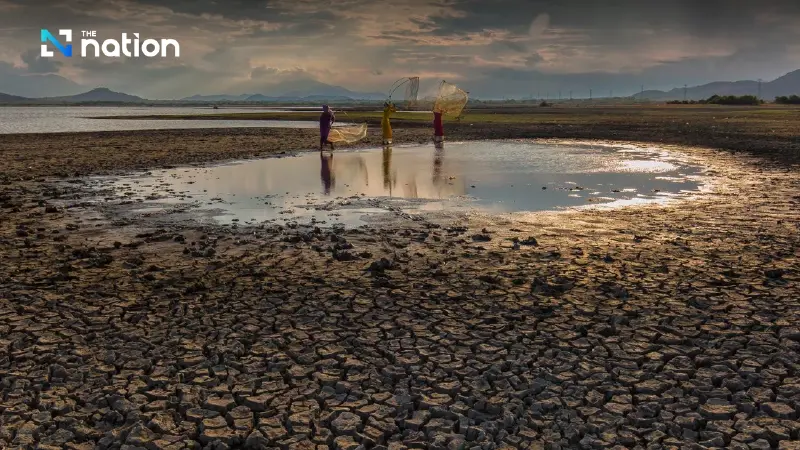


Three major EEC reservoirs are holding at less than 70% capacity, raising fresh concern over water security ahead of a possible Super El Niño in May.
- A "Super El Niño" is forecast to bring severe drought and extreme heat, creating a significant water security risk for Thailand's Eastern Economic Corridor (EEC), with effects expected by May 2026.
- The EEC, a critical zone for investment and growth, is particularly vulnerable due to rising water demand from extensive development and a population projected to double by 2037.
- In response, a multi-stakeholder platform, involving the Thai government and supported by the World Bank, has been established to implement urgent water management solutions.
- The platform's key projects focus on three areas: securing the bulk water supply, managing water demand and efficiency, and promoting wastewater treatment and reuse.
According to the Geo-Informatics and Space Technology Development Agency (Public Organisation), or GISTDA, the El Niño phenomenon is behind drought and extreme heat.
But when sea surface temperatures in the Pacific Ocean rise sharply above average, by more than 1.5 to 2 degrees Celsius, conditions enter what is known as “Super El Niño”, bringing more severe and prolonged climate volatility than usual to Thailand and ASEAN.
The effects are expected to become clearer in early May 2026.
Water management in the Eastern Economic Corridor (EEC) has therefore become urgent, as it is directly linked to economic momentum and the country’s efforts to raise investment.
Recently, Dr Chula Sukmanop, Secretary-General of the Office of the Eastern Economic Corridor Policy Committee (EECO), co-chaired the 2/2026 meeting of the EEC Water Multi-Stakeholder Platform (EEC Water MSP) with the World Bank.
Representatives from 32 public and private sector agencies attended, while the World Bank provided technical and academic support.
The meeting acknowledged progress by Workstreams 1-3 in identifying key projects and implementation plans to strengthen water security in the EEC.
The sub-working group on bulk water supply (Workstream 1) has three key projects: (1) management of the water pipeline network in the EEC, (2) expansion of raw water sources on private land, and (3) the Prasae–Nong Kho–Bang Phra reservoir network project.
The sub-working group on demand management and efficiency (Workstream 2) has three key projects: (1) development of the EEC Water Data System (EEC-WDS), a water resources monitoring and geospatial data management system, (2) promotion of appropriate agricultural area management during crises, and (3) expansion of community water management based on the royal initiative of King Rama IX.
The sub-working group on wastewater treatment and reuse (Workstream 3) has two key projects: (1) wastewater management for reuse in the EEC, and (2) crisis water management through the promotion of wastewater recirculation from industrial plants.
“During the meeting, EECO and the relevant agencies also stressed the need to push the key projects under Workstreams 1-3 towards concrete results through an integrated cooperation mechanism between the public and private sectors, laying the groundwork for long-term water management and moving towards the goal of improving water management efficiency to build sustainable water security in the EEC.”
According to the Office of the Eastern Economic Corridor Policy Committee, the EEC covers three provinces, Chonburi, Chachoengsao and Rayong, and has a wide range of investment development plans, including high-speed rail, U-Tapao Aerotropolis, ports, 21 industrial promotion zones, tourism promotion, existing industries and agriculture.
The population is therefore projected to rise from 3 million at present to 6 million by 2037.
Water resource management must therefore be comprehensive, efficient and sustainable, because water can generate economic benefits, support daily life and even recreation.
At the same time, however, it can also wreck an economy in the blink of an eye, as has already happened in many areas.
World Bank provides technical and academic support
At the first 1/2026 meeting of the EEC Water Multi-Stakeholder Platform, participants set out to advance policy and operational cooperation to tackle increasingly severe water challenges driven by economic expansion, climate change and continuously rising water demand.
The platform is driving water resource management in the EEC across three key dimensions: (1) bulk water supply, (2) demand management and efficiency, and (3) wastewater treatment and reuse.
Data from the Office of National Water Resources (ONWR) show that the water-use activities requiring demand analysis include water for household consumption, water for production in both agriculture and industry, as well as water to maintain ecosystems and push back saltwater intrusion.
The timeframe is set at 20 years, using 2017 as the base year, followed by 2027 and 2037, respectively.
The analysis found that total water demand across all activities in the three EEC provinces stood at 2,404.91 million cubic metres in 2017, rising to 2,777.68 million cubic metres in 2027 and 2,977.55 million cubic metres in 2037.
Over the first 10 years, demand across all activities increases by 372.77 million cubic metres from the base year, while over the second 10 years it rises by a further 199.87 million cubic metres from the first decade, bringing the total increase from 2017 to 572.64 million cubic metres.
