
AI breath test could widen early cancer screening in Thailand
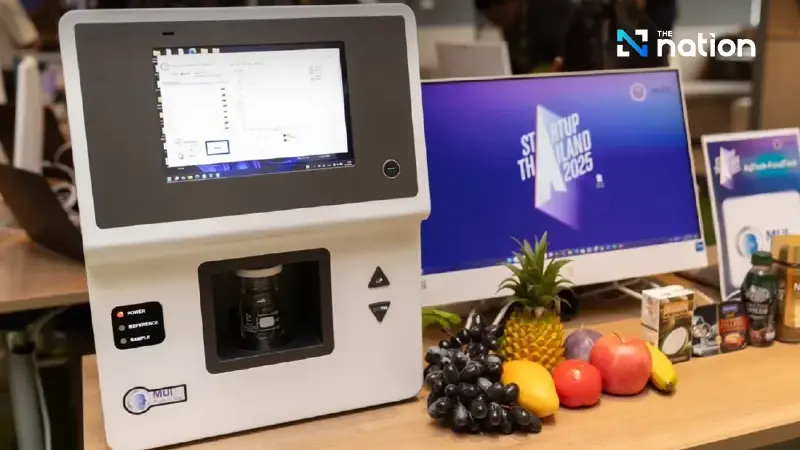


Thai researchers are developing AI-powered breath screening to detect liver, pancreatic and bile duct cancers faster and more affordably.
Thai researchers are developing an AI-powered breath test that could make early cancer screening cheaper, faster and more accessible, especially for people in rural areas and community hospitals.
The innovation, developed through cooperation between Chulalongkorn University, King Chulalongkorn Memorial Hospital, MUI Robotics and researchers linked to Mahidol University, uses artificial intelligence to analyse volatile organic compounds, or VOCs, in a person’s breath.
Researchers said the technology has shown screening sensitivity of 85% for liver cancer, 97% for pancreatic cancer and 82% for bile duct cancer, offering a new non-invasive option for detecting cancers at an earlier stage.

AI breath screening targets early cancer detection
Professor Dr Rungsun Rerknimitr, vice-president of Chulalongkorn University, said the project reflects cooperation within the Research University Network (RUN), which brings together universities with different research strengths.
Chulalongkorn University helps drive the network’s digital and robotics research cluster, while Mahidol University has played a leading role in health-related research under RUN since 2015.
Rungsun said the breath-based cancer screening innovation showed how university collaboration could combine medical knowledge, artificial intelligence and advanced technology to improve diagnostic capability and accuracy.
He said RUN researchers had expertise across many fields, while member universities in different regions could help identify local health problems and develop research that responds directly to national needs.
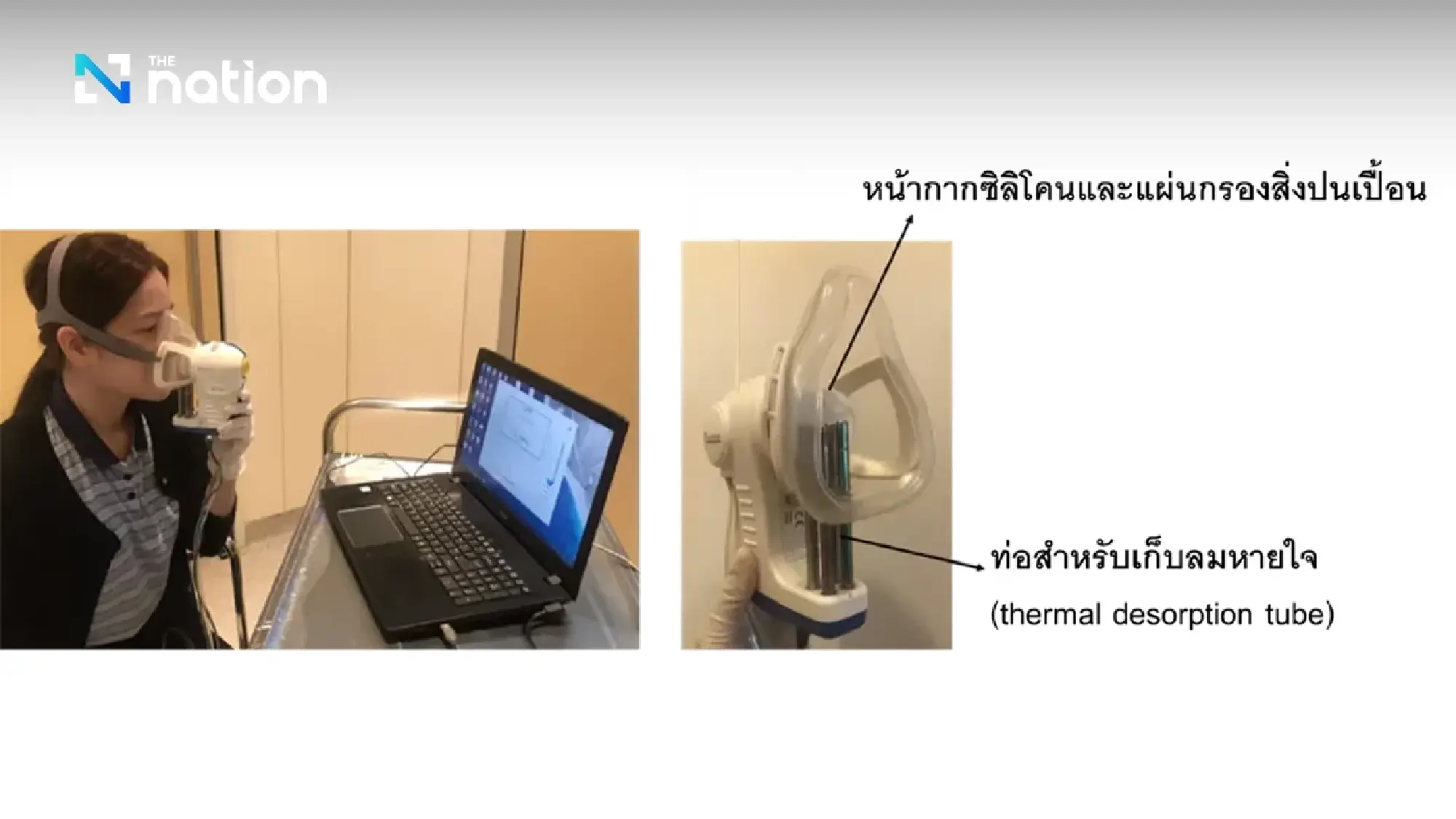

Chulalongkorn study focuses on gastrointestinal cancers
Dr Thanikan Sukaram, a researcher from the Centre of Excellence in Gastrointestinal Endoscopy at King Chulalongkorn Memorial Hospital, Thai Red Cross Society, said current screening for gastrointestinal cancers still has limitations.
Some cancers have screening methods with limited sensitivity, while others still do not have a standard screening approach.
The gastroenterology unit at King Chulalongkorn Memorial Hospital has therefore spent more than five years studying a new screening method based on breath analysis. The research began with liver cancer, one of the world’s leading causes of cancer-related deaths.
According to the research team, VOCs detected in breath were able to distinguish liver cancer patients from healthy people effectively.
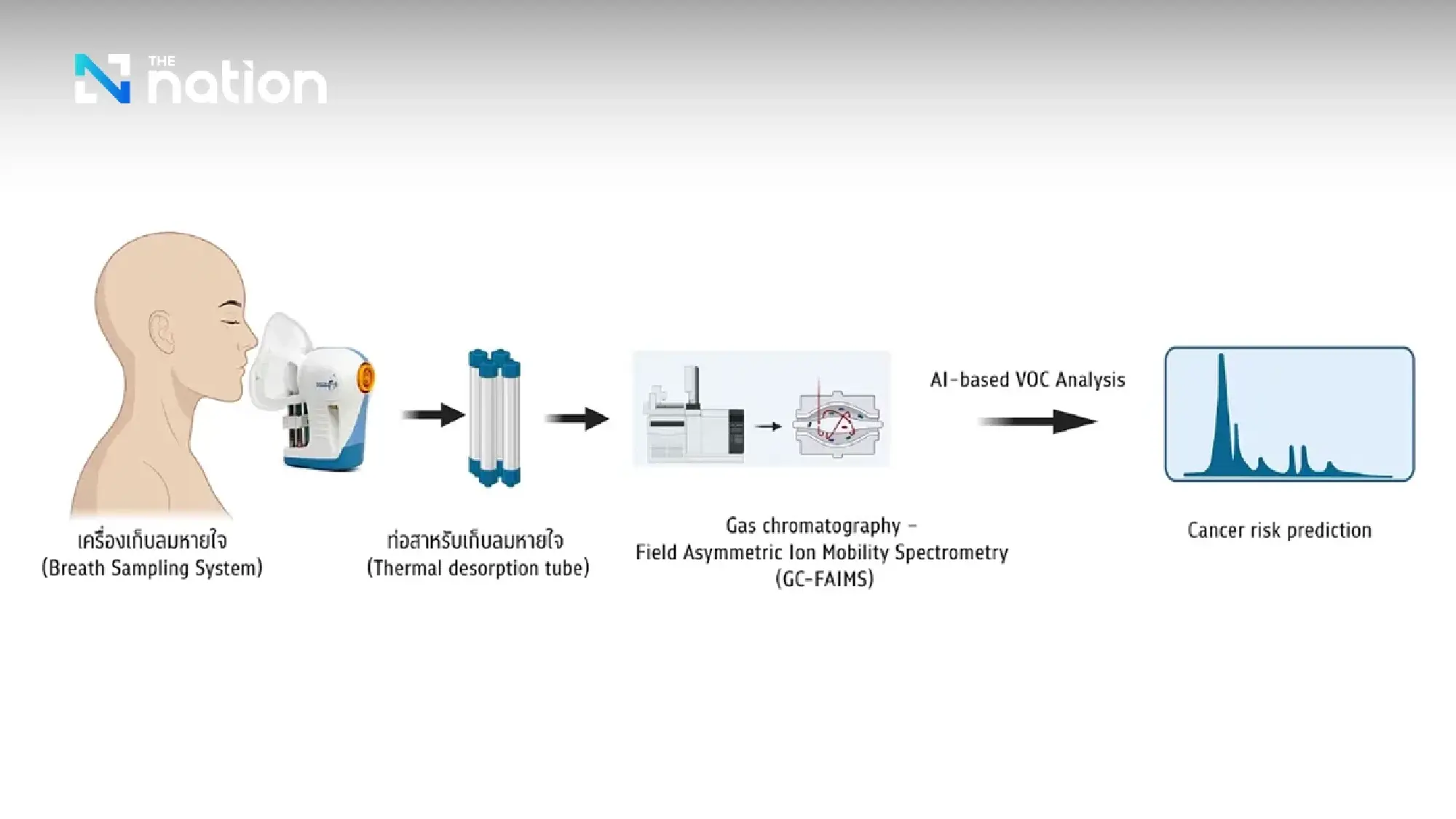

Non-invasive test avoids blood draws and radiation
The breath-based screening service for gastrointestinal cancers at King Chulalongkorn Memorial Hospital is described by the team as the first and only service of its kind currently available.
The method is non-invasive, radiation-free and painless, making it easier to use for screening than some conventional procedures.
The hospital and Chulalongkorn University developed the technology in research collaboration with MUI Robotics Co., Ltd., a deep-tech start-up founded by a Mahidol University research team.
Together, the teams developed a breath-based cancer screening innovation that can support early detection and improve the chances of effective treatment, researchers said.
MUI Robotics aims to bring screening closer to communities
Wandee Wattanakrit, chief executive officer of MUI Robotics, said a major challenge in public health, particularly in rural areas, is limited access to screening and treatment.
She said many existing screening systems require expensive equipment, specialist personnel and complex infrastructure, making them harder to deploy outside major hospitals.
MUI Robotics has therefore developed AI-Nose technology for practical use with King Chulalongkorn Memorial Hospital. The system collects breath samples from real patients, analyses VOCs linked to disease and uses an AI model to classify screening risk.
“This research aims to make screening more accessible, reduce screening costs in the public health system, support use in rural areas or community hospitals, and create opportunities for early detection at the population level,” Wandee said.
She added that the team was not only developing technology to measure smell, but building a system that could make disease screening more widely available to people in both cities and rural communities.
Three-step system analyses ‘smell fingerprints’
Wandee said the innovation works through three main steps.
First, a sensor array detects VOCs in breath. Second, signal processing converts the signals into digital data. Third, an AI model analyses the smell pattern, or “smell fingerprint”, to classify disease risk.
The strengths of the system, she said, include ease of use, speed, lower cost compared with conventional methods, support for mass screening and a reduced workload for medical personnel.
The technology could also help reduce dependence on imported medical equipment and be developed further into a national AI healthcare system.
Platform could expand to other diseases
The target users include hospitals, health check-up centres, public health agencies and national screening programmes.
MUI Robotics plans to build on the research and develop the technology into an AI-based medical screening platform. The company also aims to expand the system to screen for other diseases in the future.
If developed for wider use, the platform could support national-level screening and connect with AI healthcare and smart hospital systems.
