
Govt urges calm as dominant NB.1.8.1 Covid strain shows no sign of greater severity
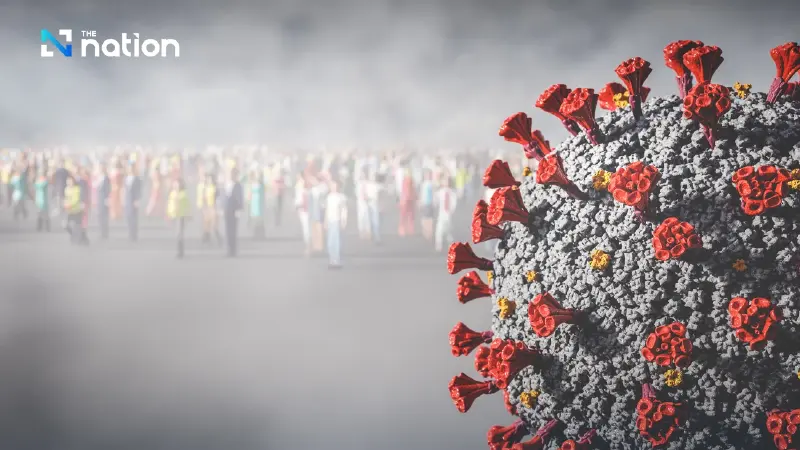


The government says Thailand’s dominant Covid-19 strain, NB.1.8.1, is being closely monitored but has shown no evidence of causing more severe illness, despite a seasonal rise in infections.
The government has urged the public not to panic over the spread of the NB.1.8.1 Covid-19 strain, saying there is currently no evidence that the dominant variant causes more severe illness, although infections are showing a seasonal rise.
Deputy Government Spokesperson Lalida Perisviwatana said on Tuesday that the government of Prime Minister and Interior Minister Anutin Charnvirakul was closely monitoring the Covid-19 situation in coordination with the Ministry of Public Health, the Department of Disease Control and other relevant agencies.
She said the government’s priority was to protect public health while preventing unnecessary alarm, adding that people should follow official updates and avoid sharing rumours or unverified information.
NB.1.8.1 already dominant in Thailand
According to the Department of Disease Control, NB.1.8.1 is now the main Covid-19 strain circulating in Thailand. The variant is a descendant of the JN.1 lineage and carries additional mutations on the spike protein, which may make it easier to transmit and better able to evade immunity. However, health officials have stressed that there is still no evidence that it causes more severe disease.
Earlier genomic surveillance by the Department of Medical Sciences, covering samples from January 1, 2025 to April 23, 2026, found that NB.1.8.1 accounted for 50.95% of sequenced samples in Thailand, followed by JN.1 at 24.97% and XEC at 9.14%.
The strain has drawn regional attention after Singapore reported a sharp increase in Covid-19 cases in mid-May. Singapore recorded 12,700 cases during the week of May 10-16, up from around 8,000 the previous week, while average daily hospitalisations rose from 56 to 73. ICU cases, however, remained low at around one patient per day.


Cases rising seasonally, but no major clusters detected
National surveillance data show that Covid-19 infections in Thailand have increased in line with the seasonal trend, but no large clusters have been detected. Most patients have reported mild symptoms, and the public health system remains capable of handling the current situation, Lalida said.
Earlier DDC data showed that Thailand recorded 3,642 cumulative Covid-19 cases and one death from January 1 to May 23, 2026. Reported cases had risen over the previous month but remained below the five-year median, suggesting the situation was still within a seasonal pattern rather than a severe nationwide surge.
High-risk groups urged to keep up basic precautions
Health authorities said the public should continue basic preventive measures, especially during the rainy season, when respiratory illnesses tend to spread more easily. These include washing hands frequently, wearing a face mask in crowded or poorly ventilated places, and avoiding close contact with people who have respiratory symptoms.
People who develop a fever, cough, sore throat or fatigue are advised to take an ATK test and rest at home to reduce the risk of spreading the virus to others.
The government also urged extra caution among high-risk groups, including older people, patients with chronic diseases and pregnant women. People in these groups should avoid crowded areas where possible and seek medical advice promptly if they develop symptoms.
“There are currently no signs of increased severity from the circulating strain,” Lalida said, adding that people could continue their daily lives while remaining mindful of their health and following public health guidance.
