
CEPI allocates about US$60 million for Bundibugyo Ebola vaccines
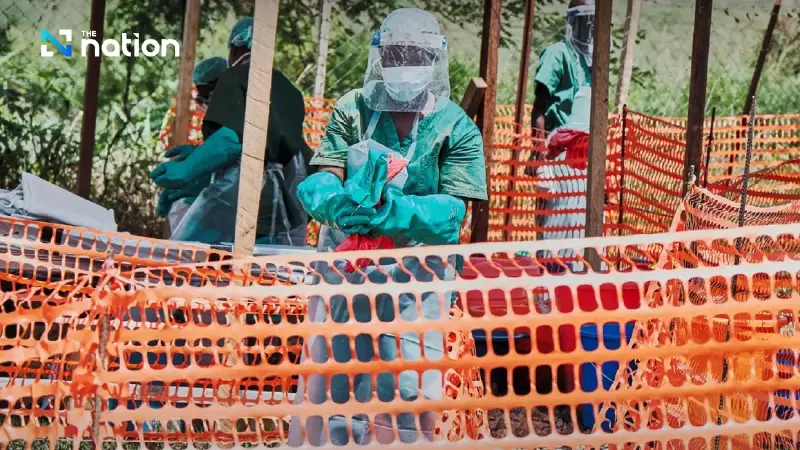


Moderna and two other vaccine projects will receive support as health agencies report confirmed cases in the Democratic Republic of the Congo and Uganda.
- The Coalition for Epidemic Preparedness Innovations (CEPI) is allocating about US$60 million to accelerate the development of vaccines against the Bundibugyo Ebola virus (BDBV).
- The funding will be distributed among three projects: up to US$50 million to Moderna, US$8.6 million to a University of Oxford/Serum Institute of India collaboration, and US$3.2 million to the International AIDS Vaccine Initiative (IAVI).
- This investment aims to speed up research and production, with the goal of having a BDBV vaccine ready for human trials within months.
- The funding is a critical response to a growing BDBV outbreak in Central Africa, as there is currently no approved vaccine or treatment for this specific Ebola strain.
International efforts to respond to the outbreak of the Bundibugyo Ebola virus (BDBV) have entered a critical phase after the Coalition for Epidemic Preparedness Innovations (CEPI), a global public health organisation, announced it would allocate about US$60 million to accelerate development of a vaccine against the disease, which is spreading in eastern Democratic Republic of the Congo.
The funding will go to Moderna and two other vaccine projects under development to speed up research, production and clinical testing, amid concerns that the outbreak could spread more widely.
Richard Hatchett, CEPI’s chief executive officer, said that, if development proceeds as planned, a vaccine for the Bundibugyo Ebola strain could be ready to enter human trials within the next few months.
That would mark a major advance, as there is currently no approved vaccine or treatment for this virus strain.
Figures from the Africa Centres for Disease Control and Prevention and the World Health Organisation show there are now 282 confirmed cases in Congo and at least 42 deaths, while about 1,100 more cases are suspected.

Uganda has also reported nine infections, including one death.
International public health agencies have declared the outbreak a public health emergency because of the risk of cross-border spread and the impact on regional public health systems.
CEPI said it would provide up to US$50 million to Moderna for the development of a BDBV prototype vaccine, covering both preclinical work and early-stage trials.
The funding also covers vaccine manufacturing and expansion into late-stage trials if early results show satisfactory efficacy and safety.
At the same time, CEPI is allocating a further US$8.6 million for a vaccine developed by the University of Oxford and produced by the Serum Institute of India, as well as initial funding of US$3.2 million to the International AIDS Vaccine Initiative to support another vaccine project.
IAVI’s vaccine is a single-dose injectable vaccine that uses the same technology as Merck’s Ervebo vaccine, an approved vaccine against the Zaire Ebola strain.
Animal studies have shown that the vaccine can significantly increase survival rates.
However, Mark Feinberg, IAVI’s president and chief executive officer, acknowledged that it remains unclear which agency will take primary responsibility for managing and conducting future clinical trials.

He said that during the 2014–2016 Ebola outbreak in West Africa, many vaccine trials were supported by US agencies and the WHO, but the WHO has more recently signalled that it may not take on that role in future, which could require additional new sources of support.
The University of Oxford’s ChAdOx1 Bundibugyo vaccine uses the same technology as the COVID-19 vaccine developed with AstraZeneca, which was widely used around the world during the pandemic.
Hatchett said researchers from Oxford and the Serum Institute had already shown, through their response to Rift Valley fever in Mauritania and Senegal last year, that they could produce a prototype vaccine ready for trials in about six weeks, faster than the traditional process that could take several years.
Even if the vaccines can be developed successfully, experts warned that the next major challenge would be procuring and distributing them to outbreak areas promptly.
Hatchett gave the example of efforts to control the Zaire Ebola outbreak in Congo between 2018 and 2020, when as many as 300,000 doses of Ervebo were needed to bring the situation under control.
In addition to CEPI’s funding, Gavi, the Vaccine Alliance, has announced an allocation of up to US$50 million to support the Ebola response, while the World Bank-backed Pandemic Fund has approved a further US$220.6 million in assistance.
The large-scale mobilisation of funding from several organisations reflects the international community’s urgent efforts to prevent the Bundibugyo Ebola outbreak from developing into a global public health crisis similar to severe outbreaks in the past.
