
Thailand tightens Ebola screening as no suspected cases detected
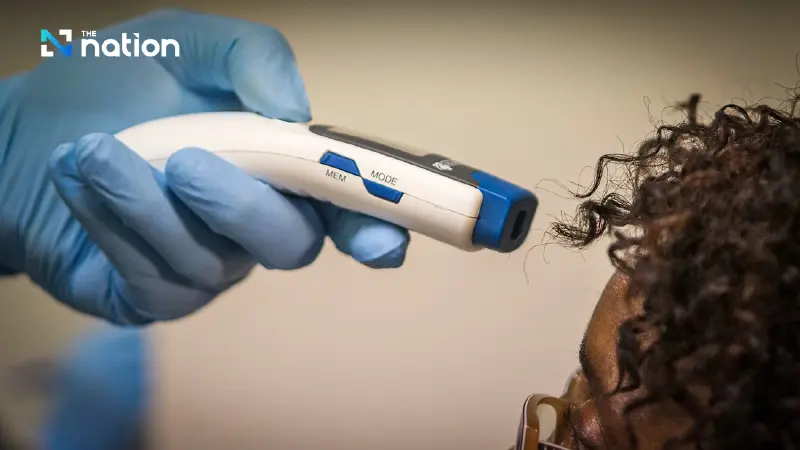


Dr Anek says Thailand has no suspected Ebola cases or PUIs, while four asymptomatic travellers remain in quarantine at Bamrasnaradura Infectious Diseases Institute.
- Thailand has implemented a compulsory 21-day quarantine for all travelers arriving from the designated Ebola-infected zones of DR Congo and Uganda, regardless of symptoms.
- Despite these heightened measures, health officials report there are currently no suspected Ebola patients or patients under investigation in the country.
- Screening has been expanded to include coordinating with hotels and airlines to identify travelers who may have transited through other countries by checking their 21-day travel histories.
- The strict quarantine policy has drastically reduced the number of arrivals from the affected countries, effectively acting as a travel deterrent.

Dr Anek Mungaomklang, Deputy Director-General of the Department of Disease Control (DDC), told Bangkokbiznews in an interview on Tuesday (June 2, 2026) about Thailand’s efforts to block Ebola infections, after the DDC opened its department-level Public Health Emergency Operations Centre.
He said travellers whose journeys originated in the two countries designated as Ebola-infected zones for a dangerous communicable disease, DR Congo and Uganda, numbered 19 on Monday (May 25, 2026), before measures requiring all arrivals to be quarantined even if they had no symptoms.
After compulsory quarantine was announced on Wednesday (May 27, 2026), the number fell to just one, or none on some days, averaging about one a day.
Overall, since Wednesday (May 20, 2026), when Thailand raised its Ebola surveillance measures, 69 people have been placed under measures ranging from observation to quarantine.
Of these, 41 have left Thailand, while 24 remain under observation because they entered the country before compulsory quarantine was imposed.
At the quarantine centre at Bamrasnaradura Infectious Diseases Institute, four people who travelled from the two countries and did not have symptoms are in quarantine, and none has shown symptoms.
“Thailand currently has no suspected Ebola patients or patients under investigation (PUI).
Bamrasnaradura Infectious Diseases Institute has 58 rooms available, and only four are in use.
After being quarantined for three days, they were all asked to return to their countries, because after three days, travellers have to bear their own quarantine costs. Most therefore ask to go home before completing 21 days.
In cases where they have no symptoms, they are allowed to return to their countries.
In cases where they have symptoms, they will be sent for isolation in the hospital.
At present, however, no one has symptoms,” Dr Anek said.
Dr Anek said travellers from DR Congo and Uganda who entered through normal channels were covered by strict surveillance and screening.
The concern was cases involving air transit or stopovers in other countries first, such as England, China or Sweden, while still within the disease’s 21-day incubation period, before travelling on to Thailand.
In such cases, the travel history could slip through the mechanism because systems at checkpoints or immigration might not check back as far as the previous 21 days, as many travellers enter from Europe.
However, the department has put in place another layer of surveillance for this group by coordinating with accommodation and hotel operators.
It has told them to ask additional travel-history questions and, if there is such a history, to notify disease control agencies.
Briefings have already been held with operators at the central level, and regional agencies have been ordered to hold follow-up meetings, particularly in areas with high numbers of tourist arrivals, such as Phuket, Krabi and Surat Thani, where similar action has already been taken.
Airlines must also ask further whether travellers have a history of travel from the two countries.
“My only concern is cases where people do not disclose their true travel history. But I believe there will be a few such cases. When they fall ill, and symptoms begin, it will soon become severe, making it difficult to travel anywhere; they will mostly stay in their rooms. This means the number of contacts will be small, because when there are no symptoms, they have not yet spread the infection. They will certainly have to report for treatment, because the symptoms will be severe. At that point, disease control teams will investigate and control the disease quickly, and will be able to keep it within a limited circle,” Dr Anek said.
Dr Anek further said Thailand’s measures to monitor for infected persons could be implemented according to the criteria and had encountered no problems.
Once the 21-day quarantine was announced for everyone whose point of origin was DR Congo and Uganda, people began to gradually not come.
Based on the situation overseas now, Thailand’s measures were sufficiently stringent.
Although it had not announced a ban on travel in and out, the measures amounted to a natural ban because few people were coming.
“The compulsory 21-day quarantine measure is already tough. Ask Thais whether they would still want to go to DR Congo or Uganda, because when they come back, they will be quarantined for 21 days and face additional costs. As for people who want to visit Thailand, they have visas allowing them to stay for 30 days, but after 21 days in quarantine, they have only a few days left to travel. They are no longer in the mood to travel. It is already like a natural ban,” Dr Anek said.
