
Thailand's Health Minister Vows to Turn Ancient Remedies Into a Global Export Empire


Public Health Minister Patana Promphat and Global Wellness Summit Co-Chair Cathy Feliciano-Chon set out Thailand's wellness ambitions and preview the 20th-anniversary Global Wellness Summit, November 10–13 in Phuket
- Thailand's Public Health Minister has announced a national strategy to transform the country's traditional remedies into standardized, science-backed products for the global export market.
- The initiative aims to create scalable consumer products to capitalize on the $6.8 trillion global wellness economy, moving beyond the geographic limitations of its current $14 billion wellness tourism and service industry.
- To achieve this, the government is streamlining clinical trials, standardizing local botanical remedies, and building commercial pipelines to turn traditional knowledge into export-ready formulations.
- The strategy is designed to benefit rural economies by integrating local agricultural supply chains, herbal artisans, and traditional practitioners into the new export-focused industry.
Public Health Minister Patana Promphat and Global Wellness Summit Co-Chair Cathy Feliciano-Chon set out Thailand's wellness ambitions and preview the 20th-anniversary Global Wellness Summit, November 10–13, in Phuket.
Thailand's ambitions to become a global wellness powerhouse took centre stage at a Friday press conference here, as Public Health Minister Patana Promphat and Global Wellness Summit (GWS) Co-Chair Cathy Feliciano-Chon previewed the kingdom's first-ever hosting of the summit's landmark 20th edition this November in Phuket.
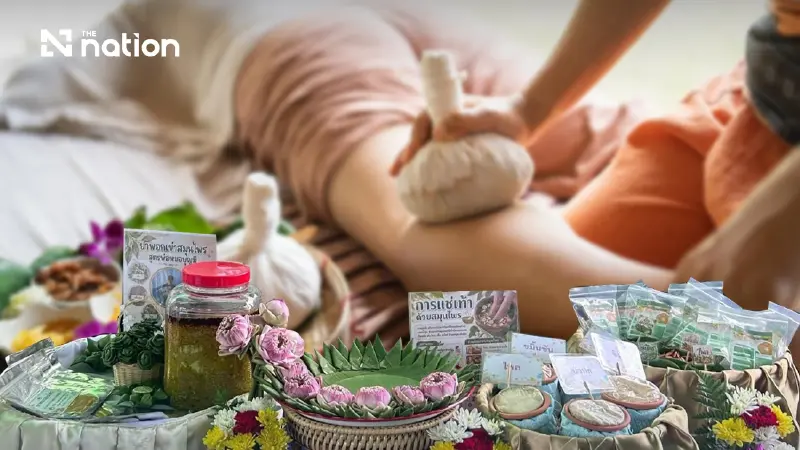
Minister Patana opened the briefing by outlining a strategic shift in Thailand's health and economic policy: moving beyond physical hospitality and spa services to transform the country's traditional remedies into standardised, science-backed exports for the global market.
While Thailand's wellness tourism and service industries generate an estimated $14 billion, physical product exports — traditional medicines, botanical supplements and herbal formulations — remain underdeveloped relative to their global market potential, the minister said.

Service revenue is inherently constrained by geography and physical capacity, he noted, while standardised, research-backed consumer products offer a far more scalable growth engine.
“For centuries, Thailand has embraced a holistic approach to health and well-being, one that harmonises the body, mind, spirit, community and nature,” Minister Patana said. “We aim to showcase Thailand's vision of becoming a leading global wellness hub where traditional knowledge is elevated through science, innovation and international standards.”

To close that gap, the Ministry of Public Health is directing research bodies to streamline clinical trials and standardise local botanical remedies—from integrative oncology adjunct therapies to advanced dermatological applications—building end-to-end commercial pipelines that turn traditional herbal knowledge into export-ready formulations.
State agencies, he added, are recalibrating their regulatory posture to support private-sector innovation rather than simply police it.
"The Royal Thai Government remains firmly committed to supporting investment, research, workforce development and international collaboration to foster a sustainable wellness ecosystem", Minister Patana said, "one that contributes to better health, reduces the burden of disease and enables people to live longer and healthier lives."
The numbers explain the urgency.

According to the Global Wellness Institute (GWI), the global wellness economy has grown 35% since 2019 to reach $6.8 trillion — nearly four times the size of the global pharmaceutical industry ($1.8 trillion) — and is projected to expand 7.6% annually to $9.8 trillion by 2029.
Asia alone generated $2.03 trillion of that total in 2024, growing a world-leading 9.3% and, for the first time, overtaking Europe in total wellness trips (563 million versus 348 million).
Within Thailand, the wellness economy reached $43 billion in 2024 — the world's 24th largest and its 7th-fastest growing — with wellness tourism ($14.05 billion) leading domestic sectors, followed by traditional and complementary medicine at $3.23 billion.

Why Asia, Why Thailand, Why Now
Following the minister, Cathy Feliciano-Chon, GWS co-chair and managing partner of FINN Partners APAC, welcomed reporters to what she called a preview of “the summit's milestone 20th year" – and the first time it will be held in Thailand.
Feliciano-Chon, who has sat on the GWS board for roughly 12 years, walked through the same explosive growth data before turning to the question she said matters most: why Asia, why Thailand, why now?
Asia, she argued, will be the world's proving ground for an ageing planet. The region is the first to experience both a fertility free-fall and rapidly ageing populations — a preview of a challenge the rest of the world is not far behind on.
Where Western longevity culture has often centred on tech billionaires chasing extreme lifespans, she said, in Asia keeping people healthy and productive longer is a matter of economic and social survival, making the region's emerging longevity economy a defining conference topic.
Asia is also pioneering what Feliciano-Chon called a genuinely integrative approach to longevity and health span.
While the West's clinical longevity market has largely emerged separately from traditional wellness practices like movement and stress reduction, Asia is home to millennia-old medical systems — from Traditional Chinese Medicine to Ayurveda — that gave rise to much of the modern wellness movement's emphasis on meditation, yoga and plant-based medicine.
Asia, she said, is now fusing those ancient traditions with cutting-edge preventive health and longevity science to create the integrated medical-wellness paradigm the world needs.
Thailand, she said, sits at the heart of that convergence. Several of the sector's iconic global brands trace their roots to Thailand — from Chiva-Som's pioneering wellness retreats in the 1990s to Six Senses' origins in Koh Samui and Amanpuri in Phuket — giving the kingdom deep authenticity at a moment when consumers are turning away from algorithm-driven, look-alike wellness products toward heritage, craft and ancient wisdom.
At the same time, Thailand is pushing hard into medical wellness and longevity: initiatives from operators including Anantara, BDMS Wellness Group and a newly announced “WellEra” mega-project are combining world-class medical facilities and longevity clinics with residential wellness communities.
That combination, Feliciano-Chon said, makes Thailand uniquely positioned to let delegates explore wellness's deepest roots and its high-tech medical future in the same trip.
She also introduced Thailand's partners in bringing the summit to Phuket, including Minor Hotels; host venue Angsana Laguna Phuket; and BDMS Wellness Group, exclusive research partner for GWI's newly released “Geography of Wellness” report on Thailand.

A Landmark 20th Anniversary, and What's Ahead
Founded in 2006, before “wellness” was a mainstream term, GWS has grown into what Feliciano-Chon called the “Davos of wellness” – a non-profit-linked think tank convening doctors, CEOs, investors, tech innovators and policymakers each year in a different country it identifies as shaping the industry's future.
Past summit stages have hosted U.S. surgeons general, leading longevity physicians and gymnast Simone Biles, while GWS's research arm, the Global Wellness Institute, has spent two decades defining and forecasting sectors from wellness tourism to wellness real estate.
This year's edition, themed “The Science, Art and Soul of Wellness", will run November 10–13 at Angsana Laguna Phuket and is expected to draw more than 600 CEOs, clinicians, investors and policymakers, co-sponsored by the Thailand Convention & Exhibition Bureau, the Tourism Authority of Thailand and the Ministry of Public Health.
The official programme, also announced Friday, points to several emerging topics: precision and longevity medicine, women's health and hormone optimisation, and the future of Asian wellness travel, alongside the release of GWI's 2026 Global Wellness Economy Monitor.
Confirmed speakers include geroscientist Andrea Maier, Blue Zones founder Dan Buettner, Chenot Group's George Gaitanos, and Minor International founder William Heinecke, with Feliciano-Chon herself moderating a session on Asia's independent hospitality brands.
A dedicated “Art and Soul” track will explore neuroaesthetics with Johns Hopkins' Susan Magsamen, alongside a new Intentional Spaces Design Challenge developed with Johns Hopkins' Center for Applied Neuroaesthetics.

For the anniversary itself, organisers are planning a retrospective “Looking Back to Look Forward” session tracing 20 years of wellness and beauty trends, alongside a celebration of Thai heritage — including a performance from the Buddhist Chanting Team of Dhammajarinee Witthaya School — woven throughout the three-day programme.
“Our industry is at another pivotal moment, where advances in science, medicine and longevity are converging with a return to — but also a reinvention of — the timeless need for connection, creativity and purpose,” said GWS Chair & CEO Susie Ellis, adding that Thailand offered the ideal backdrop given its blend of ancient wellness traditions and rapid push into medical-wellness infrastructure.
For Bangkok, the stakes extend well past the conference hall. Officials say the export strategy is designed to route capital directly into rural economies by integrating local agricultural supply chains, herbal artisans and traditional practitioners into commercial pipelines, rather than concentrating benefits in luxury resorts alone.
By pairing that heritage with modern clinical research and digital health infrastructure, Thailand is positioning itself not merely as the summit's host but as a long-term commercial leader in the world's $6.8 trillion wellness economy.
Photo Credit: Public Health Ministry
