
Focus turned to Kachin State


Play
This week, US Assistant Secretary of State for Democracy, Human Rights and Labour Tom Malinowski visited Kachin State for two days.
He visited and met with Kachin religious organisations, civic organisation, members of the KIO technicians team, Regional Government of Kachin State, Shan ethnic leaders, and refugees of Kachin conflict and the Myitsone dam project.
During his visit, he said the democratic transition of Myanmar, the military's role and the economic condition of the country are being watched by the US government. He also said the human rights violations by the military and KIA in Kachin State have been noted. Kachin refugees will continue to be assisted.
Recent developments in Kachin State are not favourable as the country is pressing for a new national ceasefire agreement. Sparking fresh concerns were the surprise artillery attack on a Kachin Independence Army (KIA) training camp in November, which cast doubt over faltering peace talks. It sparked concerns from the United Nations as the shelling was reported near civilian areas and rebels said clashes could spread. The United Nations called for civilians to be protected in the fighting, which has caused around 100,000 people to flee their homes since a 17year ceasefire ended in 2011.
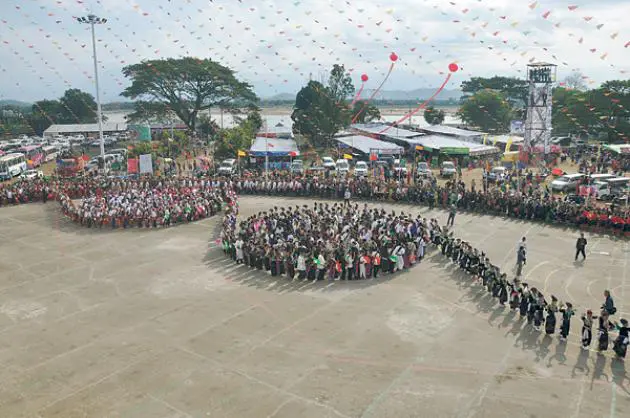
Nurturing the relationship, President Thein Sein was in the state to mark the 67th anniversary of Kachin State’s Day on January 10.
In his message sent, the president urged all national brethrens living in Kachin State to work together with Kachin State Government in order to ensure an immediate success in the peace process organised by the Union Government and witness developments in the state.
“In building a new peaceful modern democratic nation, all national brethrens living in Kachin State must make concerted efforts through patriotic and Union spirit,” Thein Sein said.
“Only with the peace and stability, can Kachin State enjoy equitable development. With the hope of achieving success in eternal peace in the whole country including Kachin, the Union Peacemaking Work Committee and the group of representatives of Kachin Independence Organisation (KIO) held several meetings in Myitkyina during 2013 and 2014 and reached the agreement. For that reason, KIO’s liaison office was opened in Myitkyina. The conflict negotiation team was also formed by two sides,” Thein Sein said.
“Moreover, the UPWC and armed ethnic oarganisations held a ceasefire negotiation in Myitkyina in order to sign a nationwide ceasefire deal and a joint statement was also issued. Now efforts are being made to sign the nationwide ceasefire deal with armed ethnic organisations including the KIO,” Thein Sein said.
Up to now, the internally displaced persons are still living at the rescue camps.
The UPWC and the KIO formed the conflict negotiation team with an aim of reducing tension between two sides during May 2014 and held monthly meetings.
However, the government army launched heavy artillery to the KIA’s cadet training school on November 19 in 2014, killing 23 cadets and wounding 20. Consequently the KIA decided to suspend the monthly meeting of the conflict negotiation team.
“This incident delayed the ceasefire process and ensured a breach of mutual trust,” the leaders of armed ethnic organisations said.
