
Laos moves towards industrialisation


Play
Laos is now moving towards industrialisation and modernisation after experiencing a slight increase in the share that the industrial and service sectors represent in the overall economic structure.
In contrast, the agriculture and forestry sector has declined significantly in the past decade as a result of the country pursuing a market economy.
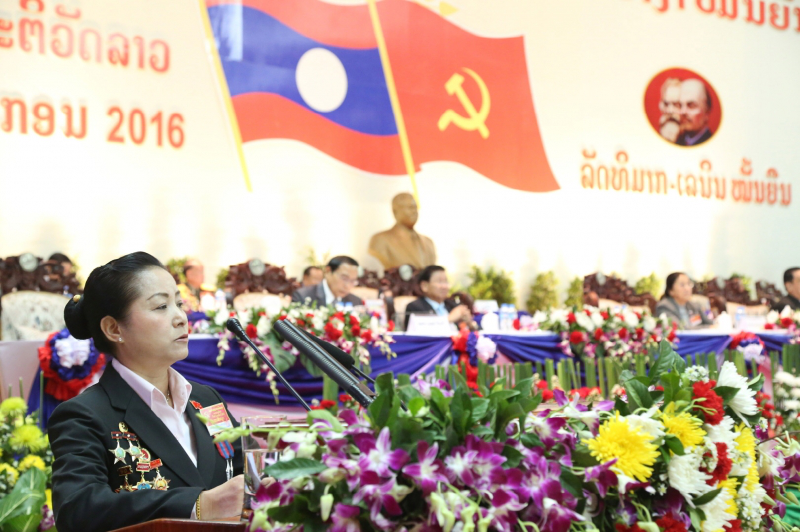
Deputy Minister of Planning and Investment Khamchan Vongsaenboun yesterday presented a report on the role of her ministry in developing the market economy in line with socialist principles, at the 10th party congress.
She highlighted the achievements made in developing the economy through market mechanisms, allowing all economic sectors to be involved in the development process.
The involvement of all economic sectors has contributed to the continued growth of the Lao economy and changes in the country’s economic makeup.
According to the government report, in the fiscal year 1999-2000 the agriculture and forestry sector accounted for 46.2 per cent of the country’s economy but by 2014-15 this had fallen to 23.7 per cent. It is expected to decline to 19 per cent in the next five years.
Meanwhile industry’s share of the economic pie had risen from 17.9 per cent to 29.1 per cent by 2014-15 and is expected to increase to 32 per cent by 2020.
The construction of hydropower projects in particular is paving the way for Laos to move closer to industrialisation and modernisation.
The value of the service sector also increased from 35.9 per cent to 47.2 per cent in 2014-15.
In 2005, the number of workers in the agriculture and forestry sector accounted for 78.5 per cent of the country’s total labour force but was expected to have fallen to 65 per cent by the end of 2015.
Labour in the industrial sector increased from 4.8 per cent in 2005 to 11.5 per cent of the total in 2015 while the services sector rose from 16.7 per cent in 2005 to 23.4 per cent in 2015.
Over the past five years, despite the global economic recession, the economy has continued to grow at an average of 7.9 per cent annually and the number of poor families has declined significantly.
The value of Gross Domestic Product (GDP) has reached 102,320 billion kip (US$12.8 billion) with GDP per capita climbing to 15.8 million kip ($1,970).
The government also mobilised total funding of 236,687 billion kip towards national development, which is considered higher than anticipated.
The government also focused on strengthening SMEs so that they are capable of competing within the Asean Economic Community.
It’s projected that the economy will continue to grow at an average of 7.5 per cent annually over the next five years with GDP per capita projected to reach US$3,190.
Economic growth will be driven by several mega-projects such as the Laos-China railway, Hongsa power plant, Xayaboury hydropower project and other investment projects.
