
Lufthansa departs KLIA again


Play
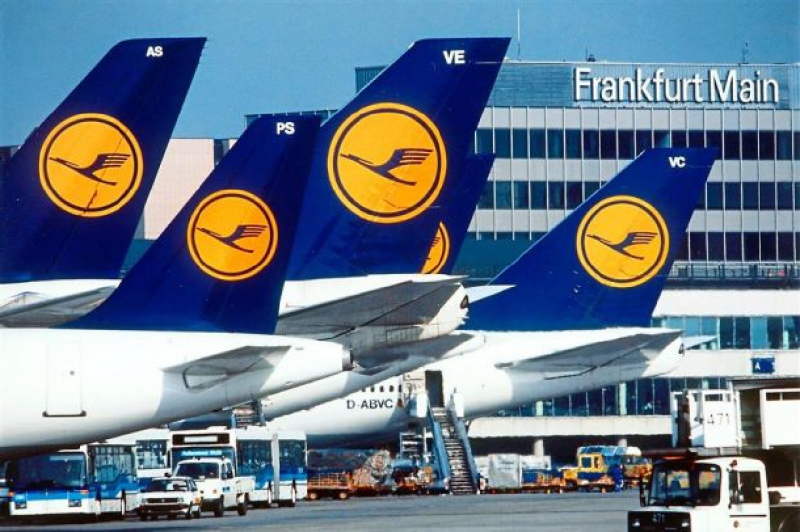
KUALA LUMPUR - Lufthansa, Europe’s largest airline by passenger numbers, has pulled out of KL International Airport (KLIA) again.
This comes less than six months after Air France stopped plying the Paris-Kuala Lumpur route.
Lufthansa stopped its 3 weekly flights or close to 900 weekly seats on the Frankfurt to Kuala Lumpur route on Feb 28. However, it continues to offer connectivity from German cities to Singapore and Bangkok.
This also comes on the heels of the suspension of flights to Paris and Amsterdam by Malaysia Airlines (MAS) in early February.
“It certainly reduces the visibility of direct connections for Lufthansa in the Malaysia outbound market to Germany,’’ says an industry executive.
This is the second time Lufthansa has suspended flights into Kuala Lumpur. Rising cost, labour issues, stiff competition that puts pressure on yields could be factors that forced the German carrier to review its strategy.
The first time it move out of KLIA was in 1998 during the financial crisis but returned several years later. It was operating five times weekly flights but reduced them to 3 times a week on Jan 6.
“They may come back if they have the right planes,’’ says the executive.
This departure does put a small dent on passenger volumes at KLIA. As it is, KLIA has seen a drop in volume due to a cut in capacity by MAS, though the frequency increases by other airlines have somewhat helped cushion the drop.
For December 2015 there was a 12.5% drop in passenger traffic at KLIA to 2.12 million from 2.43 million the previous year. But overall traffic at all airports operated by Malaysia Airports Holdings Bhd (MAHB) inched up by 0.5% to 83.73 million in 2015. For January this year, passenger traffic expanded by 4.4%.
This year, MAHB expects better volumes and has forecast a 2.5% rise in passenger numbers to 86 million.
Although passenger traffic to and from Europe has declined about a quarter for January and February this year, that decline was mitigated by a double-digit increase in traffic to and from the Middle East.
Lufthansa accounted for about 5% of total traffic for KLIA but strong growth in traffic from KLM, Turkish Airlines and British Airways in addition to growth in travel by Emirates and Qatar Airways are expected to result in net growth in passenger traffic to KLIA.
With Air France and Lufthansa’s departure, the European airlines still operating out of KLIA are British Airways (BA), KLM and Turkish Airlines.
There has been much effort made by MAHB to get more European carriers to fly into KLIA but Europe is still reeling from the economic slowdown and experts believe 2016 will largely be a year of Asian carriers flying into KLIA.
“There is significant upside to BA, KLM, MAS and its code share partner Emirates now, at the expense of Lufthansa,’’ adds the executive.
MAS now only flies to London, and all other European connections are either via Emirates and its long-time code share partner, KLM.
“We still have a code share with MAS and we can still connect at KLIA,’’ Air France Royal Dutch Airlines country manager for Malaysia and Brunei Aude-Lise Combier says.
But the bigger gainers are really the Middle-Eastern carriers as they are willing to fight on fare pricing, product offering and wide connectivity.
“It is tough to compete with the likes of Emirates, Etihad Airlines and Qatar Airways,’’ says the executive.
To take advantage of the vacuum left by Lufthansa, several carriers are offering special fare packages to Europe.
KLM and Air France are big rivals of Lufthansa and yesterday, KLM introduced its refurbished business class seats in Kuala Lumpur in a bid to woo more traffic.
It is enjoying high loads now says Combier, but she declined to elaborate further.
With the new seats, she says “we are fully convinced of the potential of premium traffic.’’
Though for now the demand is a bit slow.
KLM was not the only airline to showcase its business class flat beds this week.
MAS did the same earlier in the week with its fully lie-flat seats for its A330-300 fleet.
A MAS spokesperson says volume was good for the seats as the new seats are already fitted on some of its aircraft.
This new seat offering is part of MAS bid to make a comeback after suffering two major air disasters in 2014 that had eroded some of its market share in the global air passenger traffic space. Gaining that back is going to take time and for that, it has to invest to reinvent itself.
Some of the first few changes it is making is to the seats, food, entertainment and also services.
“Competition is so intense and if MAS wants to fill its front end of the cabin, its offering has to match that of its peers or be even better,’’ says an airline executive.
