
North Korea and its people seem to be trapped in time


Thailand's most updated English news website, newspaper english, breaking news : The Nation
When I had a rare chance to visit North Korea about 10 years ago, it felt like entering a drab and bland country.
Nearly all the things I saw – be it the clothes the North Koreans wore, or the buildings there – were either in shades of blue, black, white and grey only.
I went to Pyongyang in 2008 under a press tour.
I still remember vividly my four-day visit to the isolated country because it was so surreal, like stepping into a place where time stood still.
Visitors who have gone there in recent years said there had been improvements here and there, but by and large, North Korea remains a country trapped in time.
Back then during my visit, the streets in Pyongyang were nearly empty, even though it was the capital city of the country.
You could hardly see any vehicles on the road.
People moved around the city by walking or using the public transport – tram cars, trolley buses and city buses.
I was told then that no matter how far the distance, they only needed to pay five won (about 10 sen) for each ride.
The North Koreans probably walked a lot, I could not find anyone I would describe as fat during my brief stay.
The local people would not have any eye contact with you even when you were standing right in front of them.
They would just pass you by. They knew I was “different” from the colourful clothes I wore.
Oh, I wore jeans too, a garment that was banned in the country because they rejected any products from western countries.
Seven other Malaysian journalists and I were always accompanied by two officers from North Korea’s state-owned Korea International Travel Corporation (KITC) during our trip.
I guess that was also the reason why the local people stayed away from us.
Forget about free-and-easy sightseeing in North Korea. All visitors, even just two people, must be accompanied by a driver and two local tour guides.
One of the guides must be fluent in the visitors’ language.
I noticed that the North Koreans were a very guarded bunch. They did not display much emotion or expression, even when they were talking among themselves.
To me, they looked like human robots devoid of feelings.
I confess that there were times during the tour when I was overcome by irrational fear of not being able to return home and be forever stuck in a country caught in stasis.
One day, our guide took us to a North Korean-styled barbecue lunch at Mt Ryongak, a popular place for outdoor activities.
We bumped into a group of locals there. A woman was dancing and singing while a man played the accordion. Others surrounded the two and cheered them on.
To our surprise, the group invited us to sing and dance along.
The friendly folk greeted me and even shook my hands.
Having encountered normal people who were so guarded with their words and actions, the “warmth” shown by this group was a little unsettling.
I could not help but wonder if they were just actors staging a show to impress us.
Another time, our tour guide arranged for us to stay in Yanggakdo International Hotel on the Yanggak Islet of the Taedong River.
The guide told us there was no nightlife in Pyongyang.
However, tourists were not banned from going out at night.
That occasion was the only time our two KITC officers did not hover around us.
I wandered the streets with the other journalists.
I remember walking along a dark and secluded street for some time before we saw some North Koreans.
Like usual, we were ignored.
We could not go far as all the taxi drivers refused to take us anywhere without a local guide accompanying us.
Other nights, I would just stay in my room watching movies about North Korean soldiers fighting for their country.
I also visited the casino in the hotel which was open only to foreigners.
When I was about to leave the city to board the train to Dangdung, China, I deliberately looked into the several residence blocks in front of me.
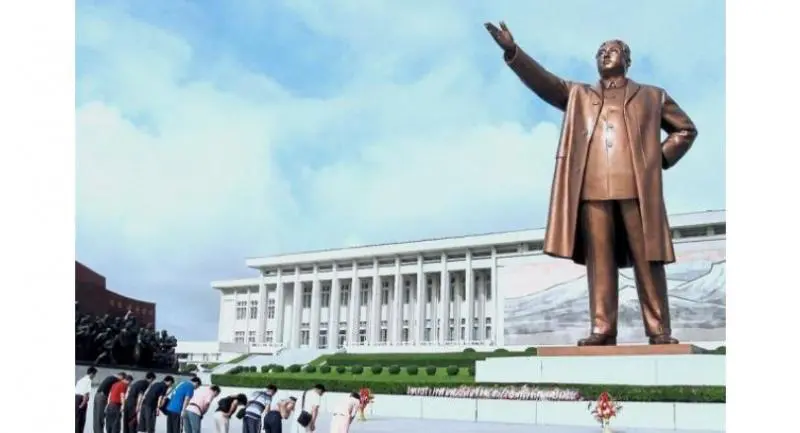
Through the small windows of each unit, I could see photos of the much-revered leaders Kim Il-sung and Kim Jong-il hanging on the wall.
Il-sung ruled North Korea for 46 years, from 1948 until his death in 1994.
He was succeeded by his son, Jong-il, the father of current leader Jong-un, whose half-brother Jong-nam was assassinated at KLIA2.
Although Dangdung was just 10 minutes from Sinuizu in North Korea, I felt it was like in a different universe.
Before we were allowed to leave the country, North Korean soldiers approached us to do their routine check.
They collected our passports and other necessary documents.
We also had to open our luggage for inspection besides being subjected to a body search.
The soldiers paid close attention to the photos that we had taken, just to make sure we did not bring out any images deemed “inappropriate” to North Korea.
It felt so good when I was able to leave the isolated country and was given back my handphone.
Yes, we could not bring our handphones into North Korea.
And there was no Internet access for us during our stay.
Memories of my brief visit there flooded back recently, triggered by events that made North Korea famous for a “deadly” reason.
I wonder. Back then, did I enter a world which detractors claimed as a truly terrible place, or, was it a “utopia” carefully crafted by its Supreme Leader for the benefit of his beloved subjects?
