
Grab to inject $100m in Myanmar expansion
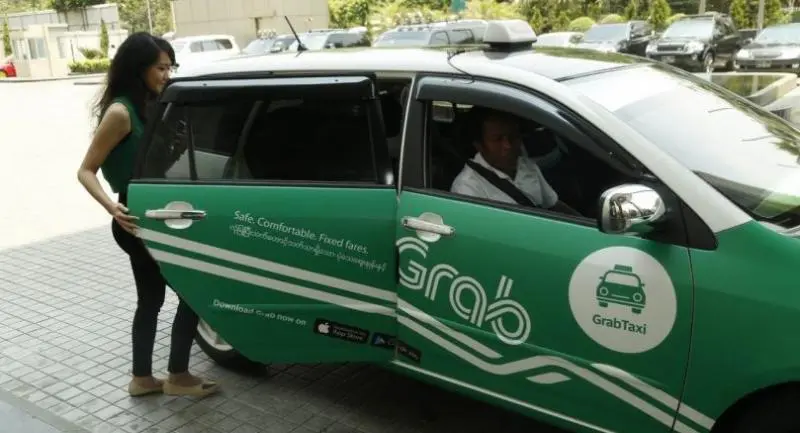


GRAB, one of the leading ride-hailing providers in Southeast Asia, said yesterday that it would invest US$100 million (Bt3.32 billion) over three years to expand in Myanmar.
“This is already one of our fastest-growing markets, and we are very excited to deepen our commitment into Myanmar,” said Anthony Tan, co-founder and CEO.
The firm would build a team of up to 200 local talents to enter major cities and roll out products including GrabPay.
The firm had taken off at an incredible pace in the market.
He pledged to address Myanmar’s transport challenges with locally suited and innovative solutions that would create more socioeconomic opportunities for locals.
Tan seemed proud of the firm’s performance, as it became by far the market leader with the largest licensed taxi network in the industry.
The firm has partnered with more than 6,000 taxi drivers and intensively trained them to ensure quality service. It now takes 25,000 bookings every day.
Since May, the firm’s driver partners have seen an average increase of 240 per cent in their monthly earnings.
They also enjoy free personal accident insurance, discounted mobile data plans and financial services through its partnerships with CB Bank and Wave Money.
Besides expanding to other cities, the firm will provide 24/7 call centre services and improve its corporate travel facilities. It also plans to introduce a cashless payment feature called GrabPay.
Regionally, the firm has more than 55 million app downloads and over 1.2 million drivers in 87 cities across the seven countries it operates in.
Over 8,000 corporations use the app to manage their employees’ transport expenses digitally and seamlessly.
The firm’s expansion plan meshes well with the regional government’s strategy for transport sector reforms.
Phyo Min Thein, chief minister of the Yangon Region Government, encouraged the firm to be part of the reforms.
“We are happy to hear the voice of taxi drivers and passengers through Grab, who have daily contact with people. This will help us to properly transform the taxi sector in a way that works for everyone,” he said at an earlier event.
The official said all taxi companies must build safety and security features into their own systems, and employ technology solutions.
Grab should improve taxi drivers’ capacity to provide the best service to passengers, and build their language and business skills.
“Taxi drivers play a key role by providing transportation services to both locals and foreigners. So they should at least learn to speak English for better communication,” he said.
Koh Chee Chian, deputy chief of mission and counsellor at the Singapore Embassy, said he looked forward to more innovation to help improve traffic conditions, enhance passenger convenience and safety as well as to lift the drivers’ livelihoods.
He is confident the firm’s entry into Myanmar would create new synergies to complement the government’s development agenda in terms of infrastructure development, urban planning and revamping public transportation.
“With an estimated 33 million active mobile subscriptions in Myanmar, of which 80 per cent of the subscribers are smartphone users, Grab is riding on the wave of the digital revolution that is sweeping across the country,” he said.
