
China's distant diaspora
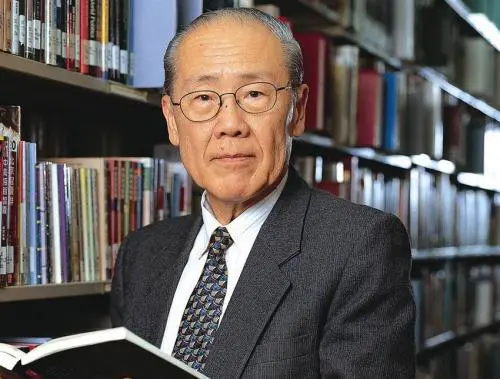


Barred from studying his ancestral homeland, Wang Gungwu discovered much about his fellow overseas Chinese
Wang Gungwu: Junzi Scholar – Gentleman
By Asad-ul Iqbal Latif
Published by the Institute of Southeast Asian Studies, 2010
Available at leading bookshops
Reviewed by Jeffery Sng
Wang Gungwu, perhaps more than anyone else, has highlighted the complex dilemmas facing Chinese living abroad and their interaction with their homeland. In a world dominated by Western science, Western thought and Western scholarship, Wang Gungwu is recognised internationally as a leading historian on China and Southeast Asia.
Asad-ul Iqbal Latif’s book “Wang Gungwu: Junzi Scholar – Gentleman” is a series of conversations with Wang published last year to mark his 80th birthday. The interviews span the life, times and thoughts of an eminent intellectual, scholar, Sinologist and teacher. The text is reflective, lucid and easy to read.
Wang was born in 1930 in Surabaya in Dutch Indonesia, the son of a Chinese-language teacher who’d emigrated from Taizhou. The family subsequently moved to British Malaya and Wang was raised in Ipoh.
He acquired from his parents a strong Chinese identity. Growing up in a colony impressed on him how much Asians had lost over the centuries to the dominant Europeans. He wondered why China, after millennia of greatness, failed to respond to the challenges of the 19th century. Wang looked to history for the answers.
What happens when a great empire collapses? How does it recover? These questions intrigued him against the backdrop of the Qing Dynasty’s demise in 1911 and China’s descent into 40 years of civil war.
He searched for parallels in history and found the 100-year civil war following the fall of the Tang Dynasty. The result was Wang’s 1957 PhD dissertation for the University of London School of Oriental and African Studies, “The Structure of Power in North China during the Five Dynasties”.
However, born into a migrant family, Wang was also interested in the history of overseas Chinese and the pattern of China’s relationship with the countries around the South China Sea.
Wang’s vivid reminiscences of his childhood and the Japanese occupation of Malaya are poignant and reflect the challenge of identity re-orientation that many overseas Chinese face.
As an adult he came to understand that authorities regard history as a dangerous subject. The restrictions imposed on the study of history in Southeast Asia frustrated his quest for answers. His youthful curiosity about China remained unsatisfied.
The British wanted to play down Anglo-Chinese conflicts and instead turn the Chinese against Japan. The strategy was probably the most successful British policy contributing to Japan’s military defeat during World War II.
“The Japanese invasion of Manchuria in 1931 gave Chinese nationalism its particular stridence, and the war of 1937-1945 still provides the trigger, if not the core, of contemporary Chinese nationalism,” Wang says. “Compared to Chinese nationalist passion against the Japanese, even the nationalism against the Great Powers and America seemed pale in retrospect.”
Japan had earlier inspired Asian nationalist movements against Western colonial powers with its 1905 military victory over Russia. Its invasions of the early 1940s speeded up the de-colonisation of Southeast Asia.
The war resulted in the installation of independent nation states throughout Asia, but they became divided into opposing camps, capitalist or communist.
The 1940 triumph of Mao Zedong provoked a fiercely anti-communist reaction in post-colonial Southeast Asia, so that it became impossible to study modern Chinese history in Malaya. The governments of Malaya and Singapore suspected every Chinese resident of communist sympathies.
Communist phobia intensified during the Korean War and America’s war against North Vietnam. Anti-communist propaganda, official suspicion of Chinese intellectuals, the banning of Chinese-language books, and a travel ban to communist China made it almost impossible for overseas Chinese to research modern China.
So Wang shifted his attention to ancient history. The source materials were freely available in most countries, although the travel ban precluded access to any within the Peoples’ Republic.
Wang’s earliest publications reflected a careful avoidance of modern China. Following his 1957 treatise on the Five Dynasties, there was “The Nanhai Trade: A Study of the Early History of Chinese Trade in the South China Sea”.
Wang also wrote extensively about the Chinese diaspora in the region, although he disliked that term when applied to Chinese leaving China, because of its association with propaganda that perpetuated fears of a “Chinese threat” in the South China Sea.
He observed that overseas Chinese embraced neither Chinese nationalism nor that of their adopted countries. And yet nationalists in their host countries did seek to enlist them in nation-building efforts in the wake of de-colonisation.
Witnessing at close quarters the formation of Malaysia in 1963 and Singapore’s separation in 1965, in the wake of divisive ethnic politics, must have tarnished his faith that people of diverse heritages could enrich national culture while being loyal citizens of their new nation.
After completing his PhD in London, Wang became an assistant lecturer at the University of Malaya. His talents were quickly recognised. By 1962, at age 32, he was dean of arts, and by the following year a full professor.
In 1968, though – stung by Malaysia’s refusal to grant his son an identity card and still restricted in his travels in China – Wang moved to the Australian National University as professor of Far East history.
There, with abundant resources on contemporary China, he was able to renew his earlier interest. The People’s Republic was then in the throes of the Cultural Revolution.
Finally working without fear of official suspicion or reprisal, Wang spent 18 productive years. Australia actually brought him closer to China.
And, when Wang became vice chancellor of Hong Kong University in 1986, he got a close-up look at China after the Cultural Revolution. Hong Kong unwittingly gave him a ringside view of the tragic Tiananmen Square crackdown in 1989.
Despite Tiananmen, the decade Wang spent in Hong Kong convinced him that Deng Xiaoping’s reforms had reversed the decline China began in the 19th century. He characterised Deng’s success as China’s “Fourth Rise” – after the unification achieved by the Qin-Han, Sui-Tang and Ming-Qing dynasties.
It must be gratifying for him to see China seeking to rejoin world history largely on Chinese terms.
He left Hong Kong in 1996, the year before Britain gave it back to China, and returned to Singapore as chairman of the East Asian Institute. He had come full circle, back to the island of his youth.
Wang continues to live and work in Singapore. He is also chairman of the Institute of Southeast Asian Studies and the Lee Kuan Yew School of Public Policy.
