
Finding love and compassion in our inner garden
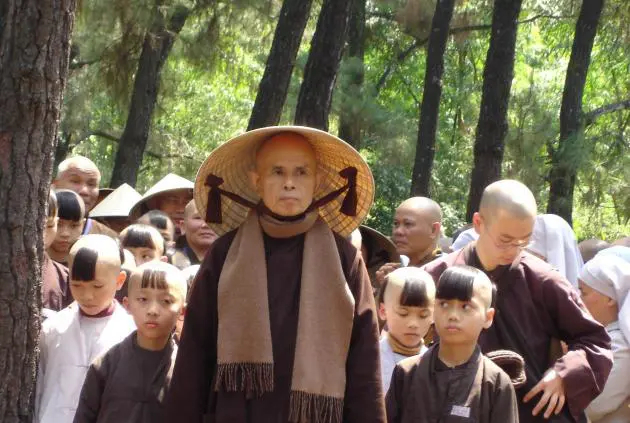


American professor Jerry Braza explains how mindfulness can help us to lead more meaningful lives
The Seeds of Love: Growing Mindful Relationships
By Jerry Braza
(With a foreword by Thich Nhat Hanh)
Published by Tuttle
Available at leading book stores
“Life exists only in the present moment, to lose the presence is to lose life,” says Vietnamese Zen master Thich Nhat Hanh. That basically sums up the concept behind the monk’s mindfulness practice, which has gained immense popularity in the West. Many Westerners have spent time at his Plum Village in France and among them is Jerry Braza, the author of “The Seeds of Love”, who has returned on several occasions.
A practising Catholic, Braza has studied the teachings of psychologist Carl Rogers, meditation teacher Ram Dass, thanatologist Elisabeth Kubler-Ross as well as Thich Nhat Hanh and finds Nhat Hanh the most impressive. In “The Seeds of Love”, Braza, a professor in health education at a US university as well as a meditation practitioner/teacher, mainly draws on Nhat Hanh’s approach to mindfulness and adds ideas from other faiths, culling quotes from the Talmud and St Francis of Assisi.
With an accessible text that’s interestingly devoid of Buddhist jargon, “The Seeds of Love” should appeal to those of all faiths, especially newcomers to mindful, meditative practice and not just Buddhists who may be already used to vipassana-bhavana (insight meditation).
On the surface, Nhat Hanh’s mindfulness practice comes off as a cure-all, a life-changing experience or even a therapy that can slowly transform our lives.
Braza explains that we are each a gardener in the garden of consciousness. It is our duty to go back to our gardens and to choose, plant and tend the best seeds. Each of us should know exactly what’s going on in our own gardens and try to put everything in order, restoring the beauty and harmony. Then, we need to grow the seeds of compassion, love, joy and loving kindness. In this book, the author points to the pathways to the present moment and gives us the gardening tools.
He discusses two kinds of consciousness: store and consciousness (the soil and the seeds, or things below the soil) and mind consciousness (the visible garden, or things above the soil). Whether or not our meditation can develop fast depends on the quality of the seeds that lie deep in our consciousness. Too many weeds, or stress and it’s difficult to get focused.
City dwellers would almost certainly see a distinction between the inner world and outer world. But the two worlds are one and the same and affect each other, according to the Zen master. You cannot understand the outer world without thoroughly discovering the inner.
That’s when mindfulness comes in useful. And Braza simply makes it more practical for those of us stuck in the rat race.
Braza recommends a slow walk, a visit to a park, or sitting on the porch or balcony as a way to discover “noble silence”, or a unifying of body, speech and mind.
But whatever we do, we must be mindful every step of the way. That’s the goal of mindfulness, or mindful awareness. “Mindfulness is bringing our whole being to everything we do,” he explains. This means you don’t need to be in a retreat at a Buddhist temple in order to practise or maintain mindful awareness of the reality. It’s very important to stop, rest and renew in order to be in tune with the present moment.
But how does meditation practice benefit us?
The author has learned that even in this slowing of the mind, thoughts are present, but his mind is not as “reactive” to them in solitude and the natural environment. Then there’s “interbeing”, or oneness with all. You’d be successful once you see flowers blooming in your garden. In Buddhism, we believe mindfulness leads to concentration and concentration leads to insight.
Readers will find much to reflect on, especially on the subject of the inner garden. After all, this seems the only place to find understanding and compassion. While we’d all like to do a walking meditation in the woods, pick wildflowers along the way as well as bamboo branches for flower arrangements, the majority of us cannot afford the time to enjoy that environment.
So it is incumbent on each of us to find our own gardens, and appreciate the peace and miracle of where we are.
