
Seeds of survival
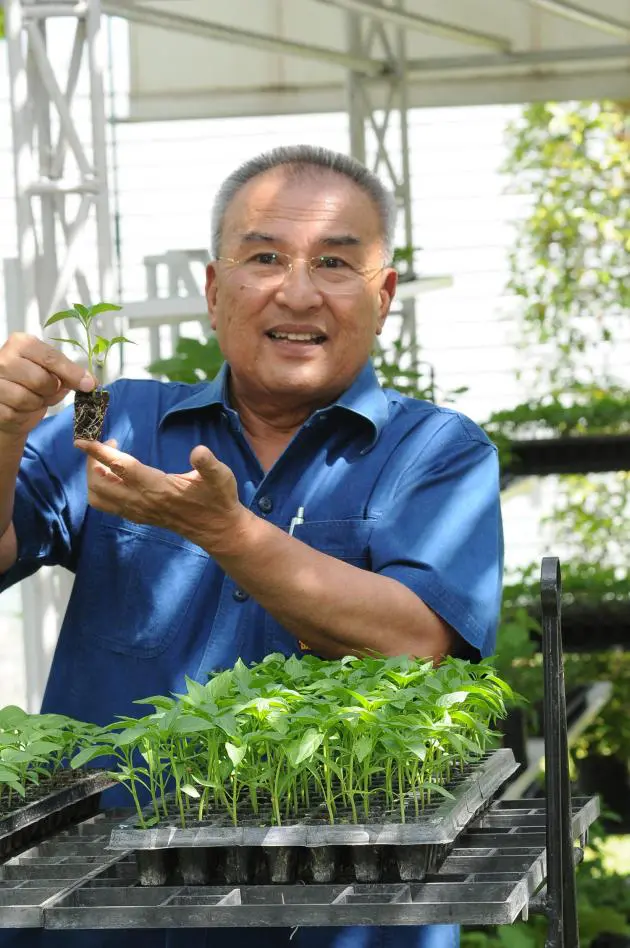


The Mae Fah Luang Foundation |sets up to bring the philosophy of |self-sufficiency to 13 provinces through a vegetable-growing project
With floodwaters beginning to recede in all but a few areas in 13 upcountry provinces from Sukhothai down to Suphan Buri and Saraburi and the clean-up operation well under way, many organisations are looking towards what residents are most likely to need in the medium to long term as they strive to resume normal.
Many will be struggling to make ends meet, either because they were unfortunate enough to lose their jobs as a result of the flooding or because they will need to borrow money to be able to fix their homes.
The Mae Fah Luang Foundation under Royal Patronage is aiming to help one million flood-affected people or 30,000 families enjoy sustainable lives through affordable garden vegetables under its “Kla Dee” project.
The foundation, which operates on His Majesty the King and the late Princess Srinagarindra’s self-sufficiency philosophy, started to examine flood-affected areas in Nakhon Sawan, Phitsanulok and Uthai Thani in the middle of October. On October 21, it planted the first seedlings at the Provincial Administration Organisation in Uthai Thani province as well as at Lop Buri Agricultural and Technology College and the Royal Thai Air Force II site, also in Lop Buri. The seedlings are chilli, eggplant, aubergine, holy basil or sweet basil, yardlong bean, pumpkin, water spinach, Chinese cabbage, chaom and banana.
MR Disanadda Disakul, the foundation’s secretary general, says that because floodwaters have destroyed garden vegetables, these have become scarce in the market or else expensive.
“Our 120-day project, will help support flood victims to grow and to consume garden vegetables on a sustainable basis,” he says. “There are two objectives: the first is to reduce household expenses and the second to increase income.”
The foundation is dividing the distribution into three steps: “ready to eat”, “ready to grow”, and “ready to breed”.
“Our seedlings will shorten the period for growing these plants. Above all, we hope that after the floods recede, community networks will be sufficiently strong that they can continue to work to improve their quality of life,” MR Disanadda says. “People in these provinces have lived with water all their lives but this year, we have more rain than usual. We need to go back to our roots and one of the ways of doing that is to grow various types of plants. You don’t need a big garden for these vegetables. Most of them can be grown in an enamel basin.”
The foundation’s goal is to help families reduce expenses by as much as Bt600 per person or around Bt600 million in total. “Once they have enough for themselves, they could generate income from the additional crop. We estimate they could earn about Bt1,066 per person in this four-month period.
Narong Apichai, the foundation field’s director who is in contact with flood victims, says he feels that most rural folk are in good spirits. They can still catch fish from the river. Those in trouble are the urban people who can’t find what they need in the shops or markets.
“What we trying to do is encourage these people to help themselves. All the vegetable seedlings we are giving can be found in our everyday diet. Our help is maybe not very big but it is something quite necessary, just like a few drops of fish sauce in a bowl of steamed rice,” he points.
“So once the floodwaters recede, our seedlings – about 1.4 million from Uthai Thani and 600,000 more from Lop Buri province will be ready to deliver. They can pick them up within 15 days,” Narong adds.
MR Disanadda guarantees that the fruit from the “Super Hot” chilli seeds that the foundation will be snapped up once they find their way to the market.
In response to the foundation’s philosophy, the Mae Fah Luang style is direct: “We respect our beneficiaries. We ask what they need, what their problems are and then we try to provide them with what they need. We can give them vegetables that are ready to eat and seedlings that are ready to grow. More importantly, they will be growing their vegetables in community and family networks,” MR Disanadda says.
Anyone affected by the floods and wanting to receive seedlings can contact their Provincial Administration Organisation.
GROW A LITTLE
- The budget for the “Kla Dee” project is around Bt65 million and the Swedish furniture maker Ikea has donated Bt20 million.
- A starter set costs Bt250, and if you donate that amount, it’ll ensure a needy family will get one.
- The Mae Fah Luang Foundation “Kla Dee” project has accounts at Siam Commercial Bank, Bank of Ayudhaya, Kasikorn and Krung Thai Bank. Call (02) 252 7114, e-mail [email protected] or visit www.MaeFahLuang.org.
