
'Four Reigns' falls hard


Play
Kukrit's novel wasn't made for the stage, let alone a fawning, high-speed musical
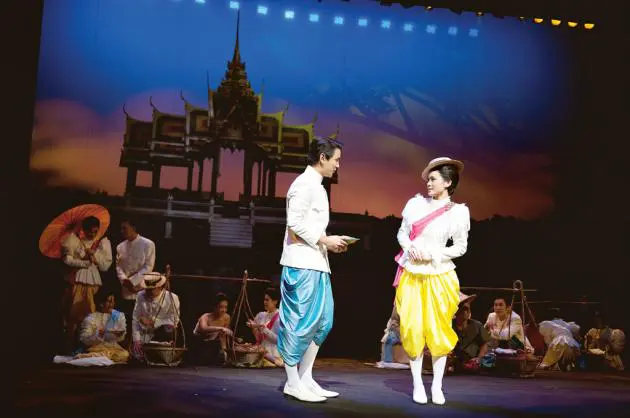
Scenario’s stage adaptation of MR Kukrit Pramoj’s beloved novel “Si Phendin” (“Four Reigns”) is a bold effort – some might say crazy. It’s now onstage at the Muangthai Rachadalai Theatre.
The book has been tremendously popular since Siam Rath first serialised it in 1951, and since the 1960s there’s been a TV adaptation every decade.
I well remember being glued to the small screen in 1982, watching Nantawan Mekyai and Pinyo Thongchua portray Mae Phloy and Khun Prem and learning how society had changed so much.
But there has never been a movie version or a professional stage adaptation. (Euthana Mukdasanit presented it onstage when he was a student at Thammasat University.)
The reason is evident: Compressing a saga that spans six decades and has so many characters into a two- or three-hour script threatens to sacrifice too much of the novel’s value.
Scenario actually added more dialogue, scenes and characters to Kukrit’s “Luk Khunluang” four years ago – grievous tampering, in my view – but it’s done the opposite with “Si Phendin”.
The first act of this 195-minute version speeds along like a revue rather than a musical, with characters entering and exiting on swirling turntables, simply hurling emotions at one another, and offering little explanation for the drama underway.
This is in addition to frequent displays of the Siamese ways of yesteryear, reminiscent of a Thai tourism show overseas.
Act 2, fortunately, allows time for more detail and empathy for the characters. Still, however, because of the compression, significant characters like Phloy’s lifelong friend Choy and her older brother Pherm are portrayed as clowns. Her younger son Od and youngest daughter Praphai are mere caricatures.
The script coarsely re-focuses the book. The novel is praised for its vivid depiction of Siam as it underwent significant social, political and economic changes, as recounted in simplistic fashion by Mae Phloy. It presented this aristocratic woman in highly realistic form, as well.
The five authors of the stage script instead want to show how the King is the “pillar” of her life, but they fail to adequately explain her personal reasons why. Worthwhile social and cultural issues are touched upon but never developed, such as Phloy’s marriage not being entirely a matter of her own choice.
There are those who will take umbrage at the rewriters’ emphasis on the “pillar of life” aspect. This, and repeatedly playing the main theme, “Nailuang Khong Phaendin”, almost suggest a return to absolute monarchy.
Amid today’s appeals for political reconciliation, and following an election blessed by a 75-per-cent voter turnout, such an outdated vision only disparages our eight decades of democracy.
I studied at Chitralada School, and even there my teachers never asked me to sing the King’s praises four times in three hours, as the characters in this musical do.
“I love my king,” Phloy says in her opening monologue, and I do too, because he is a king in a democratic country and has supervised numerous projects that benefit the people.
Veterans Sinjai Plengpanich and Kriengkrai Unhanan fit the roles of Phloy and Prem, but when they start singing it’s clear they weren’t trained for musical theatre.
As the teenage Phloy and Prem, Napat “Gun” Injaiuea and Pimdao Panichsamai are better singers, except when Gun gets too jazzy in a dance scene, perhaps to please his fan club. It spoils our image of the gentlemanly Prem. Pimdao’s characterisation is praiseworthy – she’s aware that she’s in a musical, not in concert.
As On and Un, their sons of opposing ideologies, Yuttana “Toomtam” Puangklang and Anuttaphon “R” Sirichumsang are a good match, overshadowing Singharat “Singto” Chanphakdee’s portrayal of little brother Od as a stereotypical wimp.
Rudklao Amratisha, as Choy, steals the show in one musically demanding solo number, demonstrating again that she’s one of the few professional actors who can sing and act just as marvellously well.
Young singer Nutthanit Ratanaserikiet displays her roof-raising prowess as Phloy, but apparently she needs a few more months in acting class.
As always with Scenario productions, the set and costumes are a feast for the eyes. As for the ears, the music and lyrics are reminiscent of its past works, especially “Thaviphop”, with sections sounding like Broadway.
And there’s a continuity problem with the style of language in both dialogue and lyrics – it shifts back and forth between traditional and contemporary.
Bottom line, the most anticipated musical of the year turns out to be the least worthy of your time and money. You really should buy or re-read the book instead (there’s an English version with a much better translation than the theatre surtitles offered).
Scenario seems to have had a year of regression. Its three new productions – “Rueng Lao Khuen Fao Phi”, “Boxing Boys” and “Si Phaendin” – did not earn positive reviews, and nor did the “Thaviphop” revival.
The firm also gave Singapore a three-day run of “Boxing Boys” – its attempt to climb on the Korea-style non-verbal performance bandwagon. Further touring is quite unlikely.
The New Year kicks off with “Rueng Lao Khuen Fao Phi”, which is an effort to replicate the commercial success of “Ghost Stories” in London. We wish them well and hope for rejuvenation soon.
Plenty of time
_ Postponed by the flooding, “Si Phaendin The Musical” is now onstage at the Muangthai Rachadalai Theatre and continues through January 22, with a holiday break from December 26 through January 5.
_ The shows are Wednesday to Sunday at 7.30 with weekend matinees at 1.30 (no English surtitles at the matinees).
_ Seats cost Bt500 to Bt2,800 at www.ThaiTicketMajor.com. Find out more at www.Rachadalai.com.
_ Watch at video clip at www.NationMultimedia.com.
