
You can bet on British bubbly


Play
An English sparkling wine is the champion at a blind tasting in Bangkok
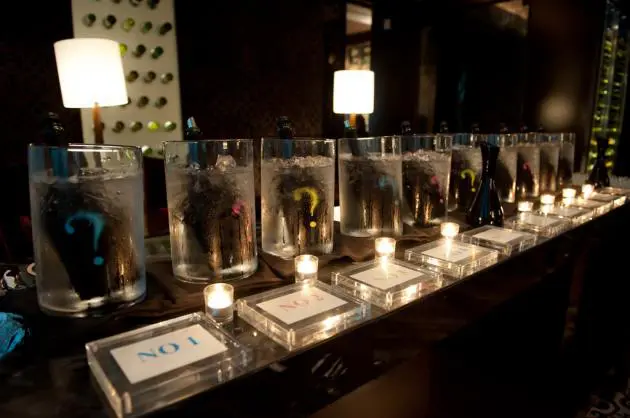
Boutique wine importer Fin (Fabulous Is Needed) hosted a blind tasting of sparkling wines in the St Regis Hotel’s Decanter Room late last month to introduce good choices from various places. The invited connoisseurs were the judges, but it was all quite friendly.
Everyone was given a notebook in which to grade the wines, from whites 1 to 7 to roses 8 to 10. We had to identify the country of origin and whether the wine was Champagne or sparkling.
Sparkling wines from England were in the spotlight. England began producing wines only relatively recently – mostly whites – and they’re not commonly encountered here.
The original English wines “were far too acidic, the rose was so-so and pinot noir was hopeless”, Michael Broadbent of Christie’s recalled. “But there’s been a dramatic improvement thanks to climate change.”
In fact English whites have been claiming top awards in the International Wine Challenge since 1984.
Sparkling wines are made with the same methods used in France’s Champagne region, but unless they actually come from there, they can’t legally be called Champagne.
Still, you have the same continuous stream of fine bubbles and the same effect on the palate – smooth, tingling or sharp. They can be dry (brut) or lightly sweet (sec). On the nose they’re yeasty, toasty and nutty from oak and fruit, with high acidity.
Of the 10 wines we sampled, three were Champagnes, three Cre’mants, three English and one German. Only one judge was able to pick out the English sparkling wine, and he was British and had visited the winery there.
The results of the tasting were quite a surprise. The best score went indeed to the 2007 Jenkyn Place Brut from Jenkyn Place in Hampshire, England.
It’s 60 per cent Chardonnay, 20 per cent pinot noir and 15 per cent pinot meunier. The steady stream of bubbles opened up a nose that was toasty and nutty. The palate was light and fruity, reminiscent of sherbet and limoncello, for an excellent balance of citric sweetness and acidity.
“It’s not sparkling wine that’s good enough to be mistaken for a French role model,” the celebrated winemaker Robert Joseph has said, “but fine, rich, refreshing, gently fizzy stuff that will carry the reputation of English vineyards across the globe.”
In second place was Cre’mant de Limoux AC from Bernard Delmas in Languedoc-Roussillon, France. An organic wine, it appealed with intense apple, fresh bite and a stylish finish, clean and refreshing.
Tied for third were the Champagne Blanc de Noir Brut 1er Cru AOC from Gonet-Medeville in France and 2008 Riesling Sekt Brut from Wittmann in Rheinhessen, Germany.
The former was full, rich and expressive, with a vibrant structure. Light strawberry, berry and mineral notes ride a chalky texture. The fruity Riesling is an ideal candidate for a great sparkling wine, extremely appealing for its crisp sparkle and also organic.
