
Quite a spicy story
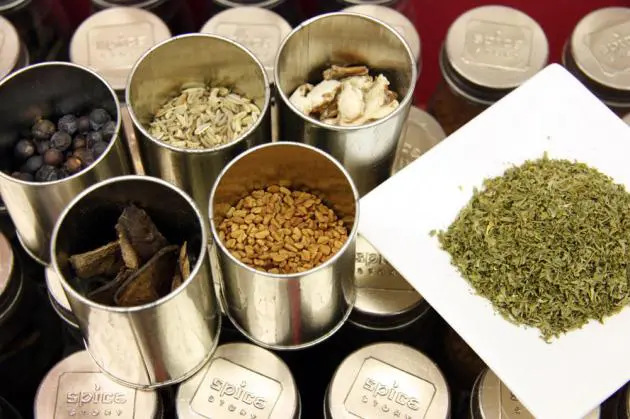


A lot of hard work went into making boil-and-eat Thai spices easy
Walk into the fragrant Spice Story shop at posh Siam Paragon and you don’t exactly envision an elderly Chinese man flogging tobacco in Sampheng, but that’s was Spice Story’s opening chapter.
In Chapter 2, that man realised that pepper was just as important an ingredient in Thai cooking as it was back home. He jettisoned the tobacco trade and started buying peppercorn in bulk from Chanthaburi.
This savvy immigrant hand-roasted and ground the pepper by hand, called it Nguan Soon (“step-by-step progress”) and, in 1954, opened the first spice shop in Chinatown.
Today that pepper and some 300 other Hand Brand No 1 herbs and seasonings are found in almost every home in Thailand, marked by the upturned thumb on the label. In fact, they’re sold in more than 20 countries.
And that Chinese man’s grandson, Visit Limprana, is now in charge of the Nguan Soon Group. His Spice Story recently moved upstairs to larger premises at Paragon, from the first to the fourth floor, and also serves food made with the firm’s spices.
Nguan Soon’s assistant managing director, Somnuek Ongrattanakana, calls the store a “business model”, with overseas franchises in mind – as well as the government’s Kitchen to the World campaign.
“It’s a mix of retail shop, restaurant and kitchenware store,” he points out. “Spices are part of daily life, and yet there are few shops like this overseas.”
Spice Story has retail counters in restaurants in Germany and Italy, but the aim is to have full-scale stores in Japan and Britain soon.
To make it as easy as possible for customers, the seasonings come powdered and ready to use, ideal for homesick Thais overseas and those at home too busy to cook entire meals. Tom yum, som tam and laab can be made in minutes, as can stir-fried rice with basil and sweet braised pork.
“We’ve developed the know-how to mix the ingredients in a single powder, with the help of Kasetsart University,” Somnuek says.
“Take our green curry, for instance. You just boil the powdered curry, add vegetable oil and whatever meat you like, and cook it through. The powder has a shelf life of nearly two years. And there’s generally only a 20-per-cent reduction in flavour compared to cooking with fresh spices.”
The packaged seasonings include shallots, sweet basil, ginger, cumin and lemongrass. There are also packets of dried herbs – galingal, nutmeg, coriander seed, cloves and kaffir lime leaves – and dried lotus and bamboo leaves for wrapping food.
One of the beauties of the shop is that you can taste everything before buying. The extensive menu of dishes, drinks and even ice cream infused with spices ranges from deep-fried shrimp wonton with yellow curry powder to duck noodles braised with Chinese five spices and pork stew with jasmine rice.
The one-of-a-kind ice cream and sorbet combine spices, milk, herbs and other plants that go way beyond the usual vanilla and strawberry flavours – the sharp bite of chilli, dark chocolate with black peppercorn, orange with the jolt of cinnamon and many more.
The healthy herbal drinks, served hot or cold, include ginger cinnamon, pandanus, poulay tea and refreshing almond juice made with Chinese almond seeds.
Somnuek sees Thai spices – pleasantly mild rather than fiercely hot or brashly strong – as having a solid future in the world, although there are obstacles.
“Spices were in great demand in Europe as far back as the Middle Ages – and very expensive. They were as valuable as gold. It’s harder to fix the price on the market these days, though, and because of that, many farmers shun them. We have to contract planters at pre-determined prices, like the Royal Projects, which supply our herbs like thyme and oregano.”
Peppercorns currently cost more than Bt300 per kilogram, he says, but Thai growers can’t meet demand. “Pepper is our main and best-selling product. We generally buy about 1,000 tonnes a year. In the past it all came from Chanthaburi, but now we rely on Vietnam, China and Sri Lanka for 40 per cent of our needs.”
Nguan Soon also imports vanilla sticks from Madagascar and cinnamon from China and Indonesia.
Domestically, it controls 60 to 70 per cent of an herb-and-spice market that earns more than Bt2 billion a year. Exports account for 30 per cent of its revenue, mainly from Europe, the US and elsewhere in Asia.
The company is expanding in other ways. It opened its first “Thai-style” fast-food restaurant, Muaythai Quickmeal, in Bahrain, serving 30 or 40 dishes made with its ready-to-use ingredients. The fans in the UAE probably want to take some of the spice packets home too.
“It can be a challenge preparing tasty meals at home on busy workdays,” Somnuek notes. “But what we make is designed to make mealtimes easy. Everyone can cook!”
FOLLOW YOUR NOSE
<< Spice Story is on the fourth floor of Siam Paragon and open daily from 10 to 10. Get in touch at (02) 610 9242 or www.TheSpiceStory.com.
<< Today only (January 22, 2012), Nation readers can eat at the store for 10 per cent cheaper.
