
The measure of a life
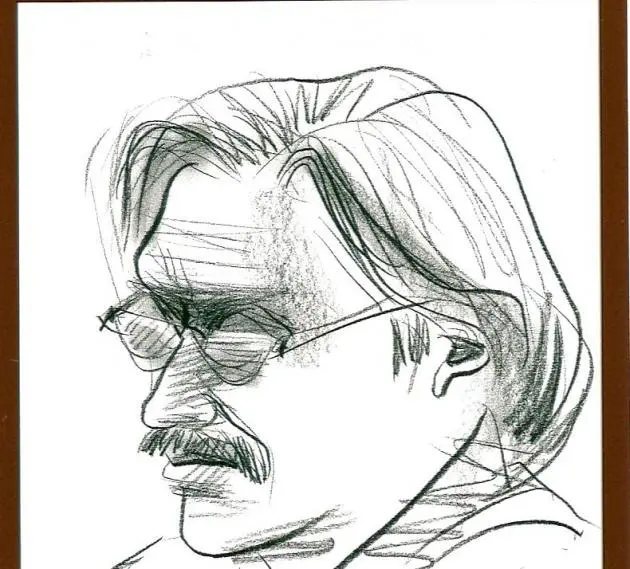


Well-known Oriyan poet, playwright, and fiction writer JP Das celebrates the autumn of his years with an omnibus of his works
JP Das Omnibus
Edited by Paul St-Pierre
Published by Har-Anand Publications, New Delhi
Available at bookshops in India
Reviewed by Jitendra Nath Misra
It’s unusual that a distinguished civil servant gives up his day job to become a full- time writer. JP Das took such a course but few have followed in his footsteps. We will never know if Das would have managed the same output had he kept his government job. This aspect of his life has so permeated Das’s persona that we are distracted from having the measure of Das the writer.
The volume has eight sections: poetry, short stories, plays, nonsense verse, essays, the art of Odisha (Orissa) state, speeches and interviews, and the author's translations of works in different languages into English. There is also an excerpt from Das's novel, “A Time Elsewhere”. So is there something that connects the diverse meditations of this motley collection?
The threads that hold together a writer’s oeuvre are often invisible, felt, not seen. But one thing comes out clearly from this collection: Das's concern with social issues, such as religious discord (Community), starvation (Kalahandi), and war (Kargil). The play “Sundardas” deals with caste, religious faith and the rights of women. “A Time Elsewhere” is a social history of nineteenth century Odisha.
In the essay, “The Poet and Society”, Das makes his views clear; a poem has to serve a purpose beyond itself and articulate social, moral and political concerns. But we also test a poem for the aftershock it creates, leaving, after the initial convulsion, a slowly settling feeling of both hope and despair. When a writer becomes a social observer, we are up against something we don't know how to deal with. Better, therefore, to treat the writing on its artistic merits alone. For all his emphasis on the writer's social role, Das’s poems provide literary solace.
Forget the subjects of the poems, wonderful sensations ooze from them: “So I searched for the moon behind the Hill/ so many hills, twisted and crumbling/ jostled trees, broken rock, and, beyond/ the temples’ pinnacle, the silence/ of centuries in the colourless sky” (“The Dream”), or “My life is a continuous/ search for refuge/ in your remote continent” (“Sanctuary”).
After the poetry, navigating the section on the short stories is like a tedious journey on a straight path, with few surprises. Phrases like “Kusum shook her head in the negative” (“The Long Life of Poetry”) and “Psychological fear gripped him” (“The Pukka Sahib”) are trite. Yet, “The Long Life of Poetry” is the best story, because of its connection with poetry, which the protagonist dreams of writing. This theme recurs in the play, “Before the Sunset”, where the narrator, Dipankar, proclaims that his friend “used to write poetry and wanted to become moonlight”.
For anyone interested in Odisha, and the author Fakirmohan’s place in it, the information Das provides in the chapter, “Fakirmohan’s Life and Work: An Overview”, is archival. Das’s portrait of this great novelist is shaped by the times in which Fakirmohan lived, when land changed hands, just as crowns did. Fakirmohan's best-loved novel, “Chhamana Athaguntha”, is about dispossession and loss, resulting from changes in land ownership.
In the excerpt from “A Time Elsewhere”, Das escorts us through turbulence amid stagnation, in a dishonest era, when defeat reigned. The story of the hapless king, Birakeshari, is told with an almost tactile empathy. The historical memory of the Odia became feeble under multiple onslaughts from the Marathas, the British and the new Bhadralok of Bengal.
While we have plenty of books on India as a whole, Das has provided a good social history of one of its lesser-known parts. This is a sweetheart book, not a bad idea, because Odisha is considered a hinterland, with an all-weather underachiever's tag. It is only now that the state has begun a revolt against its past, like the rest of India.
Das is a literary perennial. Now at 75, has the time come for him to stop wielding the pen? What, then, is the purpose of an omnibus, if not to provide a summation of his life’s works? Das recently told The Hindu newspaper that he has slowed down as a writer. There is the scent of autumn in this volume, and we can only hope that the cold, dark winter does not loom.
Jitendra Nath Misra is an Indian Foreign Service officer and, most recently, was India's ambassador to the Lao People's Democratic Republic. The views expressed in this essay are his personal opinions, and do not reflect the views or policies of the government of India.
