
GOING FURTHER AND BEYOND
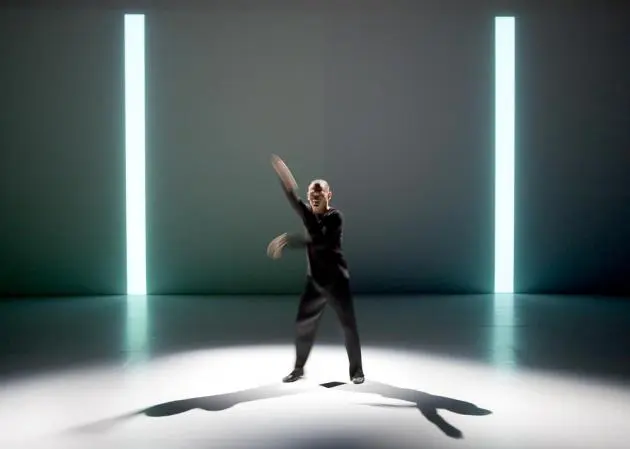


Performance artists from all over Asia share their personal perspectives in ConversAsians
The second edition of the biannual ConversAsians, organised by the Esplanade – Theatres on the Bay, featured a smaller number of artists — just 12 from seven countries including four Singaporeans. The reduced scope allowed the audience more time to watch their works in different stages of development, listen to their talks and participate in their workshops as well as leaving space for reflection about what we had experienced. The event had moved from being purely a performing arts market towards becoming a platform of exchange, meaning local audiences, artists and students could also enjoy and learn from it as much as festival organisers from around the world.
Indonesian choreographer Ery Mefri and his company Nan Jombang from West Sumatra staged “Tarian Malam” (“Night Dances”), a response to the earthquake that destroyed the city of Padang, where they were rehearsing in September 2009. In a unique work that’s deeply rooted in tradition yet filled with contemporary sentiment, Mefri’s virtuosic performers were vigorous in drumming, chanting, dance and martial arts as well as clapping and using their body parts as percussions. The post-show discussion revealed that renowned Australian performing arts centre Brisbane Powerhouse co-commissioned this work and helped in introducing the Minangkabau performing arts traditions, not widely known outside Indonesia, to the world.
Doyenne of Malay contemporary dance Marion D’Cruz presented her performance-lecture “Gostan Forward”, in which she collaborated with director Mark Teh. Interspersed with short excerpts from her favourite dance works, which showed a wide range in form and content, the performance was auto-biographical – ranging from anecdotes of her student years the US and the UK to how she’s been creating identity for Malay contemporary dance. It’s also filled with relevant socio-political comments, such as one on Malaysia’s national anthem that drew laughter. A highly revered teacher and a good storyteller and actress, thanks in part to collaboration with her late husband Krishen Jit, the pioneer of modern theatre in Malaysia, D’Cruz was always effortless, comfortable and willing to share her personal stories with extraordinary kindness, as if drawing the audience into her cosy living room.
Japanese dancer and choreographer Hiroaki Umeda’s notes for his signature solo work “While Going to a Condition” said, “I consider that my own physical appearance is just one of the elements of various phenomena.” A pluridisciplinary artist, he also designed the sound, image and lighting for his performance. That’s why “Condition” was not merely about physical movements, but their interaction with what’s going on in the visual and aural space around them, and vice versa. The rapid dance movements, pulsating sound and quick changes of visual images were juxtaposed with brief moments of silence. One element didn’t overwhelm the other – unlike in many performances that extensively use visual projection – but were well united and strongly affected the sensory perception.
It was evident here that contemporary Asian artists are continuously experimenting with both form and content. And it’s because they don’t get stuck in one field or tradition of arts that their performances are so engaging and travel far beyond their homeland. Perhaps this is a good lesson for Thailand’s performing arts schools, which are doing quite the opposite.
“Tarian Malam” is at the Brisbane Powerhouse this weekend and will return to the Esplanade as part of “Pesta Raya: Malay Festival of Arts” next month. Umeda is scheduled to perform another solo work “Holistic Strata” at the Biennale de la danse in Lyon, France also next month. “Gostan Forward” may be in Bangkok early next year. Stay tuned.
Special thanks to the Esplanade’s corporate communications team for all assistance.
