
DIM SUM A LA MICHELIN
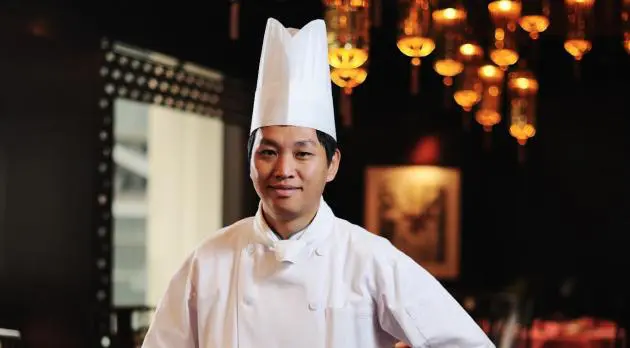


China House at the Mandarin offers tantalising Hong Kong specialities
Cantonese cuisine is all about freshness, simple cooking and plenty of seafood. Dishes are mild and rarely spicy. So when a great chef from Hong Kong came to town recently to China House at the Mandarin Oriental Bangkok, it was easy to visualise the tasty dim sum, slow-cooked clear soup, steamed seafood and stir-fried dishes that are part of traditional Cantonese cooking.
China House was lucky to host for a week last month Chef Man-Sing Lee of the famed Michelin-starred Man Wah restaurant at the Mandarin Oriental in Hong Kong. During a media tasting, Chef Lee cooked traditional and seasonal specialities with a touch of modern flair using the best seasonal ingredients he’d sourced himself in Hong Kong.
Man Wah’s award-winning signature dishes include steamed fillet of spotted garoupa, crispy ginger, crabmeat and egg white sauce; stir fried lobster, egg white, scallop mousse; smoked fish with five spices, crispy mushroom julienne shrimp and garlic spring roll; wok fried pork loin, kuei hua flavoured pear, chin kiang vinegar and wok fried wagyu beef with black pepper sauce. Unlike other Michelin-starred establishments, you don’t need to take out a small bank loan to dine at Man Wah. The food is reasonably priced, but the wine list could be pricey.
The seven-course media lunch at China House featured these and other classic Cantonese favourites. As in Man Wah, Chef Lee ensures Cantonese cuisine is created in fine dining style at China House. Seasonal favourites are really seasonal, thanks to the chef’s attention to best-quality seasonal ingredients.
Served first was a selection of dim sum, including tiger prawn dumpling, beef tenderloin puff with black pepper sauce and deep fried dumpling, bacon, mushroom, and black truffle.
The portion was quite small. The chef came out from the kitchen to tell us that the puff has 92 layers. The bacon in the deep-fried dumpling tasted like BBQ pork, which was nice. There was a balance between scrumptiousness, flavours, crunchiness and presentation for the first course.
Next up was stir-fried lobster, egg white, and scallop mousse. The chef explained via his interpreter that the egg white is easy to burn, so it’s slowly and slightly cooked so that it’s made just right. The egg is soft and wobbly like fresh tofu. Everyone finished the dish very quickly, praising its freshness and simplicity.
Next was one of Chef Lee’s signature dishes, US pork neck, Keui Hua flavoured pear, Chin Kiang vinegar. We were told the Keui Hua is some kind of flower that tastes like chrysanthemum juice. The pork neck was not as fatty as initially imagined and I liked its crispiness. The pear was preserved in Chinese liquor and flavoured with Kuei Hua. The chef added cashew nuts, which gelled well with the pork but never overpowered the main ingredient.
My favourite was steamed garoupa fillet, crispy ginger, crabmeat and egg white. I liked it because so many ingredients were thrown into the dish to create the one dish marked with flavourfulness and wholesomeness. It was incredibly tasty too, thanks to the presence of tiny pieces of delicious dried scallop, which could be easily mistaken for dried shrimp. I loved the crispy ginger so much that sat atop the dish. With this dish, your battery is fully charged.
Chef Lee then presented his classic dish, Australian wagyu M7 tenderloin, black pepper sauce. Non-beet-eating reporters opted for sea cucumber. The only spicy dish on the menu, the wagyu was well done, but incredibly soft. As a Thai, there should have been rice alongside. The portion was not big, so it was finished in no time.
We had real hot egg tartlet with chilled mango cream, tackling the hot one first. The ladies will particularly enjoy the dessert because it was not very sweet.
It was an agreeable meal that encompassed quite a lot of Cantonese traditional offerings. Let’s hope Chef Lee will be back at China House once again next time.
