
A LIGHT WITH ENERGY


Play
The world's top street dancers heat up the Thailand Cultural Centre
To Anthony van Laast, director of Blaze from the Netherlands, hip-hop and street dance isn’t just a passing fad, but “the true contemporary dance of the 21st century”. Perhaps he’s right. At this year’s Bangkok International Festival of Dance and Music, these dance forms are even showing up on the Thailand Cultural Centre’s stage.
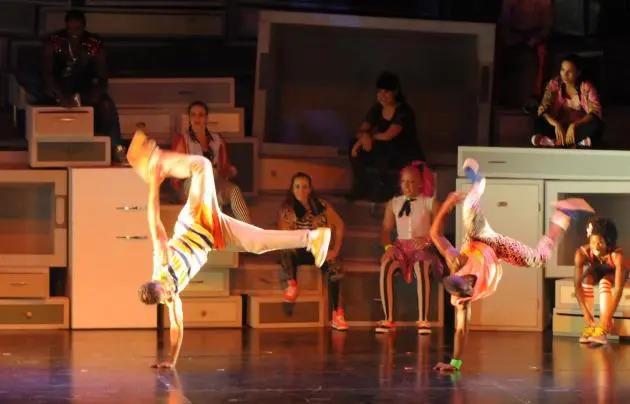
Last Friday and Saturday, Blaze transformed a venue that is more used to hosting classical ballet, modern dance and traditional forms like flamenco and the Indian kathak into a hall of fun. Blaze invited the audience to participate in a scene, successfully making men in suits stand up, dance and breath refreshing air into the otherwise rather rigid atmosphere of the performing space.
Yet for all its popularity and influence, hip-hop hasn’t produced all that high a number of solid, stand-alone shows. Unlike some of the highly artistic French hip-hop productions La Fete has brought to Thailand over the past few years, Blaze’s format is simple. It does not aim for a coherent, congruent narrative, but instead presents a jumble of dance, ranging from breaking, popping and locking to voguing and more lyrical movements for an entire 90 minutes.
The technical prowess of the dancers was highly commendable and the performance was generally spot-on. The music, too, offered a bubbly, quirky contrast, shifting from generic hip-hop tunes to Beethoven and from recent hits by Lady Gaga, Rihanna and LMFAO to the dwarfs’ “Heigh-Ho” song from Disney’s “Snow White”.
Still, with the director’s choreographing experience for successful musicals like “Mamma Mia!” and “Sister Act” and other choreographers from the popular dance competition “So You Think You Can Dance”, I expected more ambitious and innovative dance sequences. Advertising a show for its dance alone needs more than moving in perfect unison or a showcase of skilful spins and backflips.
The magical moments turned out to be mainly from Es Devlin’s ingenious set design, which featured boxes, trunks, cupboards and bathtubs, piled recklessly on top of one another, reflected the chaotic lifestyles that many of us live. Flat panels become TV screens when lit and fridges served as backstage entrances.
The set also cleverly concealed platforms and trampolines, giving the performers a wealth of levels to dance on and jump from. Better still, the teetering wall functioned as a textured screen for the mesmerising video projections from digital artists Memo Akten and Robin McNicholas.
Because Blaze was made up of short, disconnected scenes without a flowing story to glue them together, it was occasionally hard to focus and see the bigger picture. There weren’t characters to follow, and interactions between performers during the show appeared more choreographic than genuine.
The lack of linearity also prevented some dancers from showing their real personalities. They came across much more strongly in the finale when everyone had a chance to show off. During the curtain calls, I found myself noticing a few dancers for the first time and wondering how I could have missed their passion and energy.
In another creative twist, the festival organised a battle between the performers and Thai dancers in the lobby after both shows. On Friday, the Thais started off impressively but were overcome with shyness and not a little awe once the Blaze troupe showed their moves. Sadly, not many dared to step out for a one-on-one battle.
But while the Blaze crew ended up stealing the stage, a little Thai girl in a girl scout uniform stole hearts for her sheer determination to dance.
Technically, Thai dancers still have a lot to work to do. But judging from the sparkle in their eyes and the smiles on their faces, Thailand’s street dance scene just made a big leap forward.
