
A Portrait of Modern England
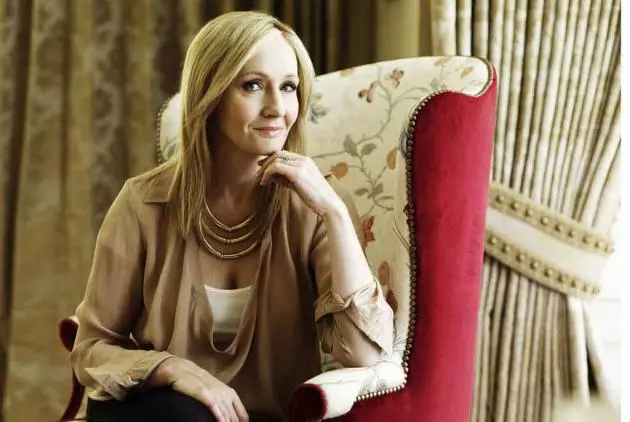


Rowling's 'Casual Vacancy' is rollicking fun and alarmingly real
Unlike 450 million people around the globe, I haven’t read JK Rowling’s Harry Potter series. I don’t read science fiction, westerns or low-rent crime novels – and certainly no children’s books.
But I have just finished her first adult novel, “The Casual Vacancy”, and was thoroughly entranced. There are no fearsome ogres or geeks flying around on broomsticks, just a host of modern characters thoroughly immersed in websites, Facebook and smartphones.
The scene is Pagford, an idyllic village in the West Country of England. A river runs amid quaint old shops and bungalows, crossed by a picturesque stone bridge and presided over by a ruined abbey on a hill.
Nearby is The Fields, an eyesore of a public-housing project. The aristocratic owners sold the land off the to the neighbouring city of Yarvil, but criminals, drunks and drug addicts have the right to send their children to Pagford schools. Fat delicatessen owner
Howard Mollison, Parish Council Chair, wants to end this practice by redrawing the village boundaries so that The Fields and a nearby methadone clinic are expelled from Pagford and consigned to Yarvil.
In this they are opposed by council member Barry Fairbrother, slight, bearded and jocular, who grew up in a trailer park at The Fields and took advantage of a Pagford education to rise to become a prominent banker.
“Most of the Fields pupils who came to St Thomas’s blended in well with their peers in Pagford; some indeed were admitted to be perfectly nice children,” Rowling observes. “Thus Barry Fairbrother had moved up through the school, a popular and clever class clown, only occasionally noticing that the smile of a Pagford parent stiffened when he mentioned the place where he lived.”
Fairbrother is opposed to the expulsion of the Fields and a high-minded faction of the Parish Council, prominently family physician Dr Parminder Jawanda, form a coalition behind him.
The novel opens with Barry Fairbrother’s sudden death by aneurism and culminates in the struggle for his vacant seat on the Parish Council.
This is one layer of the novel. The other, and even more interesting one, is the substratum of teenagers. They form the emotional heart of the novel. The adults are either complacent or disgruntled with their lot. Their teenage offspring are full of inchoate striving and raw emotions. Rowling’s omniscient narrator moves majestically among a score of
major characters.
Acne-ridden Andrew Price, called “Pizzaface” by his irascible, violent father, is in painfully, hopelessly in love with Gaia, the beautiful daughter of Kay Bawden, a London social worker who has recently moved to Pagford to be close to her new boyfriend Gavin Hughes, partner in a law firm with Miles Mollison, son of Howard, who is a candidate now for Fairbrother’s seat. Gavin regrets leading Kay on as he is falling in love with Fairbrother’s widow Mary.
Gaia befriends Sukhvinder Jawanda, the daughter of doctors, who is learning-impaired. Sukhvinder is tormented in class and on Facebook by Fats Wall, the most popular boy in school, best friend of Andrew Price. Obsessed with the notion of “authenticity”, Fats seeks it in the slums of the Field. He despises his father, the weak, well-meaning high school assistant headmaster Colin, best friend of Fairbrother and candidate now for his Parish Council seat. Colin’s wife Tessa, the school’s guidance counsellor, takes Sukhvinder under her wing as well as the school terror Krystal Weedon, daughter of Terri, a heroin addict and prostitute.
“Krystal’s slow passage up the school has resembled the passage of a goat through the body of a boa constructor, being highly visible and uncomfortable for both parties concerned.”
Kay Bawden becomes Krystal’s social worker and helps to get her mother back into a drug programme and her three-year-old brother Robbie into nursery school. Barry Fairbrother had also mentored Krystal as volunteer coach of the school’s rowing team. Her team’s victory over the snooty team of a posh private girls’ school is the high point of her life. Desperate to get away from her mother and to protect her brother, she has sex with Fats Wall in hopes of getting pregnant, on welfare and into her own apartment. Foul-mouthed, shrewd, spontaneous, passionate – “funny and tough, impossible to intimidate, always coming out fighting” – Krystal is the moral centre of the novel.
It takes a while for Rowling to assemble all these characters and wheel them onstage but, once all the connections are established, the plot rollicks on through character assassination via the Parish Council website, beatings, drowning, adultery, rape, a heart attack, self-mutilation and suicide.
This is nothing less than a microcosm of the conflicts in modern England: male and female, old and young, rich and poor. All the characters are flawed, but in the end at least a few are looking forward to new |lives. And the reader roots for them all the way.
The Casual Vacancy
By JK Rowling
PUBLISHED BY LITTLE BROWN, 2012
Available at Asia Books
Reviewed by James Eckardt
