
Moving in the groove


Play
Thais are helping fuel the viral spread of the latest dance craze, the 'Harlem Shake'
It seems incredible that a song by an electronic producer can take the world by storm, but in just a short space of time, “Harlem Shake” by Brooklyn-based DJ Baauer has replaced South Korean artist Psy’s “Gangnam Style” as the global pop culture phenomenon, with thousands of “Shake” videos being made and uploaded to YouTube everyday.
“I think ‘Harlem Shake’ was originally influenced by ‘Gangnam Style’ but quickly became fixed in its own conceptual dance style just like the Korean song,” says Norasate Mudkong aka DJ Seed. He mixes the number into his set while manning the decks at Grease on Sukhumvit Soi 49 and also plays it on his show on the social-network radio station Band on Radio.
“I heard about ‘Harlem Shake’ two months ago from a Thai student in America who asked me about its music genre via Facebook. She said that an American friend had told her it would soon become a hit. Back then, it was already popular with student groups in the US.
“When I played the ‘Harlem Shake’ video clip, I couldn’t see what was so riveting about it. But it’s like opening the door to some kind of emotional release. I think it’s a great way of letting off steam and, of course, it’s also a very danceable track,” he adds.
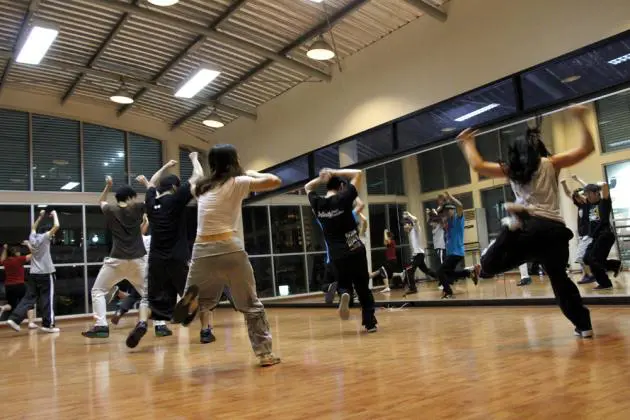
“We’re a by-product of the ‘Harlem Shake’,” says Apissara “J Da” Phetruengrong, executive director and founder of the Harlem Shake Studio on the third floor of M Theatre on New Phetchaburi Road. “Almost overnight, we had 6,000 likes on our website and our black T-shirts screened with the illustration and name have become best-sellers. We’re also receiving more phone calls hiring us to do the ‘Harlem Shake’ dance at events. An event organiser wanted us to put on his company T-shirts and demonstrate our moves. When I quoted him a price, he was amazed at how expensive it would be for a five-minute show! Most people seem to think that ‘Harlem Shake’ is however you express it with craziness and fun.”
The original “Harlem Shake” video was uploaded to YouTube by a videoblogger called Filthy Frank on January 30. It was followed on March 2 by a group of Australian teenagers known as the Sunny Coast Skate. The same day, Filthy Frank uploaded an extended version of his cut. By February 10, there were 4,000 uploads a day on YouTube. As of February 15, about 40,000 Harlem Shake videos had been uploaded, totaling 175 million views. The original video has attracted more than 25 million views to date, propelling Baaur’s single to the top of iTunes’ US chart and No 2 on iTunes in the UK and Australia.
The video typically opens with one masked or helmeted person dancing or shaking his torso, while others look on, seemingly disinterested. The rest join in when the bass drops at around the 15-second mark, with the whole group dancing wildly.
While the new dance does have some of the same elements, it shouldn’t be confused with the original Harlem shake, introduced in 1981 by a Harlem resident named “Al B”. That went mainstream in 2001 when G Dep featured the Harlem shake in his music video “Let’s Get It”.
“Musically, it is called ‘glitz hop’ like dubstep but it’s not as heavy as techno and there’s a DJ-ing technique of pause repeat. Baaur isn’t the first to present ‘glitz hop’ but he applies the beat with his signature sound and dance style,” says DJ Seed. “I think that glitz hop will replace dubstep.”
Numerous commentators have compared “Harlem Shake” with “Gangnam Style”.
“I think that the current craze for ‘Harlem Shake’ could be with us for a while, longer than ‘Gangnam Style’ anyway,” comments DJ Seed. “With ‘Harlem Shake’, it’s more about how you want to dance. If you think about it, Thai people have dancing their own brand of Harlem shake for years with the ram wong and cha cha cha. It’s also like building unity – a type of ‘Auld Lang Syne’ for the digital era.”
J Da agrees. “The beauty of Harlem Shake is that it’s flexible and everyone can do it. I think people need to see the next ‘Harlem Shake’ video clips because they want to see how the different crazes are panning out. So, it’s never-ending,” says the dancer and choreographer, who is creating the “Harlem Shake” for “The Voice” winner Thanon “Non” Chamroen’s show along with 20 dancers as part of the “Sieng Jing Tua Jing” at Rajamangala Stadium tonight. “‘Harlem Shake’ really has no boundaries,” she says.
She’s probably right. The viral dance craze has already found its way to every part of the country, with people performing at schools, colleges, universities, a 7 -Eleven, an Internet cafe, the Kasetsart intersection and even the Skytrain.
