
First tango in Yangon
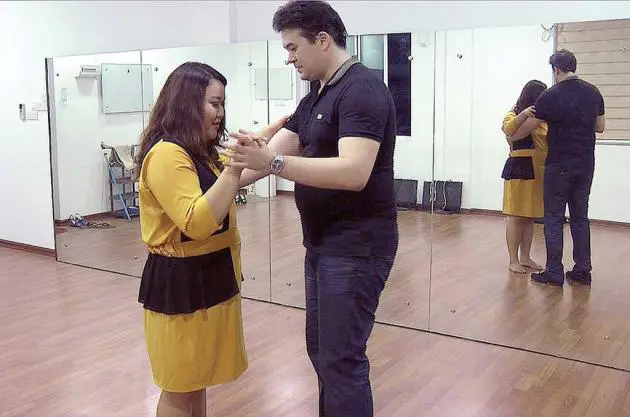


A Myanmar-Swiss businessman brings Argentina's sultry dance to his new home
Born and raised in Zurich, Switzerland, Aung Thura used to dream about one day living in his parents’ home country of Myanmar.
He was among the first Burmese expatriates to return to the country when it began opening up and today, the market research specialist is happily settled in Yangon where he runs the research and consulting business, ThuraSwiss, which introduces investors to local businesses.
He’s also brought his fellow citizens the tango.
Thura, who earned his PhD in banking from the University of St Gallen in Switzerland, regarded as one of the leading business schools in the world, first started dancing the tango 14 years ago.
“When I moved to Yangon, I missed the dance. Myanmar, as one would expect, has no tango culture so the best way of continuing my passion was to set up tango classes,” he says.
Dancing the tango requires a physical connection between dance partners, usually a man and a woman, and a certain level of self-confidence, so organising dance lessons in Myanmar’s restrictive society was no easy task.
After finding a venue for the classes, he spread the word on Facebook. The feedback was surprisingly positive but not many people showed up for the first class.
“In Myanmar society, it’s difficult for girls to come. It’s not like they can say to their parents, ‘I’m off to dance with some guys’,” says the 35-year old.
Classes are held every Sunday at the Business Institute Yangon from 5.15 to 7pm. They’re open to both locals and foreigners and are free of charge.
“There’s no obligation to come every week. People can just come along when they feel like dancing. For as long as I continue to get the room free of charge, the lessons will be free,” says Thura, who speaks English, the Myanmar language, as Burmese is known today, German and some French.
Thura teaches his students how to shift weight, the basic principles of the tango, the walking steps and some basic figures. Most are beginners and come in pairs or alone. Women often pair up, with one assuming the man’s role in the dance.
“I have in my head which steps are for beginners and which are more complicated. I try and take note of those who come each time and those who only come occasionally. I adapt the lesson as we go along,” he says.
Thura took up the tango while he was at university. But while he enjoyed the moves, he didn’t like his teacher’s way of instruction, saying it was too stiff and lacked the elegance associated with the Argentinean dance.
“The man is usually the leader and the leader has to know the steps lead his partner while maintaining an overview in the room to avoid colliding with other pairs. There are so many things to think about at the same time. The man also needs a lot of self-confidence while the followers don’t really have to think,” he explains, adding that as a beginner he practised up to four times every week.
He later switched teachers, opting to take classes outside of the university and on occasions travelling to other Swiss cities to perfect his technique.
“I was totally hooked. Even today, whenever I travel abroad, I seek out a place to dance. When I went to Shanghai, I felt very alone so I searched for a place where people danced the tango. As soon as I entered the club, I felt an immediate connection with the people,” says Thura, who has spent much of his career |working with major Swiss banks.
The dance also helps the executive concentrate on the present, relieves his the stress and switch off from his hectic schedule.
“When I’m dancing, I don’t think about my job or anything else because I’m totally |focused on every step you are doing,” says Thura, who |wrote, produced and starred in the mystery thriller “Shadows of the Past”, which was |filmed in Myanmar and Switzerland.
For now though, both the tango and making movies will remain his hobbies.
“I’m working to expand ThuraSwiss’s reach to the financial sector,” he says.
