
Tales of the Tujia


Play
The ethnic people of Zhangjiajie boast some fascinating customs
Known for its natural beauty and the Hallelujah Mountains, which played a starring role in James Cameron’s blockbuster “Avatar”, Zhangjiajie City in Hunan province is home to the Tujia people, the sixth largest ethnic group in China, whose history dates back more than 1,000 years.
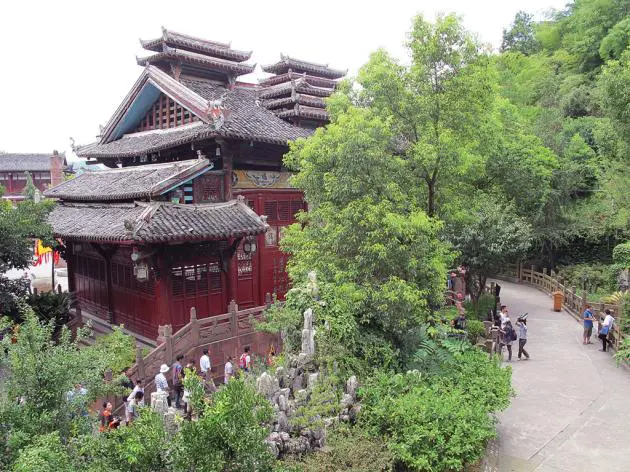
To learn about that Tujia customs and culture, our group is taken to visit Zhangjiajie Tusi Castle. This old edifice, which is surrounded by the Tujia Folk Custom Park, a replica of a typical Tujia village, was once administered by a chieftain (Tusi) called Qinhao. He was killed following his defeat in the war and so legend has it, the flesh from his whole body was removed. Today, on the sixth day of the sixth month in Chinese, Tujia people hang their blankets in the sun in a gesture that mimics covering the Tusi.
The garden is also home to a large tree covered in red strips of material – the Chinese believes red chases away the devil during Chinese Lunar New Year, and a statue of an old man carrying a large Maotai liquor jar on his back.
The nine-storey Jiuchongtian used to serve as the Tusi’s office and has been rebuilt several times over the last centuries. It’s constructed on a steep slope without using a single nail, a fact that earned it a place in the Guinness Book of World Records. The interior offers a showcase of the elaborate works and wonders of Tujia architectural art, including the precious relics that reflect the Tujia people’s hardworking and hardships.
Also on show are the Tujia people’s agricultural tools, their pipes and clothes, as well as a traditional wedding carriage.
The Tujia Folk Custom Park also highlights one of the most unusual marriage customs in the world: the “Crying Wedding”.
“Formerly, the Tujia bride would start crying before the marriage ceremony for a period that could stretch to one year though it was usually just a few months,” our guide explains. “The crying takes the form of a song and the bride was traditionally, accompanied by other 6-8 single women, who would dress in Tujia finery and cry after dinner for one or two hours. If any household didn’t follow the custom, the members of the family were looked down upon. Even before a Tujia daughter reached her teens, she would start learning the way of crying.
“The crying was a way of thanking her parents for looking after her until her marriage and also instructed her younger brother to take care of their parents. The bride-to-be would also pretend to blame the matchmaker for separating her from her parents,” the guide explains.
For his part, the groom has to work at being healthy and strong, as custom demands that he carry his bride half the way home.
“Nowadays, a man looks at a woman’s good figure, beautiful face and good complexion,” says the guide. “In the past, he was more concerned with her legs, hips and voice. A woman needed strong legs to carry firewood and water in the mountain and wide hips to facilitate child-bearing. A loud voice was also felt to be necessary in case one of the family was bitten by a snake.”
Even today, the Tujia people judge a girl's intelligence and virtue by how well she can sing crying songs in the wedding.
