
Nostalgic townscape, new taste


Play
Yokohama celebrates ramen by opening a museum dedicated to the noodle
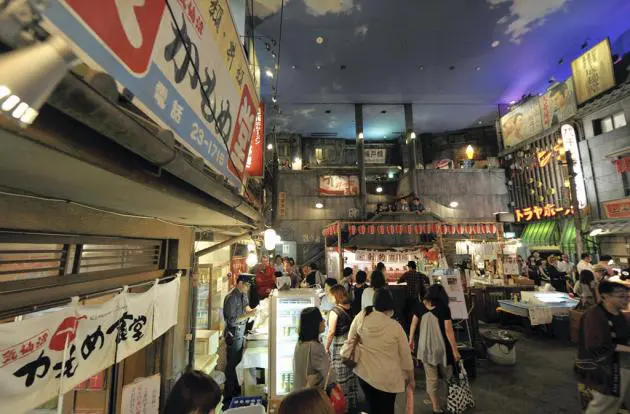
Descending the stairs to an underground level of the Shinyokohama Raumen Museum in Yokohama, Japan, visitors take in a view of a street with nostalgic touches, including a hand-drawn movie theatre signboard and an old-fashioned, red-neon pachinko parlour sign. The reproduced townscape takes them back to 1958, when instant ramen noodles were invented.
The "street" of the Kohoku Ward ramen museum is lined with outlets of nine popular ramen noodle shops nationwide. It is difficult to rank them as the dishes are all tasty and each has distinctive characteristics.
I was attracted to Kamome Shokudo (Seagull restaurant) because its name is associated with the ocean.
Kamome Shokudo originally opened in 1942 near Kesennuma Port in Miyagi Prefecture. Its soy sauce-flavoured ramen soon became very popular and has been the shop’s signature item ever since. However, it closed in 2006 as there was nobody to take over its operation. The building was washed away by the massive tsunami triggered by the Great East Japan Earthquake in March 2011.
Sometime after, Kenji Chiba, a native of Kesennuma in the disaster-hit region who operates the popular Chibakiya ramen chain in Tokyo, took over the shop’s name because he the shop to stand as a symbol of restoration of his hometown and the surrounding region from the disaster.
In February last year, he opened the new Kamome Shokudo in the museum.
“The first time I ate out with my father we had Kamome Shokudo ramen,” says the 61-year-old Chiba, 61. “I can’t forget the taste. I want to support Kesennuma’s reconstruction by serving ramen [associated with the shop]."
Chiba is planning to open a Kamome Shokudo outlet in Kesennuma in two years.
Kesennuma Ramen, seasoned with Pacific saury oil, a Kesennuma specialty, is popular at the shop.
Masaki Takigami, a museum employee in charge of public relations, says, “The museum also wants to promote Kesennuma by serving ramen to eventually help reconstruction efforts of people in the quake-hit region.”
I finally sat down and tried Kesennuma Ramen myself.
Its light salty broth accentuating the thin, curly noodles reminded me of the ocean in the Sanriku district, which encompasses Kesennuma.
Oodles of noodles
_ The museum is open daily from 11am to 10 pm. The museum also has exhibits illustrating the dish's history. Each bowl of ramen costs about 850 yen (Bt270). Small bowls start at 550 yen.
